
Oil at $60 Priced In No Demand Growth This Year, Gunvor Says
The Supply-Side Ceiling: Why $60 Marks the Line
Gunvor Group, one of the world’s largest independent oil traders, has positioned $60 per barrel as the effective ceiling for oil prices in 2024, arguing that this price incentivizes a surge in production that would overwhelm demand growth. CEO Torbjörn Törnqvist has emphasized that at $60, “virtually all oil production becomes profitable,” unlocking supply from U.S. shale, OPEC+ members, and Russia. This dynamic creates a self-correcting mechanism: as prices near $60, producers ramp up output, which in turn dampens prices.
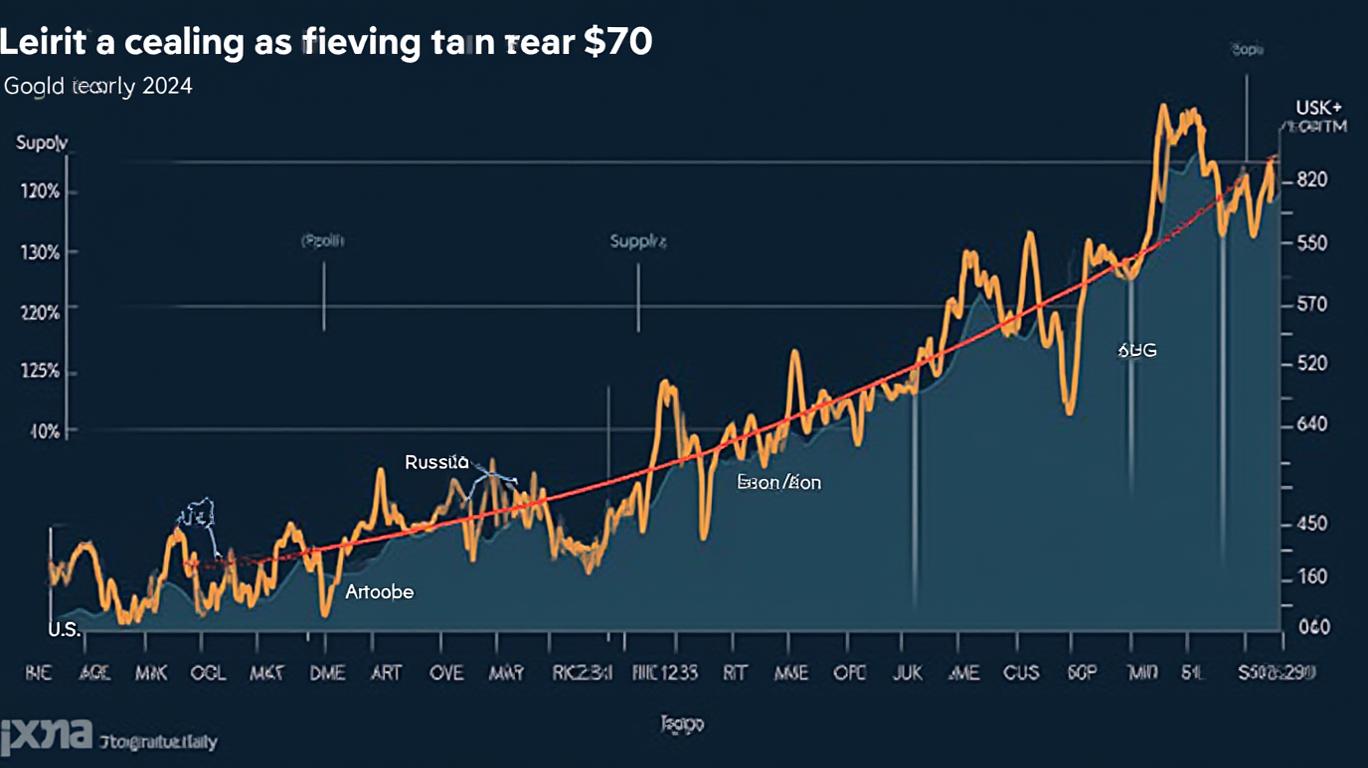
Gunvor’s analysis highlights three key drivers:
1. U.S. Shale Resilience: Producers in the Permian Basin and Bakken fields are forecast to add 400,000 barrels per day (b/d) in 2024, reversing earlier declines.
2. OPEC+ Overproduction: Despite quotas, members like Iraq and Nigeria have exceeded targets by 100,000–200,000 b/d, while Saudi Arabia’s output has edged higher.
3. Russian Defiance: Despite sanctions, Russia’s oil exports rose 300,000 b/d in Q1 2024, leveraging discounted prices to Asian buyers.
Demand Dynamics: A Fragile Recovery
Gunvor’s $60 price assumption also reflects skepticism about demand growth. Törnqvist notes that global oil demand remains 5 million b/d below pre-pandemic levels, with Europe lagging due to high energy costs and China’s rebound proving slower than expected. While the U.S. market is stable, it still faces a “couple million b/d loss” compared to 2019.

The International Energy Agency (IEA) recently trimmed its 2024 demand forecast by 200,000 b/d, citing weaker-than-anticipated economic activity. Meanwhile, Goldman Sachs’ bullish call for a return to pre-pandemic demand (100 million b/d) by mid-2024 now looks overambitious, as emerging markets face currency pressures and advanced economies grapple with high debt levels.
Contrasting Views: Bulls vs. Bears
Gunvor’s stance clashes with optimists like Dr. Mamdouh Salameh, who warns that delayed $131 billion in oil projects could create a 15 million b/d deficit by 2025, pushing prices to $100. However, Gunvor counters that structural oversupply risks dominate:
- Storage Drawdowns: Floating storage levels have fallen to 2019 lows, but Törnqvist argues this reflects short-term balancing, not scarcity.
- Geopolitical Risks: While Iran and Venezuela’s potential returns to the market add volatility, Gunvor’s analysis suggests they’re already priced into current supply forecasts.
The Long-Term Shift: Energy Transition Pressures
Gunvor’s $60 ceiling isn’t just about cyclical factors—it also reflects a strategic pivot to renewables. In 2024, the firm allocated 30% of its trading volumes to Energy Transition commodities and secured a $1.32 billion sustainability-linked loan to expand LNG operations. Törnqvist hinted at deeper implications:
- Renewables Growth: JP Morgan estimates renewables’ share of final energy consumption will grow 0.6% annually, eroding oil’s long-term dominance.
- ESG Pressure: Oil majors face $2 trillion in stranded asset risks if net-zero targets are enforced, accelerating the shift to alternatives.

Investment Implications: Navigating the $60 Ceiling
For investors, Gunvor’s analysis suggests three strategies:
1. Hedge Against Volatility: With prices trading in a $60–$80 range, options strategies can protect against downside risks while capturing upside from geopolitical events.
2. Focus on Efficiency: U.S. shale producers with low breakeven costs (e.g., Pioneer Natural Resources) may outperform peers if prices stay near $60.
3. ESG Plays: Gunvor’s LNG investments and solar partnerships signal a broader theme: energy companies with diversified, low-carbon portfolios will thrive amid demand stagnation.
Conclusion: A Market Anchored at $60, but Risks Lurk
Gunvor’s $60 price assumption is backed by robust data: oversupply pressures from all major producers, a demand recovery that’s weaker than expected, and a structural shift toward renewables. The firm’s CEO warns that “the market is moving into a laxer environment,” with prices likely averaging $60–$65 in 2024. However, risks remain—geopolitical shocks (e.g., Russia’s output cuts) or a faster-than-forecast economic rebound could breach this ceiling.
Crucially, Gunvor’s strategic moves into LNG and solar underscore a broader truth: even as oil prices stabilize, the industry’s long-term trajectory is downward. Investors ignoring this shift risk being left behind in a market where $60 isn’t just a price—it’s a warning signal for the future.







Comentarios
Aún no hay comentarios