
OHLA's Strategic Expansion in U.S. Infrastructure: A Catalyst for Long-Term Growth in the Post-Pandemic Boom
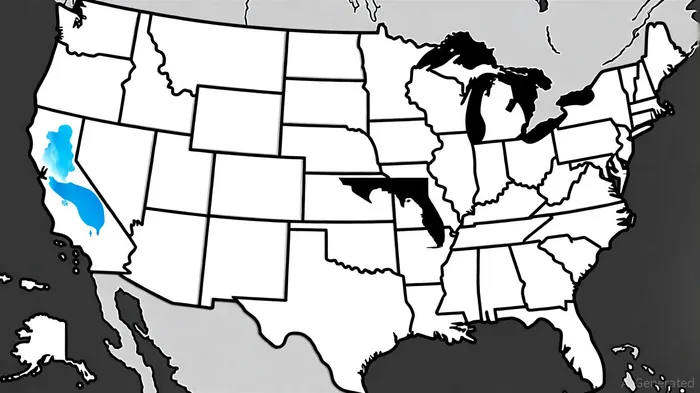
The U.S. infrastructure market is undergoing a seismic shift, driven by historic federal funding and a renewed focus on equitable development. At the center of this transformation is OHLA USA, a Spanish multinational construction firm that has aggressively expanded its footprint in key markets like Florida and California. With a portfolio of high-profile projects valued at over $3.5 billion as of 2025, OHLA's strategic alignment with the Bipartisan Infrastructure Law (BIL) and its emphasis on public-private partnerships position it as a prime beneficiary of the post-pandemic infrastructure boom[1].
Strategic Projects and Market Capture
OHLA's recent wins underscore its ability to secure large-scale, mission-critical infrastructure contracts. In 2025 alone, the company secured a $450 million contract for the Port of Miami's North Bulkhead Realignment Program, a $100.6 million Turnpike Mainline expansion in Florida, and a $933 million joint venture with Prince Contracting and WSP to upgrade I-95 in Broward County[2]. These projects are not just about scale—they reflect a calculated focus on regions prioritized under the BIL, which allocates funding to states with the greatest infrastructure needs. Florida, for instance, has been a key recipient of BIL grants, with its aging transportation networks and growing population creating a fertile ground for OHLA's expertise in highway and water infrastructure[3].
The company's California operations further highlight its long-term vision. The $123 million Alvarado 2nd Pipeline Extension in San Diego, which will improve water distribution for 1.4 million residents, aligns with the state's urgent need to modernize its water systems amid climate change challenges[4]. Meanwhile, the $1.5 billion I-405 Improvement Project in Orange County demonstrates OHLA's capacity to execute complex, high-impact transportation upgrades—a critical skill as federal funding for highway modernization accelerates[5].
Leadership and Operational Resilience
OHLA's growth is underpinned by strategic leadership appointments and operational refinements. The promotion of Brad Nystrom to Chief Operating Officer and Arnav Amin to Chief Pursuit Officer signals a focus on streamlining project execution and expanding market reach[6]. Nystrom's role in overseeing U.S. construction operations is particularly significant, as it ensures alignment with the company's global sustainability goals and its commitment to leveraging technology for efficiency. Additionally, the West Region's 2025 goals—enhancing estimating competitiveness, prioritizing employee well-being, and expanding its geographic footprint—underscore a holistic approach to scaling operations without compromising quality[7].
Competitive Positioning in a Federal-Driven Market
The BIL has reshaped the U.S. infrastructure landscape, directing over $1 trillion toward transportation, water, and energy projects. According to the U.S. Treasury Department, this law prioritizes states with historically underfunded infrastructure, ensuring that resources flow to regions with the greatest need[8]. OHLA's focus on Florida and California—two states with significant infrastructure deficits—positions it to outperform peers who may be overextended in saturated markets. For example, while companies like Bechtel and AECOMACM-- have broad national footprints, OHLA's targeted investments in high-growth corridors and its ability to form joint ventures (e.g., with WSP and Prince Contracting) give it a nimble edge in securing contracts[9].
Moreover, the BIL's emphasis on compliance with labor standards, such as the Davis-Bacon Act's prevailing wage requirements, creates a level playing field by standardizing costs. While larger firms may still benefit from economies of scale, OHLA's experience in managing complex, multi-agency projects—such as the Purple Line Light Rail in Maryland—demonstrates its ability to navigate regulatory and logistical hurdles[10].
Long-Term Growth and Investment Outlook
OHLA's U.S. revenue has surged since 2020, with California operations alone growing from $251 million in 2019 to $434 million in 2020[11]. This trajectory is set to continue as the ASCE's 2025 infrastructure grade upgrade—from “C-” to “C”—reflects the tangible progress driven by BIL-funded projects[12]. For investors, OHLA's strategic alignment with federal priorities, its robust project pipeline, and its leadership in critical sectors like water and transportation make it a compelling long-term play.
Conclusion
OHLA USA's strategic expansion in the U.S. infrastructure sector is a masterclass in aligning corporate ambition with macroeconomic tailwinds. By securing high-impact projects in BIL-prioritized states, investing in leadership, and leveraging its global expertise, the company is not just capitalizing on the current boom—it's positioning itself as a long-term leader in a market poised for sustained growth. For investors, the question isn't whether OHLA can succeed in this environment, but how quickly it can scale its dominance.







Comentarios
Aún no hay comentarios