
Offshore Wind Projects at Risk Amid Trump-Era Policy Shifts: Implications for Dominion and the Renewable Sector
The U.S. offshore wind sector is facing a critical juncture as Trump-era policy shifts in 2025 have introduced unprecedented regulatory and geopolitical risks. These developments, driven by national security concerns and a broader retreat from renewable energy commitments, are reshaping the competitive landscape for companies like Dominion EnergyD-- and threatening the nation's ability to rival China's aggressive renewable energy expansion.
Regulatory Uncertainty and Legal Challenges
In January 2025, President Trump issued an executive order temporarily halting federal offshore wind leasing and permitting, citing radar interference from turbine blades and towers as a national security threat. This pause created a two-tier system: projects already under construction, such as Dominion Energy's Coastal Virginia Offshore Wind (CVOW) project, were allowed to continue, while new developments faced indefinite delays. However, the policy quickly drew legal pushback. A federal court ruling in New York v. Trump declared the prior administrative halt unlawful, citing procedural violations under the Administrative Procedure Act. This legal reprieve offers a potential pathway for developers to challenge further delays, but the regulatory environment remains fraught with uncertainty.
The Department of the Interior has since imposed a 90-day suspension of work on five major offshore wind projects, including CVOW, citing additional national security reviews. Dominion Energy has responded by warning that such pauses threaten grid reliability for critical infrastructure, including military installations and data centers, while also risking energy inflation and job losses. 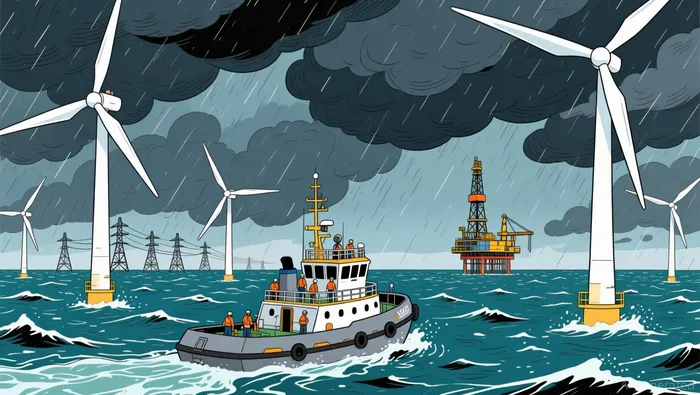 The company's third-quarter 2025 earnings, though exceeding expectations, were overshadowed by negative free cash flow of $7.76 billion over the past twelve months, partly attributed to ongoing investments in CVOW.
Geopolitical Risks and China's Ascendancy
The U.S. policy shift starkly contrasts with China's rapid dominance in the global offshore wind market. From 2020 to 2025, China has expanded its capacity at a pace far outstripping U.S. efforts, with Rystad Energy forecasting that nearly 45% of the world's installed offshore wind capacity by 2030 will be in China. The China National Offshore Oil Corporation (CNOOC) is a key driver of this growth, with projects like the 1.5 GW Hainan CZ7 expected to come online before 2030.
Meanwhile, U.S. renewable energy investments have plummeted by 36% compared to the previous year, with European firms redirecting capital to more stable markets. This exodus underscores the geopolitical risks of inconsistent U.S. policy, as the nation cedes leadership in clean energy technology and supply chain development to China. A significant portion of turbine component manufacturing remains concentrated in China, further complicating U.S. efforts to build a competitive alternative. Analysts warn that this trend could erode American energy security and geopolitical influence, particularly as global demand for renewable infrastructure surges.
Dominion Energy: A Case Study in Exposure
Dominion Energy's CVOW project exemplifies the dual pressures of regulatory and geopolitical risk. While the project remains technically active, its future phases are contingent on federal approvals that may now be indefinitely delayed. The company's public statements emphasize the project's role in meeting Virginia's energy demands and supporting national security infrastructure. Yet, the Trump administration's actions have already triggered financial strain, with offshore wind stocks like Orsted and Vestas experiencing sharp declines following the policy announcement.
For investors, Dominion's situation highlights the vulnerability of long-term renewable energy projects to abrupt policy reversals. The CVOW project's projected 2,600 megawatts of capacity is critical for Virginia's grid, but its economic viability hinges on stable regulatory frameworks and access to federal incentives. The absence of such stability under current policies raises questions about the broader appeal of U.S. offshore wind investments.
Conclusion: A Call for Strategic Resilience
The Trump-era policy shifts of 2025 have exposed the fragility of the U.S. offshore wind sector to regulatory and geopolitical shocks. While legal challenges and state-level advocacy offer some hope for project continuity, the broader trend of policy instability is eroding investor confidence and ceding ground to China. For companies like Dominion Energy, the path forward requires navigating a labyrinth of legal, financial, and geopolitical risks. Investors must weigh these factors carefully, recognizing that the U.S. renewable energy landscape is now defined by volatility and competition on a global scale.





Comentarios
Aún no hay comentarios