
Offshore Wind Halt: A Structural Policy Shift with Measurable Economic and Energy Implications
The federal government has delivered a jarring policy shock. Yesterday, the Department of the Interior issued immediate stop-work orders for five major offshore wind projects spanning New England, the Mid-Atlantic, and New York. This action halts a critical clean energy build-out and represents a direct repudiation of years of federal review and permitting progress.
The scale of the setback is unprecedented. Together, these projects would have added nearly six gigawatts of clean energy generation to the grid. More specifically, the two projects at the heart of New York's offshore wind ambitions-Sunrise Wind and Empire Wind-would have delivered over 1,700 megawatts of capacity. That is enough to power more than one million New York homes and marks the largest power generation projects the state has seen in over three decades.
The economic and energy commitments now jeopardized are substantial. The affected projects represent a combined $2 billion in near-term economic development and are slated to create more than 800 construction jobs. This is not just a delay; it is a direct economic betrayal for the communities and workers who were counting on this investment. The projects were on a path to deliver first power in 2026, a timeline critical for meeting state climate goals and ensuring grid reliability in the coming years. By halting them, the administration has taken a wrecking ball to project certainty, undermining confidence in the permitting system and raising costs for consumers.
Assessing the National Security Rationale and Regulatory Capture
The administration's core justification is a stark departure from the public record. It cites classified Pentagon reports identifying radar interference from wind turbines as a national security risk, a rationale that is new and lacks public detail. This claim is not without precedent; unclassified reports have long noted that turbine movement and reflective towers can create radar clutter, potentially obscuring targets. Yet the Department of Energy itself has acknowledged that mitigation is possible, even if it carries trade-offs like increased false alarms. The administration's sudden invocation of this classified threat, after years of permitting, raises immediate questions about its credibility and timing.
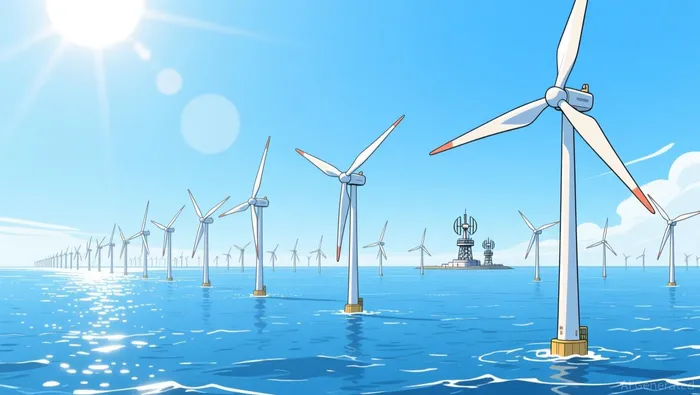
The projects had already undergone years of extensive federal review, including national security assessments. This makes the reversal appear arbitrary and politically motivated, not a response to newly discovered danger. As New York's Attorney General argues, the stop-work orders are arbitrary and unwarranted given the projects' prior review. The action looks less like a security imperative and more like a strategic shift in policy, potentially influenced by regulatory capture or a broader ideological stance against renewable energy. The timing is telling: this move follows a December 8 court ruling that invalidated a prior, broader wind permitting moratorium as arbitrary and capricious under the Administrative Procedure Act. The administration is now attempting to reframe its authority by shifting from a broad suspension to a targeted national security pause, a legal and factual pivot that courts may scrutinize closely.
The legal context is critical. The December court decision established a clear precedent: agencies cannot indefinitely halt permitting without a reasoned explanation. By citing classified national security concerns, the administration is attempting to place this action in a different legal category, one that may be less subject to the same scrutiny. Yet the fact that the projects had already passed national security reviews undermines the claim of an urgent, unforeseen threat. This creates a dangerous precedent where project certainty can be destroyed on the basis of undisclosed, classified information, eroding trust in the entire permitting system. For investors and developers, the bottom line is a heightened sense of regulatory vulnerability, where years of progress can be undone by a single executive order citing a new, unverifiable risk.
Financial and Project Implications for Developers and the Grid
The policy shock translates directly into concrete financial and operational risks for developers and the energy system. For companies like Norway's Equinor and Denmark's Orsted, the halt threatens binding contracts, local tax revenue, and workforce training programs that were already in motion. The projects were already under construction when the stop-work orders came, meaning significant capital has been committed and labor engaged. Now, both firms face the prospect of costly delays and potential contract terminations, with Equinor warning it may face likely termination if it cannot restart by a specific deadline.
This action also undermines the very foundation of large-scale infrastructure investment: permitting certainty. As a clean energy advocacy group noted, the administration's move takes a wrecking ball to project certainty and raises costs for consumers. For investors, the message is clear: years of federal review and assessment can be undone overnight by a single executive order citing undisclosed national security concerns. This creates a profound vulnerability that will likely increase the cost of capital for future offshore wind projects and could deter broader investment in U.S. clean energy infrastructure.
The grid implications are equally serious. The five halted projects represent nearly six gigawatts of clean power, a significant chunk of the nation's generation capacity. Their delay directly threatens energy affordability and grid reliability, particularly in states like New York that were counting on them to meet rising demand and reduce fossil fuel dependence. By stalling this build-out, the policy not only jeopardizes climate goals but also weakens the economic and energy security it claims to protect. The bottom line is a damaged investment climate and a delayed transition to a more resilient, affordable energy future.
Catalysts, Scenarios, and Investment Watch
The immediate path forward hinges on a single, high-stakes legal test. New York Attorney General Letitia James has filed two separate lawsuits against the Trump administration, seeking to block the stop-work orders. This case will directly challenge the legality of the action and the strength of the national security claim. The court will scrutinize whether the administration's invocation of classified Pentagon reports provides a sufficient, reasoned basis for halting projects that had already undergone years of review and were already under construction. A ruling in favor of the state would be a major victory for project certainty, while a loss could embolden further targeted actions and deepen regulatory uncertainty.
Beyond the courtroom, the development of technical solutions offers a potential, albeit uncertain, path forward. The core of the administration's claim is radar interference from turbine movement and reflective towers. The Department of Energy has acknowledged that mitigation is possible, though it may involve trade-offs like increased false alarms. The coming months will be critical for monitoring whether developers and federal agencies can collaboratively design and implement effective mitigation technologies or operational protocols. Success here could provide a factual basis for restarting projects and rebuilding trust. Failure would validate the administration's stance and likely cement a prolonged pause.
Investors must also watch for broader federal policy signals. This action is not an isolated incident but part of a pattern of regulatory hostility toward offshore wind, as evidenced by repeated setbacks for developers like Equinor and Orsted. The administration's stated views on wind energy as "ugly, costly and inefficient" suggest a deeper ideological stance. If this policy shift extends to other clean energy and infrastructure projects, it could trigger a broader reassessment of the U.S. investment climate. The key watchpoints are the court case outcome, the pace of technical mitigation work, and any new executive actions or legislative moves that signal a sustained retreat from federal support for offshore wind. For now, the setup is one of acute legal and regulatory risk, where project viability hangs on a fragile combination of judicial review and technological innovation.







Comentarios
Aún no hay comentarios