
Offshore Wind Energy Resilience: Navigating Regulatory Risk and Project Restart Potential
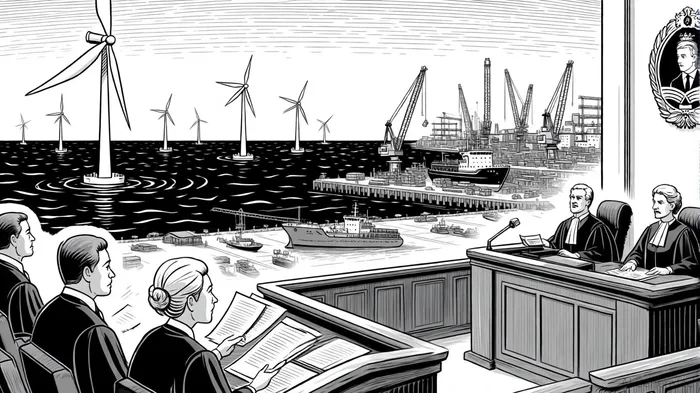
The offshore wind industry has long been a poster child for the promise of clean energy, but its path is anything but smooth. Recent developments in the United States—particularly the legal battle over Ørsted's Revolution Wind project—highlight the fragility of regulatory frameworks and the critical need for strategies to mitigate risk. As the Trump administration's stop-work order on the project faces judicial scrutiny, the case offers a masterclass in how developers and states can leverage legal tools to protect investments and restart stalled projects.
The Revolution Wind Saga: A Case Study in Regulatory Volatility
Ørsted's Revolution Wind project, an 80% complete $5 billion venture off the coast of Rhode Island, was abruptly halted in August 2025 by the Trump administration, which cited vague national security concerns[1]. The project, which had undergone nine years of environmental reviews and received final federal approval in 2023[2], became a lightning rod for debates over executive overreach and the politicization of energy policy. According to a report by Reuters, the administration's claims about radar interference and “swarm drone attacks” lacked concrete evidence, drawing sharp criticism from retired military officials and lawmakers[3].
The legal response was swift. Ørsted and its partner, Skyborn Renewables, filed a lawsuit in the U.S. District Court for the District of Columbia, arguing that the stop-work order violated the Outer Continental Shelf Lands Act (OCSLA) and the Administrative Procedure Act (APA)[4]. Meanwhile, Rhode Island and Connecticut—states that stand to gain 350,000 homes' worth of clean energy from the project—sued separately, framing the delay as an existential threat to their climate goals and grid reliability[5]. A September 17 filing by Rhode Island's attorney general underscored the urgency: the project must restart by late September to avoid losing power purchase agreements and incurring $1 billion in cancellation liabilities[6].
Legal Frameworks as a Shield Against Regulatory Whims
The Revolution Wind case underscores the importance of robust legal frameworks in insulating projects from arbitrary political decisions. OCSLA, which governs offshore energy development, requires federal agencies to act in the public interest and adhere to procedural rigor[7]. Similarly, the APA mandates that agencies base decisions on reasoned explanations and evidence—a standard the Trump administration's opaque rationale appears to have failed.
According to a Harvard Law School analysis, the lawsuits are testing the boundaries of executive authority in energy policy[8]. If the courts side with Ørsted and the states, the ruling could establish a precedent that limits future administrations' ability to unilaterally halt projects without due process. This would be a critical win for regulatory risk mitigation, offering developers a legal pathway to challenge stop-work orders and restart stalled ventures.
Financial Implications: The Cost of Uncertainty
The stakes extend beyond legal theory. Ørsted's daily losses of $2 million[9] and the potential for $1 billion in breakaway costs[10] illustrate the financial toll of regulatory instability. For investors, such volatility raises red flags. A BloombergNEF report notes that offshore wind's global pipeline has already shrunk by 15% in 2025 due to policy uncertainty, with developers increasingly seeking contractual safeguards and restructured agreements[11].
Yet the Revolution Wind case also offers a blueprint for resilience. By combining state-level advocacy with federal litigation, Ørsted and its partners have demonstrated how multi-pronged legal strategies can pressure regulators to act transparently. The involvement of Rhode Island and Connecticut—states with binding clean energy targets—adds a layer of political accountability, as governors and legislators face public backlash for delaying climate progress.
Broader Lessons for the Industry
The Revolution Wind saga is not an isolated incident. The Trump administration's broader crackdown on offshore wind—including attempts to revoke permits for the New England Wind and SouthCoast Wind projects[12]—has created a climate of fear among developers. However, the legal challenges mounted by Ørsted and the states suggest a path forward: leveraging procedural laws to force accountability and using state-level partnerships to amplify political leverage.
For investors, the lesson is clear: regulatory risk is inevitable, but it can be managed. Projects in politically sensitive jurisdictions should prioritize early-stage legal due diligence, secure state-level commitments, and structure contracts to include clauses that allow for renegotiation in the face of policy shifts. As the offshore wind industry matures, the ability to navigate regulatory turbulence will separate winners from losers.
Conclusion: A New Era of Resilience
The Revolution Wind case is a microcosm of the broader struggle between short-term political agendas and long-term energy transitions. While the Trump administration's actions have exposed vulnerabilities in the U.S. regulatory system, the legal pushback by Ørsted and the states has also revealed tools for resilience. For investors, the takeaway is twofold: first, regulatory risk is a reality that must be priced into every project; second, the right legal and political strategies can turn that risk into an opportunity.
As the courts weigh in on this landmark case, one thing is certain: the offshore wind industry's ability to withstand—and even thrive in—turbulent regulatory environments will define its future.







Comentarios
Aún no hay comentarios