
Office Sector Revitalization: Institutional Capital Allocation and Value Creation in Commercial Real Estate
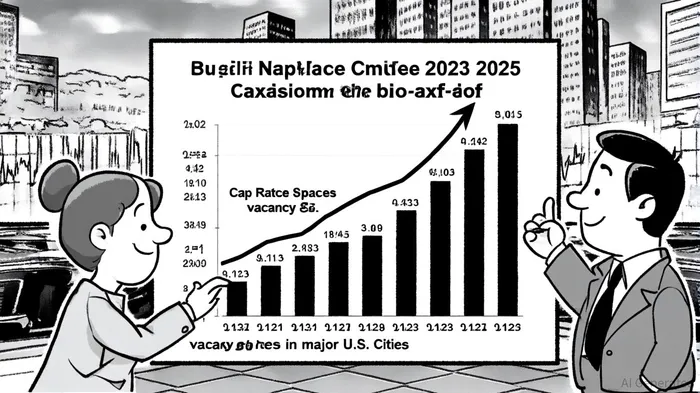
The commercial real estate office sector, long battered by pandemic-era disruptions and shifting work norms, is entering a pivotal phase of recalibration. Institutional investors, once cautious in their allocations, are now recalibrating their strategies to capitalize on a market poised for selective recovery. This shift is driven by a confluence of factors: a 40% decline in office asset values since their peak[2], a 200+ basis point expansion in cap rates[2], and a narrowing bid-ask gap signaling renewed buyer confidence[3]. As the sector transitions from distress to opportunity, the interplay between capital allocation and value creation is reshaping the landscape.
Institutional Capital Allocation: From Caution to Cautious Optimism
Institutional investors have historically viewed office real estate as a stable, income-generating asset. However, the 2023 downturn—marked by a 10% average reduction in CRE allocations[2]—forced a reevaluation. Despite this, 70% of investors surveyed by CBRECBRE-- plan to increase their CRE holdings in 2025[4], reflecting a nuanced pivot toward high-quality assets in resilient markets. Dallas and Miami/South Florida, for instance, are attracting attention due to their strong fundamentals and affordability[4].
This reallocation is not a return to pre-pandemic exuberance but a strategic recalibration. The 2024 Institutional Real Estate Allocations Monitor notes that target allocations to real estate have risen nearly 200 basis points since 2013, with a weighted average of 10.8% in 2024, expected to dip slightly to 10.7% in 2025[1]. This marginal decline underscores a preference for liquidity, with 39% of institutions now favoring listed REITs[1]. The shift highlights a broader trend: investors are prioritizing flexibility in a low-yield environment, where active management and asset selection are critical to outperformance[5].
Value Creation: Core, Core-Plus, and Value-Add Strategies
The office sector's valuation reset has created fertile ground for value creation. Cap rate expansion—driven by a 40% drop in asset prices[2]—has generated attractive yield spreads, particularly for premium properties. For example, prime office spaces in Dallas-Fort Worth (DFW) command an average asking rent of $32.15 per square foot, with a market cap rate of 8.8%[1], far outpacing non-prime assets. This disparity incentivizes investors to adopt tiered strategies:
- Core Investments: These focus on fully leased, high-credit-tenant properties, offering stable cash flows and capital preservation. For instance, newly constructed multifamily or industrial assets in secondary markets provide a buffer against volatility[5].
- Core-Plus and Value-Add: These strategies involve operational enhancements or renovations to drive rent growth. In DFW, where older 1980s-era buildings struggle with high vacancies[1], investors are retrofitting properties with modern amenities to attract tech firms and remote-first companies.
- Opportunistic Plays: Distressed redevelopments and mixed-use projects in high-growth areas are gaining traction. Miami's South Florida market, for example, is seeing demand for hybrid office-living spaces as companies seek to attract talent in a competitive labor market[4].
Regional Case Studies: Dallas-Fort Worth and Beyond
The DFW market exemplifies the sector's duality. While the overall vacancy rate hit 19.6% in Q1 2025[2], submarkets like Collin County are bucking the trend. High-quality suburban offices there are attracting out-of-market companies, drawn by DFW's affordability and air connectivity[1]. Similarly, Miami's office market is benefiting from a surge in remote work adoption, with firms relocating to the region to tap into its international talent pool[4].
These regional dynamics underscore a broader theme: the office sector's recovery is not uniform. Investors are increasingly adopting a granular approach, targeting submarkets with strong demographic tailwinds and infrastructure. This strategy aligns with MSCI's 2025 outlook, which emphasizes active management as a key driver of returns in a fragmented market[5].
The Road Ahead: Discipline and Selectivity
While the office sector's fundamentals are improving, risks remain. Vacancy rates in major cities like San Francisco (22.65% in Q2 2024[3]) highlight the need for caution. However, the market's strategic inflection point offers a unique opportunity for disciplined investors. By leveraging cap rate expansion, focusing on premium assets, and deploying targeted capital, institutional investors can navigate the sector's challenges while positioning for long-term gains.
As CBRE's 2025 U.S. Investor Intentions Survey notes, the key to success lies in balancing risk and reward. With interest rates stabilizing and transactional activity rebounding[5], the office sector is no longer a pariah but a potential cornerstone of diversified CRE portfolios.





Comentarios
Aún no hay comentarios