
Odesa Pipeline Gamble: Hungary's Geopolitical Stakes and Energy Crossroads
The revival of Hungary's mothballed Odesa-Brody pipeline stands as one of the most consequential geopolitical plays in Europe's energy landscape. For MOL, Hungary's state-backed energy giant, the $1 billion project to resurrect the 1,200-km pipeline represents a high-risk, high-reward bid to break free from Russian oil dominance—a move that could redefine Central Europe's energy independence or become a costly misstep in a war-torn region.
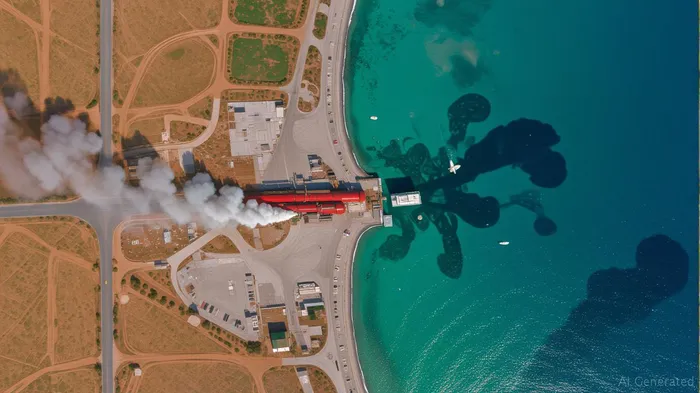
The Pipeline's Geopolitical Tightrope
The Odesa-Brody pipeline, dormant since 2010, was once a lifeline for Soviet-era crude shipments. Today, its revival hinges on overcoming three existential challenges:
1. Technical Rehabilitation: The pipeline requires $1 billion in repairs, with funding delayed by EU bureaucratic hurdles and geopolitical instability.
2. Geopolitical Minefields: Russian attacks on Odesa's port infrastructure and mined Black Sea routes threaten operations. Hungary's Prime Minister Viktor Orbán must also navigate tensions with Ukraine—a partner critical to the project but a nation Hungary opposes in its EU accession bid.
3. EU Sanctions Deadlines: The bloc's 2027 deadline to phase out Russian oil imports looms large. Failure to meet this timeline could force Hungary into noncompliance penalties—or worse, reliance on Russian oil longer than its neighbors.
Energy Diversification: A Two-Edged Sword
For MOL, the pipeline's success would unlock access to Caspian Basin crude (e.g., Azerbaijani oil) and position Hungary as a transit hub for non-Russian energy. This shift could:
- Reduce Russian Dependence: Hungary currently sources 60% of its oil from Russia. The pipeline's 400,000-barrel/day capacity could cut this dependency by half.
- Boost Regional Influence: A functional Odesa-Brody pipeline would rival Russia's Druzhba pipeline and solidify Hungary's role in EU energy security.
But risks abound. The Croatian Janaf pipeline—a key alternative route—has been accused of overcharging and underperforming, while Ukraine's war-torn infrastructure remains vulnerable to sabotage.
Investment Implications: Playing with Fire
MOL: A Leveraged Bet on Geopolitical Success
MOL's stock () has lagged peers amid execution risks. Investors betting on the pipeline's success must weigh:
- Upside: If operational by 2025, MOL could dominate Central European refining and logistics, attracting ESG investors as it pivots to low-carbon projects (e.g., geothermal, carbon capture).
- Downside: Delays or geopolitical fallout could leave MOL overleveraged, with $500 million already spent on refinery upgrades and rising debt.
Hungary's Sovereign Debt: A Barometer of EU Relations
Hungary's 10-year bonds () reflect investor confidence in Orbán's diplomatic balancing act. A breakthrough with the EU on energy compliance or sanctions could tighten spreads, while a political rupture (e.g., renewed Russia-Ukraine escalation) would widen them.
Energy Infrastructure Plays: Beyond MOL
The pipeline's success could boost firms like:
- Croatia's INA Group (CRO:INA): Operator of the Janaf pipeline, though its capacity constraints are a wild card.
- Polish Oil & Gas (PKN ORLEN) (WSE:PKN): A potential partner in pipeline extensions to Poland.
- Shipping Logistics Firms: Companies handling Black Sea crude transport (e.g., Maersk) may see demand rise.
The Political Wildcard: Orbán's Re-election Gambit
Orbán's 2025 re-election campaign hinges on appeasing voters with anti-Ukrainian rhetoric while complying with EU energy mandates. A diplomatic misstep—such as halting pipeline talks with Kyiv—could derail the project and trigger EU sanctions. Investors must monitor:
- Orbán's rhetoric on Ukraine's EU membership.
- Progress on EU funding approvals for the pipeline.
- Russian military activity near Odesa.
Investment Strategy: Navigating the Crossroads
- Aggressive Investors: Buy MOL shares now if you believe geopolitical risks are overblown. Monitor Q3 2025 for funding milestones.
- Defensive Plays: Short Hungary's sovereign debt if EU relations sour; go long if sanctions compliance is achieved.
- Sector Diversification: Pair MOL with broader energy infrastructure ETFs (e.g., XLE) to hedge pipeline-specific risks.
Conclusion: A Gamble with Continent-Wide Stakes
The Odesa-Brody pipeline is more than an energy project—it's a referendum on Hungary's future in Europe. Success could make MOL a linchpin of the EU's energy transition and stabilize Central Europe's energy supply. Failure risks leaving Hungary isolated, indebted, and dependent on Russian oil. For investors, this is a test of patience and geopolitical acumen. The next 18 months will decide whether the pipeline becomes a bridge to energy independence or a monument to overreach.







Comentarios
Aún no hay comentarios