
Octane's Captive-as-a-Service Model and Its Strategic Implications for RV Financing Growth
The recreational vehicle (RV) financing sector is undergoing a seismic shift, driven by fintech innovations that are redefining traditional asset-light retail finance models. At the forefront of this transformation is Octane, a fintech leader leveraging its Captive-as-a-Service (CaaS) model to disrupt the RV financing landscape. By combining digital-first solutions, risk management expertise, and scalable capital access, Octane is not only streamlining the customer experience but also unlocking new growth avenues for OEMs and dealers. This analysis explores how Octane's CaaS model aligns with broader fintech-driven disruptions in asset-light finance and why it represents a compelling investment opportunity in the evolving RV sector.
The CaaS Model: A Fintech-Driven Paradigm Shift
Octane's CaaS model eliminates the high costs and operational complexity of establishing a traditional captive finance company, enabling OEMs and dealers to offer branded financing solutions with minimal overhead. This approach allows partners to tailor terms and integrate technology platforms while leveraging Octane's expertise in risk management and capital markets. For example, in 2024, Octane completed a $126 million asset-backed securitization entirely backed by RV and marine collateral, featuring multiple AAA-rated note classes-a testament to its ability to attract institutional capital and maintain an asset-light balance sheet according to market analysis.
The model's scalability is evident in Octane's rapid market adoption. Since entering the RV sector in 2022, the company has doubled its RV loan originations year-over-year, with projections of another doubling in 2024. This growth is underpinned by a digital ecosystem that supports end-to-end financing, from initial customer inquiries to post-sale servicing, enhancing both dealer profitability and customer satisfaction according to company data. By reducing friction in the financing process, Octane is addressing a critical pain point in the RV industry, where traditional financing often involves lengthy approval times and opaque terms.
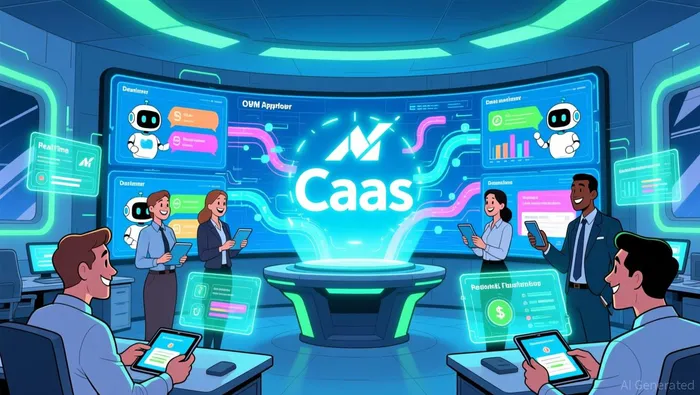
Strategic Implications: Fintech's Role in Reshaping Asset-Light Finance
Octane's success reflects broader fintech trends reshaping asset-light retail finance. Key drivers include embedded finance, AI-driven personalization, and collaborative ecosystems between fintechs and traditional institutions.
Embedded Finance and Digital Integration
Embedded finance-where financial services are integrated directly into non-financial platforms-is a cornerstone of Octane's strategy. By embedding its CaaS model into dealer and OEM workflows, Octane enables real-time loan approvals and seamless customer journeys. This mirrors industry-wide shifts toward embedded solutions, such as P2P lending and robo-advisors, which prioritize user-centric design and instant access according to industry reports. For RV financing, this means dealers can offer competitive rates and flexible terms without relying on third-party lenders, reducing transaction costs and improving margins according to company data.AI and Hyper-Personalization
Fintechs like Octane are leveraging AI to deliver hyper-personalized financial products. In the RV sector, this could involve dynamic pricing models that adjust interest rates based on real-time credit assessments or AI-powered chatbots that guide customers through financing options. Such innovations align with 2025 market trends, where AI-driven personalization is expected to dominate fintech growth according to market forecasts. Octane's ability to integrate these technologies into its CaaS platform positions it to capture a significant share of the RV financing market, which is projected to expand as demand for recreational assets rises.Collaborative Ecosystems
The fintech landscape is increasingly characterized by "coopetition"-collaborations between startups and traditional institutions. Octane's partnership with Adventure Lifestyle, a powersport and marine dealer group, exemplifies this trend. By launching Adventure Lifestyle Finance, the collaboration enabled the dealer to offer branded financing solutions while leveraging Octane's capital markets expertise. This model mirrors broader industry shifts, where traditional banks are partnering with fintechs to access agile technology and data-driven insights according to financial research. For investors, such partnerships highlight the potential for cross-sector growth and the de-risking of market entry.
Market Validation and Financial Resilience
Octane's financial performance underscores the viability of its CaaS model. The company's Series F funding round, which raised $100 million in equity capital, reflects strong investor confidence in its ability to scale according to company announcements. Additionally, its asset-backed securitizations-such as the $219 million OCTL 2025-RVM1 transaction-demonstrate its capacity to attract institutional capital while maintaining an asset-light structure according to financial reports. These financial metrics align with fintech trends emphasizing liquidity and scalability, as traditional asset-heavy models face scrutiny in a low-interest-rate environment according to industry analysis.
Conclusion: A Fintech-Driven Future for RV Financing
Octane's CaaS model is a microcosm of fintech's transformative impact on asset-light retail finance. By digitizing the RV financing process, reducing operational friction, and enabling hyper-personalized solutions, Octane is not only addressing industry pain points but also setting a new standard for efficiency and customer experience. For investors, the company's strategic alignment with 2025 fintech trends-ranging from embedded finance to AI-driven personalization-positions it as a key player in the evolving RV sector. As the market continues to prioritize agility and innovation, Octane's CaaS model offers a compelling blueprint for sustainable growth in an increasingly digital-first financial ecosystem.







Comentarios
Aún no hay comentarios