
Ocean-Based Carbon Removal: A New Frontier in Scalable Climate Tech and Industrial Synergy
The global climate crisis demands solutions that transcend traditional boundaries, and ocean-based carbon dioxide removal (CDR) is emerging as a transformative force. With its potential for scalability, integration with existing industrial infrastructure, and cost-negative economic models, this sector is redefining the landscape of climate technology. For investors, the intersection of innovation and industrial synergy presents a compelling opportunity to align financial returns with planetary impact.
Strategic Infrastructure Integration: Bridging the Gap Between Innovation and Industry
Ocean-based CDR technologies are no longer confined to theoretical research. Companies like Captura and Ebb Carbon are pioneering methods that integrate seamlessly with existing industrial systems. Captura's electrodialysis approach, for instance, leverages renewable energy to remove CO₂ from seawater, a process that can be co-located with offshore wind farms. Similarly, Ebb Carbon's electrochemical systems are designed to operate alongside desalination infrastructure, reducing costs and energy demands while mitigating ocean acidification according to industry analysis.
Partnerships are accelerating this integration. Captura's collaboration with Equinor in Hawaii demonstrates how oil and gas firms can pivot toward decarbonization by adopting CDR technologies according to industry reports. Meanwhile, Ebb Carbon's decade-long agreement with Microsoft to remove 350,000 tonnes of CO₂ underscores the growing corporate appetite for scalable solutions as data shows. These examples highlight a critical trend: ocean CDR is not a standalone technology but a modular component of broader industrial ecosystems.
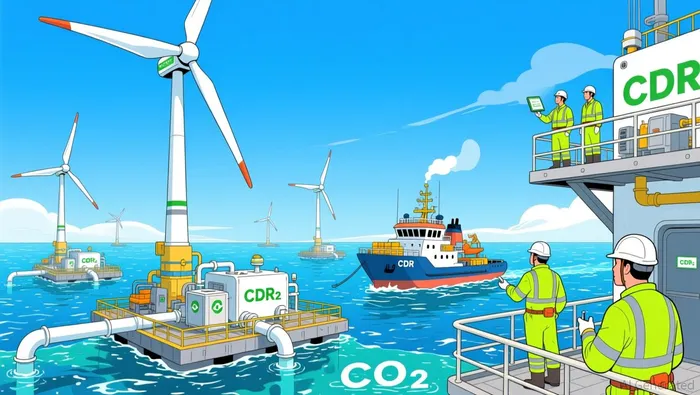
Cost-Negative Potential: Beyond Carbon Credits to Revenue-Generating Synergies
The economic viability of ocean-based CDR hinges on its ability to generate revenue beyond carbon credits. Electrochemical CDR, in particular, offers a dual pathway: removing CO₂ while producing valuable by-products like green hydrogen. Equatic, a developer of seawater electrolysis systems, has secured a pre-purchase agreement with Boeing to deliver 2,100 metric tons of carbon-negative hydrogen alongside CO₂ removal according to industry analysis. This model transforms CDR from a cost center into a revenue stream, with hydrogen applications in energy, transportation, and industrial processes.
Moreover, advancements in ocean alkalinity enhancement and macroalgae cultivation are unlocking cost advantages. By mimicking natural processes, these methods reduce energy inputs and leverage existing marine infrastructure. For example, Gigablue's substrate technology sequesters CO₂ in ocean sediments while fostering phytoplankton growth, creating a self-reinforcing cycle of carbon removal according to research. Such innovations align with McKinsey's assertion that ocean CDR could achieve gigaton-scale removals if stakeholders address regulatory and technical barriers as McKinsey reports.
Market Dynamics and Investment Opportunities
The ocean CDR market is projected to grow at a robust CAGR of 28% through 2035 according to market analysis, driven by corporate sustainability commitments and policy frameworks. Startups like SeaO2 and Propeller-a $100M venture fund focused on ocean CDR-are attracting capital by demonstrating clear additionality and transparency according to industry reports. Meanwhile, governments are incentivizing deployment: China's South China Sea sequestration project and Norway's North Sea initiatives signal a shift toward large-scale marine storage according to industry analysis.
However, challenges remain. The high upfront costs of marine CO₂ sequestration and the need for standardized monitoring protocols could slow adoption according to industry analysis. Yet, the emergence of cost-negative models and industrial partnerships suggests these hurdles are surmountable. For instance, the integration of CDR with renewable energy infrastructure-such as wave or hydropower-reduces energy costs and enhances scalability according to technical reports.
Conclusion: A Strategic Imperative for Investors
Ocean-based CDR represents a unique convergence of environmental necessity and economic opportunity. For investors, the key lies in identifying projects that demonstrate both technological scalability and industrial integration. Companies leveraging electrochemical processes, hydrogen co-production, or macroalgae cultivation are particularly well-positioned to capitalize on this growing market. As regulatory frameworks mature and corporate demand for durable carbon removal intensifies, the sector is poised to deliver returns while addressing one of the most pressing challenges of our time.
The time to act is now. With the right strategic investments, ocean-based CDR can evolve from a nascent technology into a cornerstone of global climate restoration.





Comentarios
Aún no hay comentarios