
OCBC Navigates Margin Pressures: Assessing Long-Term Resilience Amid Leadership Transition and Digital Shift
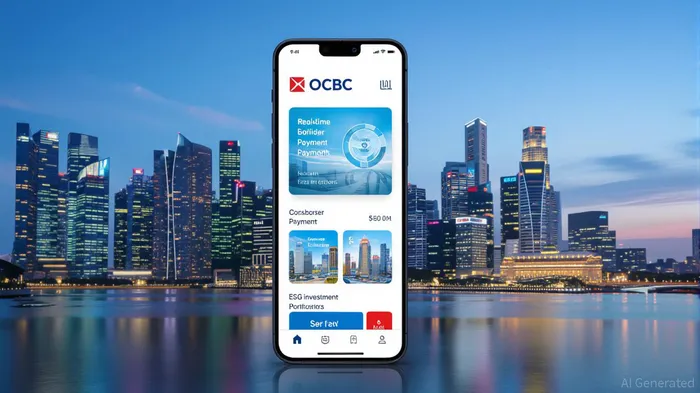
OCBC Bank's 6% year-on-year profit decline in H1 2025 may raise eyebrows, but a closer look reveals a company strategically positioning itself for long-term resilience. The drop in net profit—driven by a 6% contraction in net interest income and a 28-basis-point NIM compression to 1.92%—reflects the broader normalization of global interest rates. Yet, this is not a sign of weakness but a recalibration in a landscape where traditional banking margins are under pressure.
The Margin Challenge: A Temporary Headwind
The decline in NIM is a direct consequence of the post-pandemic rate environment, where central banks have begun to unwind aggressive tightening cycles. For OCBC, a bank with a significant exposure to fixed-income lending and deposits, this shift has squeezed earnings. However, the bank's ability to grow non-interest income by 5%—led by a 24% surge in fee revenue—demonstrates its capacity to diversify revenue streams. This pivot toward fee-driven growth, particularly in areas like wealth management and digital services, is a critical buffer against margin erosion.
Investors should also note OCBC's disciplined cost management. A 2% year-on-year reduction in operating expenses and a cost-to-income ratio of 39.7% highlight operational efficiency. While these metrics may not seem flashy, they are the bedrock of long-term stability, especially in a low-growth environment.
Leadership Transition: A Strategic Catalyst
The 2025 leadership transition from Helen Wong to Tan Teck Long is not just a change in personnel but a strategic pivot. Tan, who will assume the CEO role in January 2026, has already demonstrated a knack for driving digital innovation and sustainable finance. His tenure as head of Global Wholesale Banking saw the digitization of SME onboarding for 90% of small businesses in Singapore and Malaysia—a move that not only boosted efficiency but also deepened customer loyalty.
Tan's focus on cross-border fintech partnerships, particularly in Greater China, is equally compelling. With existing collaborations like the real-time cross-border payment solution with Ant International, OCBC is tapping into markets where digital adoption is surging. This aligns with the broader ASEAN fintech boom, a sector projected to grow at a 25% CAGR through 2030.
ESG as a Growth Engine
OCBC's ESG initiatives under Tan are no longer just compliance-driven—they're profit centers. The bank's sustainable finance division has grown operating profit by 40% since 2022, fueled by demand for green loans and climate-resilient infrastructure projects. By setting net-zero targets for six key industries, OCBC is positioning itself as a leader in a sector where regulatory and consumer demand are in lockstep.
Investors should also watch the bank's ESG-linked loan portfolio, which now accounts for 15% of its total loans. This not only diversifies risk but also taps into the $30 trillion global ESG investment market. For OCBC, this is a win-win: it meets stakeholder expectations while generating returns.
The Road Ahead: Buy, Hold, or Watch?
While the near-term profit decline is a reality, OCBC's long-term fundamentals remain intact. Its NPL ratio of 0.9% and a 10% increase in total allowances for credit losses (to S$114 million) show a conservative approach to risk management. Meanwhile, the leadership transition is a calculated move to accelerate digital and ESG growth.
For investors, the key question is timing. OCBC's shares trade at a forward P/E of 10x, a discount to its regional peers, reflecting margin concerns. However, the bank's strategic initiatives—particularly in fintech and ESG—suggest this discount may not last. A buy is justified for those with a 3–5 year horizon, but patience is required.
Final Takeaway
OCBC's 6% profit decline is a symptom of macroeconomic forces, not a failure of strategy. The bank's leadership is actively addressing margin pressures through digital innovation, fee diversification, and ESG integration. For investors willing to look beyond short-term volatility, OCBC presents a compelling case of a traditional bank reinventing itself for a digital, sustainable future.
Investment Advice: Consider a cautious buy with a focus on long-term growth. Monitor the bank's Q3 2025 results for signs of NIM stabilization and continued ESG momentum.







Comentarios
Aún no hay comentarios