
NYSE Order Imbalance as a Leading Indicator of Market Sentiment
The New York Stock Exchange (NYSE) has long been a cornerstone of global equity markets, but its real-time order imbalance data offers more than just liquidity insights—it serves as a leading indicator of market sentiment for short-term traders. By analyzing discrepancies between buy and sell orders during auctions, traders can anticipate price movements and refine their strategies to capitalize on fleeting inefficiencies.
The Mechanics of Order Imbalance and Market Sentiment
Order imbalance occurs when the volume of buy or sell orders in a security significantly outweighs the opposite side during auction periods. According to a report by the NYSE, these imbalances are available in real-time across exchanges like NYSE, NYSE American, and NYSE Arca [1]. Academic research underscores their predictive power: imbalances at the bid and ask queues in the Limit Order Book (LOB) correlate linearly with price movements, particularly in thinner markets where liquidity is scarce [3]. For instance, a 1% increase in buy imbalance may drive a 0.5% upward price adjustment, while a similar sell imbalance could depress prices by the same magnitude.
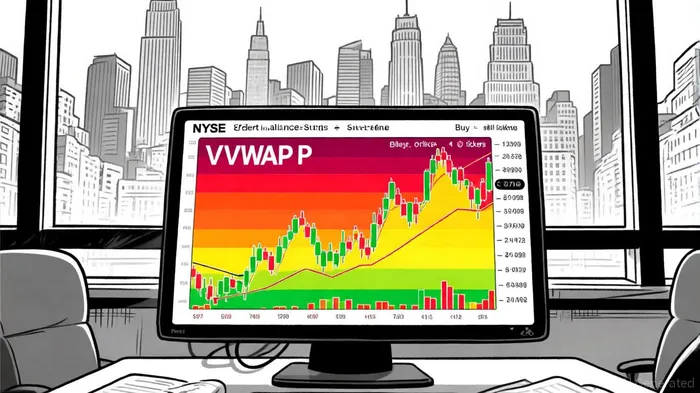
This inverse relationship with market depth is critical. In markets with low order book depth, even minor imbalances can amplify price pressures, as market makers adjust their inventory to hedge exposure [3]. Traders leveraging this dynamic often monitor metrics like Order Book Imbalance (OBI) and Volume-Weighted Average Price (VWAP) to identify entry points. A sophisticated strategy might trigger a buy signal when OBI indicates strong demand and the price is below VWAP, while selling when supply pressure dominates and the price exceeds VWAP [6].
Practical Strategies: Entry, Exit, and Risk Management
Short-term strategies rooted in order imbalance require precise execution rules. A study analyzing NYSE data found that daily imbalances exhibit positive autocorrelation, meaning a buy-heavy day is likely followed by another [2]. This insight informs a simple yet effective strategy: buying at the ask when the previous day's imbalance is positive and selling at the bid when it is negative. Such a system generated statistically significant returns in backtests, as lagged imbalances often foreshadowed price trends [2].
Platforms like TradeStation enable traders to automate these strategies by combining real-time data with customizable entry/exit conditions. For example, an entry rule might activate when OBI exceeds a predefined threshold (e.g., 10% buy imbalance), while exit rules could include profit targets tied to VWAP or stop-loss orders to limit downside risk [1]. Advanced practitioners also integrate machine learning models to refine predictive accuracy, adapting to evolving market conditions [6].
Risk management remains paramount. Position sizing, diversification across tickers, and stop-loss orders are essential to mitigate adverse price swings. For instance, a trader might cap exposure to any single security at 5% of the portfolio and use trailing stops to lock in gains during favorable momentum [5].
Performance Metrics and Advanced Tools
Evaluating the efficacy of order imbalance strategies demands rigorous metrics. While direct Sharpe ratios for NYSE-based strategies are not widely published, high-frequency trading (HFT) analogs provide benchmarks. These strategies often report risk-adjusted returns using metrics like realized spread capture and fill rates, which measure execution efficiency and market impact [4]. A GLM linear regression model applied to order flow imbalance data has demonstrated strong in-sample and out-of-sample R² values, underscoring its predictive robustness [2].
For traders seeking deeper insights, tools like the NYSE's closing auction imbalance analysis tool offer granular data on order book dynamics [1]. Combining this with heat maps and volume profile charts can reveal hidden patterns, such as recurring imbalances during specific auction windows [6].
Conclusion: A Strategic Edge in Short-Term Trading
NYSE order imbalance data is more than a liquidity signal—it is a sentiment barometer that short-term traders can exploit. By integrating real-time imbalances with advanced analytics, traders can anticipate price movements, optimize execution, and manage risk with precision. As markets grow increasingly algorithmic, the ability to decode order book dynamics will separate successful strategies from the noise.
For those willing to invest in the infrastructure—real-time data feeds, low-latency execution, and adaptive models—order imbalance trading offers a compelling edge in the high-stakes arena of short-term market participation.







Comentarios
Aún no hay comentarios