
NYC's Political Transition and the Future of Rent-Stabilized Housing: Implications for Real Estate and Public Housing Investors
The Rent Guidelines Board: A Power Struggle with Market Implications
The 2025 RGB decisions have already demonstrated their capacity to influence the market. According to a report by CSSNY, , . This growth, driven by higher rent collections and government support programs, has bolstered investor returns. However, the same report notes a divergence in property valuations: while rental income has risen, sale prices for rent-stabilized buildings have declined, partly due to the 2019 HSTPA, which aligned sales prices with actual rent rolls.
This duality-higher operating income but lower asset values-reflects a broader tension in the market. Investors must weigh the immediate benefits of stabilized rental income against the long-term risks of regulatory overreach, which could further depress property values or deter new construction. The RGB's political composition, though not explicitly detailed in recent public records, appears to favor landlords, as evidenced by the aggressive NOI growth. Yet, without transparency on member affiliations, predicting future policy shifts remains speculative.
Rent Freeze Proposals: A Double-Edged Sword
Proposed rent freeze policies, particularly those championed by mayoral candidate , . While this could provide short-term relief for low-income households, experts warn of unintended consequences. A Fox Business analysis highlights that freezes may discourage real estate investment, exacerbate housing shortages, and drive up market-rate rents by reducing turnover.
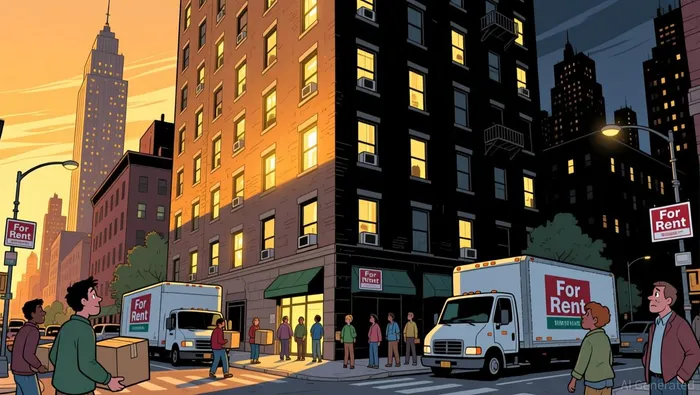
The economic logic is clear: landlords facing restricted returns may withdraw units from the market or shift costs to unregulated tenants. For instance, rising insurance and maintenance expenses-already a burden for many stabilized landlords-could force property owners to take units offline or pass costs to market-rate renters. This dynamic risks creating a two-tiered system where stabilized tenants gain affordability at the expense of market-rate residents and developers.
Moreover, the long-term sustainability of rent freezes is questionable. As noted in by Reason.org, policies that prioritize short-term affordability over supply-side solutions (e.g., zoning reforms, construction incentives) often backfire, fueling inflation and reducing housing quality. For investors, this means that while rent freezes may temporarily protect cash flow, they could erode the value of future development opportunities and strain the overall housing ecosystem.
Investor Strategies in a Regulated Market
Amid this uncertainty, savvy investors are adapting. American Strategic Investment Co. has prioritized debt reduction and portfolio optimization. By completing a consensual foreclosure on 1140 Avenue of the Americas and marketing properties like 196 Orchard for sale, . This strategy underscores a broader trend: investors are hedging against regulatory risks by focusing on liquidity, cost control, and asset diversification.
However, such strategies are not without challenges. The third-quarter 2025 revenue decline. For public housing investors, the key lies in balancing short-term gains with long-term resilience, ensuring portfolios remain adaptable to regulatory changes.
Conclusion: Navigating the Crossroads of Policy and Profit
New York City's rent-stabilized housing market stands at a crossroads. The 2025 RGB's landlord-friendly decisions have temporarily boosted investor returns, but the push for rent freezes and political uncertainty threaten to disrupt this equilibrium. For investors, the path forward requires a dual focus: leveraging current regulatory tailwinds while preparing for potential headwinds.
The risks are clear-reduced construction incentives, asset devaluation, and strained tenant-landlord relations. Yet, opportunities exist for those who can navigate the regulatory maze. By prioritizing liquidity, advocating for supply-side reforms, and diversifying portfolios, investors can mitigate the fallout of political transitions. As the debate over rent control intensifies, the ability to adapt will separate successful investors from those left exposed to the volatility of a market in flux.







Comentarios
Aún no hay comentarios