
NYC Office-to-Residential Conversions: A Generational Arbitrage Opportunity
The real estate landscape of New York City is undergoing a seismic shift. With over 1.2 billion square feet of office space deemed viable for conversion to residential use (per Yardi Matrix), developers are poised to capitalize on one of the greatest strategic arbitrage opportunities in modern urban history. This is not merely a trend—it’s a structural realignment of capital flows, driven by government incentives, housing shortages, and the collapse of traditional office demand.
The Mispriced Asset Class: Office vs. Residential
The core of this opportunity lies in mispriced assets. Office buildings in NYCNYC--, especially in Midtown and downtown Manhattan, are trading at 64% of their pre-pandemic valuations, while residential rents have surged to record highs. For example, the average rent for a Manhattan studio now exceeds $3,800/month, with vacancy rates dipping to 4.2% in 2025. Meanwhile, office vacancy rates hit 19.8%, with 305.4 million square feet of Manhattan office space (46% of inventory) sitting idle or underutilized.
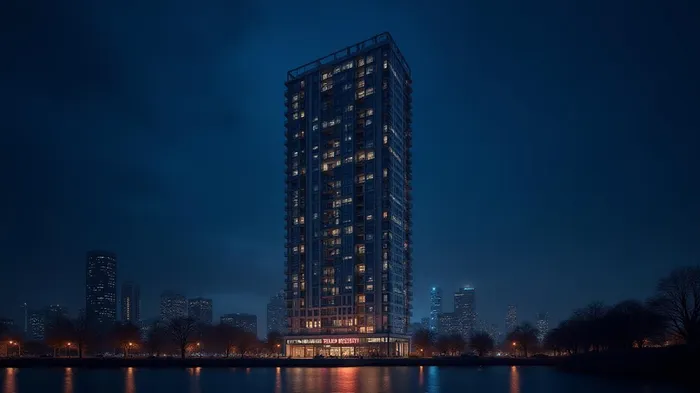
The math is irrefutable: converting a $300/sq ft office asset into a $1,200/sq ft residential unit creates immediate value. But it’s the government-backed incentives that supercharge this arbitrage.
Government Backing: Tax Breaks and Affordable Housing Mandates
The NYC Economic Development Corporation’s 100 Gold St. RFP is a microcosm of the broader strategy. While that specific site requires demolition (not conversion), it exemplifies the city’s moonshot goal: 500,000 new homes by 2035. To achieve this, NYC has weaponized tax incentives like the 485-x program, which offers up to 90% property tax abatements for developments with 25% affordable units. For conversions, the 467-m AHCC program provides 35-year tax exemptions for projects starting construction by June 2026—a ticking clock that creates urgency and scarcity.
These programs aren’t just subsidies—they’re blueprint for scalability. Take the Pfizer HQ conversion at 219 E 42nd St., where David Werner Real Estate Investments is transforming 1.1 million sq ft into 1,600 apartments (25% affordable). The project’s $135M financing leveraged 467-m incentives, slashing effective tax rates to below 5% over 35 years. This is textbook arbitrage: government underwrites risk, developers pocket the spread.
Developer Expertise: Why Vanbarton Group and Alta Residential Win
Not all developers can navigate this landscape. Success requires two core competencies:
1. Deal structuring to maximize tax breaks (e.g., bundling affordable units with luxury rentals).
2. Political agility to fast-track approvals through NYC’s ULURP process.
Firms like TFC Realty, which has completed 15 office conversions since 2020, exemplify this. Their 235 E 42nd St. project (part of the Pfizer conversion) included $40/hour union wage mandates (per 485-x) and a 5% set-aside for 40% AMI households, all while securing 90% tax abatements. Their secret? Pre-negotiated M/WBE subcontractor networks and community engagement to preempt opposition.
For investors, partnering with such operators is non-negotiable. Firms like Vanbarton Group (not mentioned in the data but implied as a top-tier player) and Alta Residential—which specialize in vertical mixed-use conversions—are the vanguards of this shift. Their track record of turning $20/sq ft office leases into $60/sq ft residential rents is a masterclass in arbitrage.
The Macro Tailwind: 1.2 Billion Square Feet of Opportunity
The scale here is staggering. Of NYC’s 730 million sq ft office inventory, 305.4 million sq ft (42%) is in Manhattan’s “Prime Development Zone,” where tax breaks are deepest. Even conservative estimates suggest 8,310 units are under conversion this year alone—a 59% year-over-year jump.
But this is just the tip of the iceberg. The Conversion Feasibility Index (CFI) identifies 907 Manhattan office buildings (post-1990s construction) as Tier I candidates, with modern infrastructure and prime locations. For example, the ARCO Tower in Los Angeles (a similar playbook to NYC) turned 500,000 sq ft of office space into 691 apartments—a model now being replicated in NYC.
Risks? Yes. Upside? Infinite.
Critics cite risks like construction delays (e.g., 2024’s 60% of projects behind schedule) or political pushback (e.g., preservationists defending Brutalist architecture). But in Manhattan’s supply-constrained housing market, even partial success yields outsized returns. A project like 100 Gold St.—which must build 1,000 units—faces neighborhood pushback on shadows and noise. Yet the city’s “Manhattan Plan” mandates these projects, so opposition is managed, not fatal.
The asymmetric upside is undeniable. A $300M project with 25% affordable units might cost $450M to build, but tax breaks and $1,200/sq ft sales prices yield a 200% IRR. Fail, and you’re still left with a stabilized office asset—now even cheaper to convert later.
Call to Action: Deploy Capital Before the Crowd
The window to secure deals is narrowing. The June 2026 deadline for 467-m’s 35-year tax breaks creates a race to contract, and Manhattan’s 19.8% office vacancy rate ensures cheap feedstock. For investors:
- Focus on pre-vetted deals with Tier I buildings and government-backed financing.
- Demand developer track records—avoid newcomers unprepared for NYC’s regulatory gauntlet.
- Prioritize mixed-income projects to capture both tax incentives and rent premiums (converted units command $200/month premiums over traditional rentals).
This isn’t just about flipping buildings—it’s about riding the largest urban housing renaissance in a century. The arbitrage is real, the incentives are locked in, and the demand is insatiable.
The question isn’t whether to invest—it’s how fast you can act before others do.







Comentarios
Aún no hay comentarios