
NYC Mayor Mamdani and Gov. Hochul Announce $1.7 Billion Child Care Investment on Mamdani's Eighth Day in Office
New York City Mayor Zohran Mamdani and Gov. Kathy Hochul announced a $1.7 billion investment in child care on Mamdani's eighth day in office. The funding includes free child care for 2-year-olds and a $1.2 billion increase in child care subsidies. The initiative is part of a broader effort to make child care universally accessible in New York City and across the state.
The Trump administration has frozen $10 billion in child care and family assistance funds for five Democratic-led states, including New York. The freeze is justified by the administration as a response to allegations of fraud in state child care programs. HHS Secretary Robert F. Kennedy cited the need for increased oversight in states like Minnesota, where fraud investigations are ongoing.
New York Congressman Mike Lawler, a Republican, has criticized the freeze as a "broad brush" approach. He argued that any fraud should be investigated without suspending funding for critical programs. Lawler represents a swing district and has pushed for more aggressive oversight in New York.
What Are the Implications of the Child Care Funding Freeze?
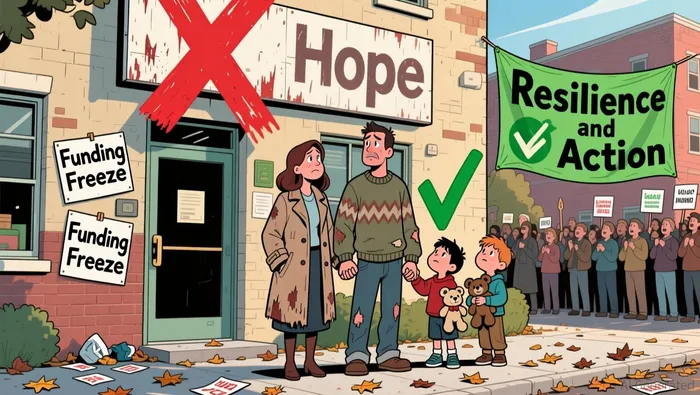
The Trump administration's freeze impacts access to child care subsidies and other social services in five Democratic-led states. These states represent 25% of the U.S. population, with New York being among the most affected. HHS has cited the need for greater compliance with federal requirements but has not provided evidence of fraud in all the impacted states.
New York Governor Kathy Hochul has condemned the freeze, calling it "vindictive" and "cruel." She warned that the move could harm families and children in the state, especially those reliant on federal funding for child care and social services. Hochul pledged to challenge the freeze if formal notice is received.
How Is New York Responding to the Funding Freeze?
Despite the federal freeze, New York is moving forward with its own child care expansion plan. The 2-Care program will offer free child care for 2-year-olds, while the existing 3-K program will be strengthened to provide universal access. Hochul said the state will fully fund the new program for the first two years.
Mamdani has proposed raising taxes on corporations and high-income individuals to fund the universal child care initiative. He also highlighted the economic cost of the child care crisis, estimating it at $20 billion over four years due to mothers leaving the workforce and families relocating.
The state will also establish an Office of Child Care and Early Education to implement the program. This office will oversee the expansion of child care subsidies, workforce support, and quality control.
The federal freeze has created uncertainty for child care providers and families in New York and other affected states. Charity Pallum, a teacher in Minnesota, said her family relies on federal subsidies to afford child care for her twins. If the support is cut, her husband might have to reduce his hours, straining their finances.
What Are Analysts Watching Next?
Analysts are tracking how the federal freeze impacts state-level efforts to expand child care. New York and other affected states may need to find alternative funding sources or adjust their programs to comply with federal requirements. The freeze could also influence upcoming budget negotiations at the state and federal levels.
Political tensions are rising as the issue becomes more prominent. The freeze is seen as a political move by the Trump administration to target Democratic-led states. Hochul and other state leaders have vowed to resist the cuts, potentially leading to legal challenges.
The child care funding freeze is also part of a broader administration strategy to address perceived fraud in social service programs. However, critics argue that the freeze lacks evidence in many cases and could harm low-income families. The debate highlights the growing divide over social welfare policy in the U.S.
The future of child care funding will likely depend on upcoming federal budget negotiations and any changes in policy under the Trump administration. The impact on families and businesses in New York and other states will depend on how long the freeze remains in place and whether alternative funding mechanisms are available.







Comentarios
Aún no hay comentarios