
Nvidia Unveils Multiyear Roadmap at GTC 2025
Generado por agente de IATheodore Quinn
viernes, 21 de marzo de 2025, 2:02 am ET2 min de lectura
NVDA--
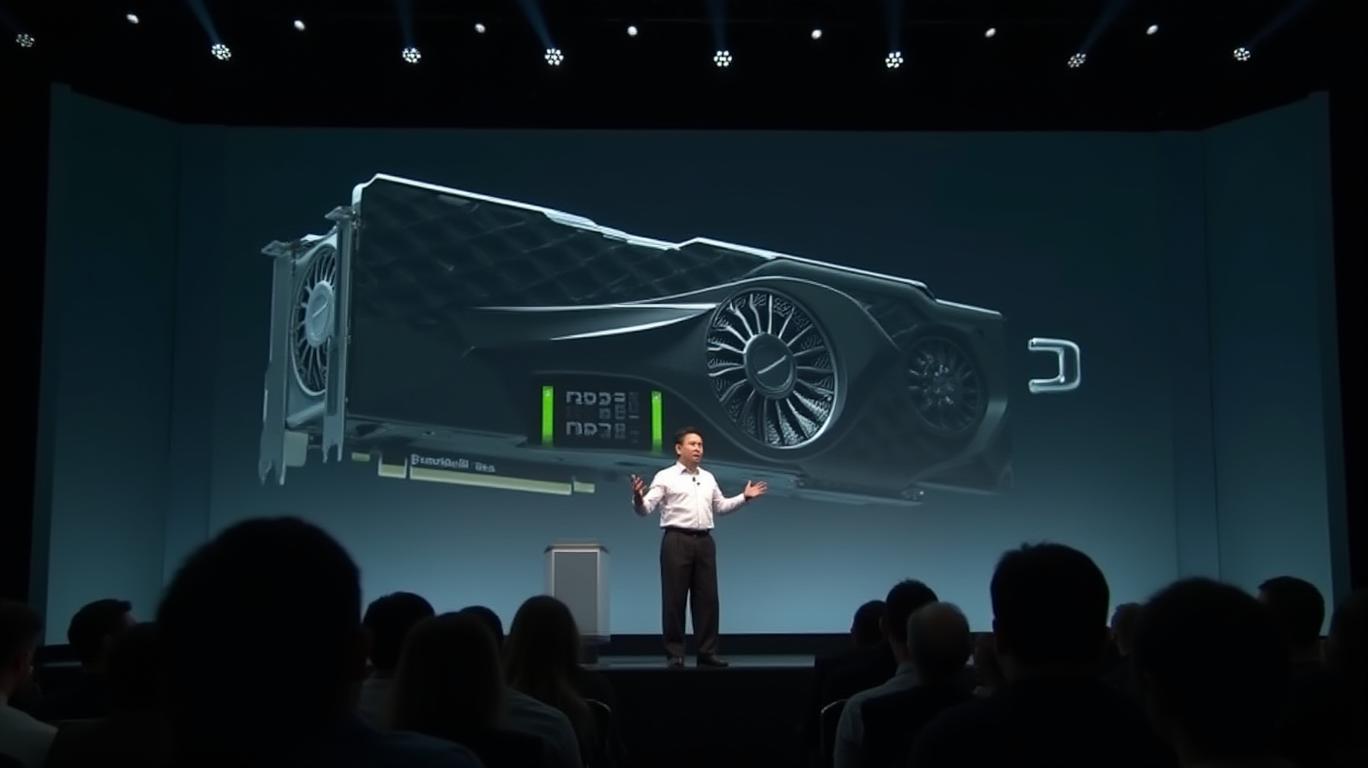
Nvidia's annual GPU Technology Conference (GTC) 2025 was a spectacle of innovation and strategic foresight, as the company unveiled a multiyear roadmap that promises to redefine the landscape of AI and high-performance computing. The event, held in San Jose, California, saw the unveiling of the Blackwell and Rubin GPUs, along with a suite of complementary technologies designed to meet the escalating demands of AI-driven workloads.
The Blackwell Ultra NVL72, a cornerstone of Nvidia's roadmap, is a testament to the company's commitment to extreme scale-up. With 600,000 components per data center rack and 120 kilowatts of fully liquid-cooled infrastructure, the Blackwell Ultra NVL72 delivers a staggering 1-exaflops of computing power in a single rack. This level of performance is unprecedented and positions NvidiaNVDA-- at the forefront of AI technology, capable of handling the most demanding reasoning and agent-driven tasks.
Nvidia's strategy of scaling up before scaling out is a bold move that sets it apart from competitors. By focusing on creating AI factories and infrastructure that can handle the most demanding AI workloads, Nvidia is future-proofing its offerings and ensuring that its customers have access to the most powerful and efficient computing solutions available. This approach is evident in the company's roadmap, which extends beyond Blackwell to Rubin, offering 144 GPUs by this time next year and an expansion to 576 GPUs or 600 kilowatts per rack in 2027.
The release of the Spectrum-X Ethernet and Quantum-X800 InfiniBand networking systems further enhances Nvidia's competitive edge. These systems provide up to 800 gigabytes per second of data throughput for each of the 72 Blackwell GPUs, addressing potential bottlenecks in data transfer and ensuring that the increased computational power is effectively utilized. This level of networking capability is crucial for handling the massive data throughput required for AI workloads and positions Nvidia as a leader in the AI infrastructure space.
Nvidia's open-source inferencing software, Dynamo, is another key component of its strategy. Designed to increase throughput and decrease the cost of generating large language model tokens for AI, Dynamo orchestrates inference communication across thousands of GPUs. This software is described as "the operating system of an AI factory," highlighting its critical role in enabling AI at scale. By driving efficiency as AI agents and other use cases ramp up, Dynamo ensures that Nvidia's infrastructure can keep pace with the growing demands of AI.
The impact of Nvidia's multiyear roadmap on its competitive position in the market is likely to be significant. The company's bold moves in divulging its roadmap for Blackwell and Rubin, along with planned enhancements in several other key product areas, reflect a level of transparency that reassures investors and customers. As Jensen Huang, Nvidia's CEO, noted, "We’re the first tech company in history that announced four generations of technology at one time. That’s like a company announcing the next four smartphones. Now everybody else can plan." This transparency and forward-thinking approach can attract more investors and customers, driving stock performance.
Moreover, Nvidia's transition from a processor maker to an AI factory is a strategic shift that positions the company as a critical revenue driver for its diverse customer base. As Huang stated, "We’re not building chips anymore, those were the good old days. We are an AI factory now. A factory helps customers make money." This shift aligns Nvidia's business model with the growing demand for AI solutions, which can lead to sustained revenue growth and stock performance.
In summary, Nvidia's multiyear roadmap for Blackwell and Rubin GPUs is designed to meet the anticipated growth in AI-driven workloads by providing scalable, high-performance infrastructure. This roadmap not only future-proofs Nvidia's offerings but also positions the company as a leader in the AI industry, making it a compelling long-term investment. The company's strategy of scaling up before scaling out, along with its release of high-performance networking systems and open-source inferencing software, further solidifies its competitive position. This strategy is likely to have a positive impact on Nvidia's stock performance over the next five years, as it attracts more investors and customers and aligns its business model with the growing demand for AI solutions.
Nvidia's annual GPU Technology Conference (GTC) 2025 was a spectacle of innovation and strategic foresight, as the company unveiled a multiyear roadmap that promises to redefine the landscape of AI and high-performance computing. The event, held in San Jose, California, saw the unveiling of the Blackwell and Rubin GPUs, along with a suite of complementary technologies designed to meet the escalating demands of AI-driven workloads.
The Blackwell Ultra NVL72, a cornerstone of Nvidia's roadmap, is a testament to the company's commitment to extreme scale-up. With 600,000 components per data center rack and 120 kilowatts of fully liquid-cooled infrastructure, the Blackwell Ultra NVL72 delivers a staggering 1-exaflops of computing power in a single rack. This level of performance is unprecedented and positions NvidiaNVDA-- at the forefront of AI technology, capable of handling the most demanding reasoning and agent-driven tasks.
Nvidia's strategy of scaling up before scaling out is a bold move that sets it apart from competitors. By focusing on creating AI factories and infrastructure that can handle the most demanding AI workloads, Nvidia is future-proofing its offerings and ensuring that its customers have access to the most powerful and efficient computing solutions available. This approach is evident in the company's roadmap, which extends beyond Blackwell to Rubin, offering 144 GPUs by this time next year and an expansion to 576 GPUs or 600 kilowatts per rack in 2027.
The release of the Spectrum-X Ethernet and Quantum-X800 InfiniBand networking systems further enhances Nvidia's competitive edge. These systems provide up to 800 gigabytes per second of data throughput for each of the 72 Blackwell GPUs, addressing potential bottlenecks in data transfer and ensuring that the increased computational power is effectively utilized. This level of networking capability is crucial for handling the massive data throughput required for AI workloads and positions Nvidia as a leader in the AI infrastructure space.
Nvidia's open-source inferencing software, Dynamo, is another key component of its strategy. Designed to increase throughput and decrease the cost of generating large language model tokens for AI, Dynamo orchestrates inference communication across thousands of GPUs. This software is described as "the operating system of an AI factory," highlighting its critical role in enabling AI at scale. By driving efficiency as AI agents and other use cases ramp up, Dynamo ensures that Nvidia's infrastructure can keep pace with the growing demands of AI.
The impact of Nvidia's multiyear roadmap on its competitive position in the market is likely to be significant. The company's bold moves in divulging its roadmap for Blackwell and Rubin, along with planned enhancements in several other key product areas, reflect a level of transparency that reassures investors and customers. As Jensen Huang, Nvidia's CEO, noted, "We’re the first tech company in history that announced four generations of technology at one time. That’s like a company announcing the next four smartphones. Now everybody else can plan." This transparency and forward-thinking approach can attract more investors and customers, driving stock performance.
Moreover, Nvidia's transition from a processor maker to an AI factory is a strategic shift that positions the company as a critical revenue driver for its diverse customer base. As Huang stated, "We’re not building chips anymore, those were the good old days. We are an AI factory now. A factory helps customers make money." This shift aligns Nvidia's business model with the growing demand for AI solutions, which can lead to sustained revenue growth and stock performance.
In summary, Nvidia's multiyear roadmap for Blackwell and Rubin GPUs is designed to meet the anticipated growth in AI-driven workloads by providing scalable, high-performance infrastructure. This roadmap not only future-proofs Nvidia's offerings but also positions the company as a leader in the AI industry, making it a compelling long-term investment. The company's strategy of scaling up before scaling out, along with its release of high-performance networking systems and open-source inferencing software, further solidifies its competitive position. This strategy is likely to have a positive impact on Nvidia's stock performance over the next five years, as it attracts more investors and customers and aligns its business model with the growing demand for AI solutions.

Divulgación editorial y transparencia de la IA: Ainvest News utiliza tecnología avanzada de Modelos de Lenguaje Largo (LLM) para sintetizar y analizar datos de mercado en tiempo real. Para garantizar los más altos estándares de integridad, cada artículo se somete a un riguroso proceso de verificación con participación humana.
Mientras la IA asiste en el procesamiento de datos y la redacción inicial, un miembro editorial profesional de Ainvest revisa, verifica y aprueba de forma independiente todo el contenido para garantizar su precisión y cumplimiento con los estándares editoriales de Ainvest Fintech Inc. Esta supervisión humana está diseñada para mitigar las alucinaciones de la IA y garantizar el contexto financiero.
Advertencia sobre inversiones: Este contenido se proporciona únicamente con fines informativos y no constituye asesoramiento profesional de inversión, legal o financiero. Los mercados conllevan riesgos inherentes. Se recomienda a los usuarios que realicen una investigación independiente o consulten a un asesor financiero certificado antes de tomar cualquier decisión. Ainvest Fintech Inc. se exime de toda responsabilidad por las acciones tomadas con base en esta información. ¿Encontró un error? Reportar un problema




Comentarios
Aún no hay comentarios