
Nvidia: Already On The Way Back Up After Tariffs Turmoil
The Tariff Tsunami and Its Aftermath
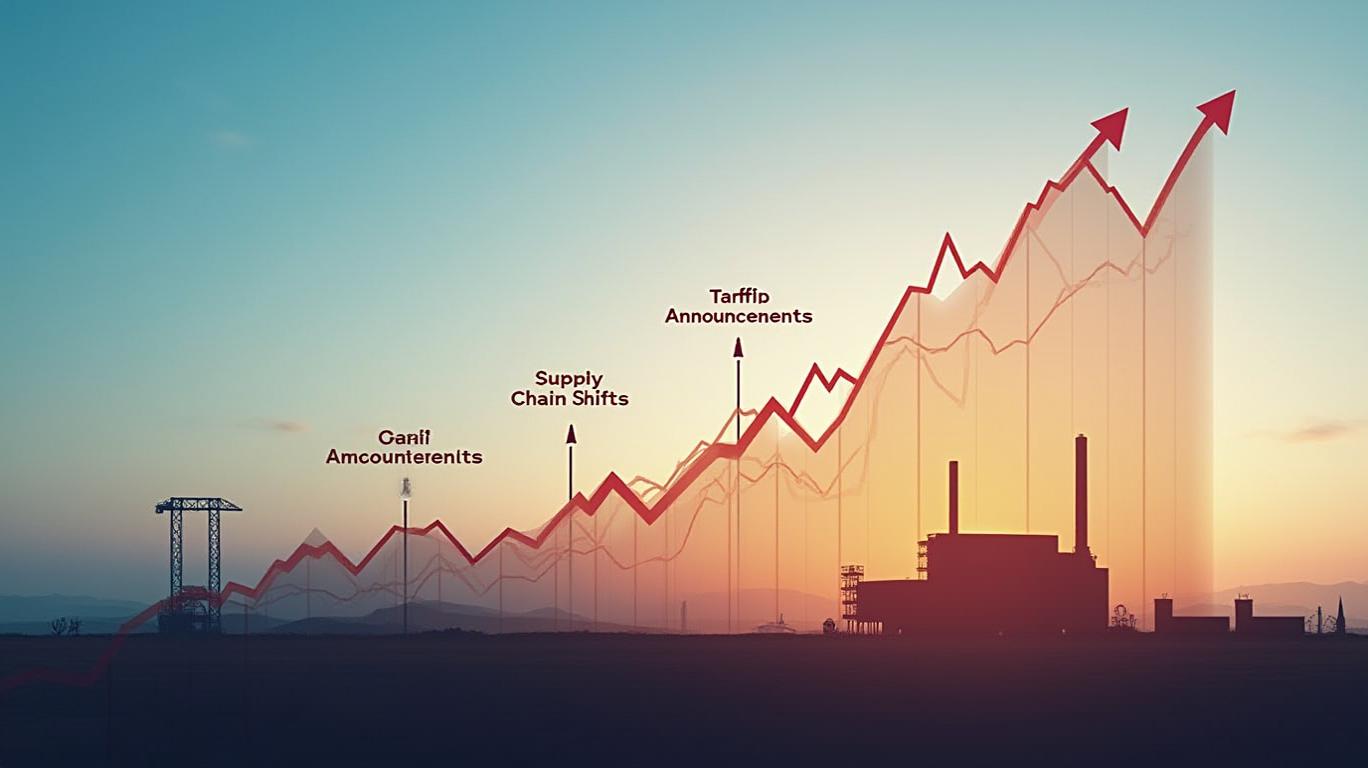
Nvidia’s stock plunged 30% from its January 2025 peak of $153 to $108 by April, wiping out $1.03 trillion in market capitalization. The catalyst? A perfect storm of U.S. tariff policies targeting China and Taiwan, where 80% of its semiconductor supply chain operates. A 145% tariff on Chinese imports and a 34% levy on Taiwanese goods sent shockwaves through the tech sector. Yet, the stock’s stabilization at $108.09 by mid-April hints at investor confidence in Nvidia’s ability to navigate these headwinds.
How NvidiaNVDA-- Is Steering Through the Storm
The company’s agility shines in two critical areas: supply chain diversification and strategic tariff mitigation. By leveraging exemptions for raw semiconductor components, Nvidia shifted production of unfinished chips to the U.S., where TSMC’s Arizona plant now handles final assembly. This move, highlighted by Tom’s Hardware, avoids punitive tariffs on finished goods while maintaining Asian manufacturing efficiency for early-stage production.
CEO Jensen Huang emphasized this duality: “Our global supply chain remains resilient,” he stated in March, while reaffirming plans to “onshore” 20% of manufacturing by 2027. The Blackwell AI supercomputer’s $700 million first-quarter sales underscore the demand for Nvidia’s AI infrastructure, even as gross margins dipped to 70.6%—a 8.4% drop from 2024 levels due to tariff costs.
Earnings Resilience Amid Margin Pressure
Nvidia’s Q1 fiscal 2026 guidance of $43 billion in revenue (up 65% YoY) reflects AI’s relentless growth. However, the 70.6% gross margin forecast has analysts divided. While some, like Sungarden YARP’s Rob Isbitts, called the numbers “underwhelming,” others note that the figure still outperforms broader semiconductor industry averages. Crucially, Nvidia’s AI segment—driven by data center and generative AI demand—remains its anchor, growing 90% YoY in Q4 2024.
The Double-Edged Sword of Tariff Mitigation
Nvidia’s strategy of absorbing tariff costs rather than hiking consumer prices has softened the immediate blow to demand. The RTX 5090, for example, avoided a potential 142% price surge by keeping its $1,999 tag. However, this comes at a cost: every $100 million in tariff absorption cuts quarterly profits by ~$50 million. The gamble? That AI adoption will outpace inflation-driven cost pressures.
Risks Lurking in the Fog
Three threats loom large:
1. Demand Volatility: Goldman Sachs warns that $1 trillion in projected generative AI spending could evaporate if recession fears deter corporate spending.
2. Competitive Erosion: Microsoft’s and Google’s in-house AI chip development could siphon data center revenue, while open-source alternatives weaken CUDA’s dominance.
3. Margin Math: If Nvidia’s gross margin slips below 70%, its stock could retrace to pre-2023 levels—a stark contrast to its current 16.3x 2028 P/E ratio.
Why the Rebound Is Real—and Fragile
The stock’s April stabilization reflects three pillars of hope:
1. Tactical Flexibility: The TSMC partnership and tariff-exemption strategy have reduced immediate supply chain risks.
2. AI’s Inevitable Trajectory: Even skeptical analysts acknowledge that generative AI’s enterprise applications are here to stay, with Nvidia leading the infrastructure race.
3. Market Sentiment Shift: The $108 price holds psychological significance—it’s near pre-tariff 2024 levels, suggesting investors view current valuations as bargain-priced.
Conclusion: A Calculated Climb
Nvidia’s stock is undeniably on the mend, but the road ahead is littered with potholes. The company’s Q1 2026 revenue guidance of $43 billion, paired with its $700 million Blackwell sales milestone, demonstrates AI’s staying power. Yet, the 70.6% gross margin is a warning flare: if tariffs push that figure below 70%, profit erosion could reignite volatility.
Investors should watch two key metrics:
- Data Center Spending: Amazon and Microsoft’s Q2 2025 cloud investments will signal whether enterprises are doubling down on AI despite economic risks.
- Margin Trends: A stabilization or rebound in gross margins above 71% would validate Nvidia’s cost-control strategies.
For now, the stock’s recovery is real—but its durability hinges on whether AI’s promise can outpace geopolitical and economic storms.






Comentarios
Aún no hay comentarios