
Nvidia's Strategic H200 Production Expansion and Its Implications for AI Chip Market Leadership
The global AI chip market is undergoing a seismic shift, driven by surging demand from China and the strategic maneuvers of semiconductor leaders like NvidiaNVDA--. As the world's largest AI chipmaker, Nvidia faces a pivotal moment in 2026, with its H200 GPU at the center of a high-stakes race to meet Chinese demand while navigating regulatory uncertainties and competitive pressures. This analysis evaluates Nvidia's investment potential amid these dynamics, focusing on production scalability, financial performance, and the evolving competitive landscape.
Chinese Demand and Production Scalability: A High-Stakes Balancing Act
Chinese tech giants have placed orders for over 2 million H200 chips in 2026, far exceeding Nvidia's current inventory of 700,000 units. This demand surge follows the U.S. government's decision to permit H200 exports to China with a 25% fee, a policy shift that has reignited interest in the chip among firms like Alibaba and ByteDance. The H200, manufactured using TSMC's 4nm process, offers 2–3 times the performance of China's most advanced domestic accelerators, making it a critical asset for AI-driven innovation in the region.
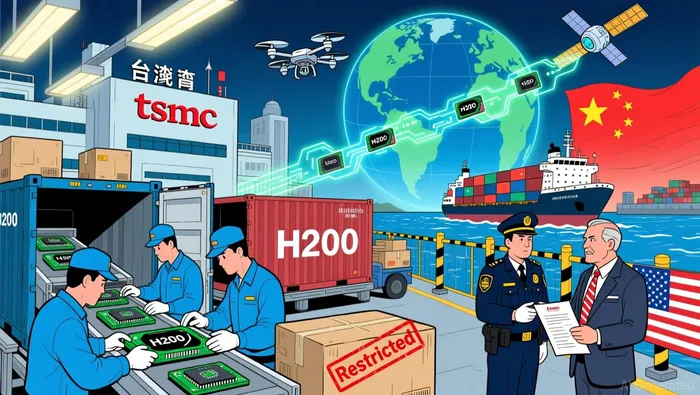
To address the supply gap, Nvidia has initiated discussions with TSMCTSM-- to expand H200 production, with capacity ramping expected to begin in Q2 2026. However, regulatory hurdles persist: Chinese authorities are still deliberating whether to approve H200 imports, with proposals suggesting mandatory bundling of each H200 purchase with domestically produced chips to support local semiconductor development. This uncertainty complicates Nvidia's ability to fully capitalize on the demand spike, as regulatory delays or restrictive conditions could dampen adoption.
Financial Performance and Market Growth: A Tailwind for AI Innovation
Nvidia's fiscal 2025 results underscore its dominance in the AI chip sector. The company reported $39.3 billion in Q4 revenue, a 78% year-over-year increase, and $130.5 billion in total fiscal 2025 revenue, up 114%. This growth is fueled by demand for AI supercomputers like the Blackwell architecture, which positions Nvidia at the forefront of next-generation AI infrastructure.
The broader market is equally promising. The global AI chip market is projected to grow from $31.6 billion in 2025 to $846.8 billion by 2035, a compound annual growth rate (CAGR) of 34.84%. This expansion is driven by AI adoption across industries, including healthcare, automotive, and telecommunications, creating a fertile environment for Nvidia's high-margin products. However, the company's ability to sustain this growth hinges on its capacity to scale H200 production and maintain its lead in innovation.
Competitive Landscape: Navigating Threats from AMD, Intel, and ASICs
While Nvidia's CUDA ecosystem and Blackwell roadmap provide a formidable moat, competitors are closing the gap. AMD's Instinct MI325X and MI300X GPUs offer competitive performance in inference tasks, while Intel's Gaudi 3 struggles with market adoption despite significant R&D investments. AMD's recent partnerships with OpenAI and Oracle Cloud Infrastructure further highlight its aggressive push into AI infrastructure.
A more disruptive threat comes from application-specific integrated circuits (ASICs). Broadcom and Marvell are gaining traction with custom chips tailored for hyperscalers like Google and Meta, offering superior power efficiency for specific workloads. TrendForce notes that Broadcom's AI ASIC shipments are expected to grow by 44% in 2026, outpacing GPU shipments by 16%. This "ASIC-ization" trend reflects a shift toward specialized hardware, challenging Nvidia's general-purpose GPU dominance.
Investment Risks: Supply Chain, Regulation, and Technological Shifts
Nvidia's expansion plans face three key risks. First, global semiconductor supply chains remain fragile, with export controls on advanced manufacturing tools like EUV lithography and gate-all-around (GAA) transistors constraining production. Second, regulatory scrutiny in the Indo-Pacific region is intensifying, with data governance policies and Section 232 investigations in the U.S. adding compliance burdens. Third, the rise of ASICs and open Ethernet standards could erode Nvidia's market share in networking and infrastructure, areas where Broadcom's Tomahawk 6 switch chip is gaining traction.
Conclusion: A Strategic Leader in a Turbulent Market
Nvidia's H200 production expansion underscores its commitment to dominating the AI chip market, but success depends on navigating regulatory and supply chain challenges while outpacing competitors. The company's financial strength, coupled with the explosive growth of the AI sector, positions it as a compelling long-term investment. However, investors must remain cautious about the risks posed by ASICs, geopolitical tensions, and regulatory shifts. For now, Nvidia's strategic agility and ecosystem advantages suggest it will retain its leadership role, albeit in an increasingly competitive and volatile landscape.







Comentarios
Aún no hay comentarios