
Nvidia's Strategic Expansion in the UAE and Its Implications for AI-Driven Growth
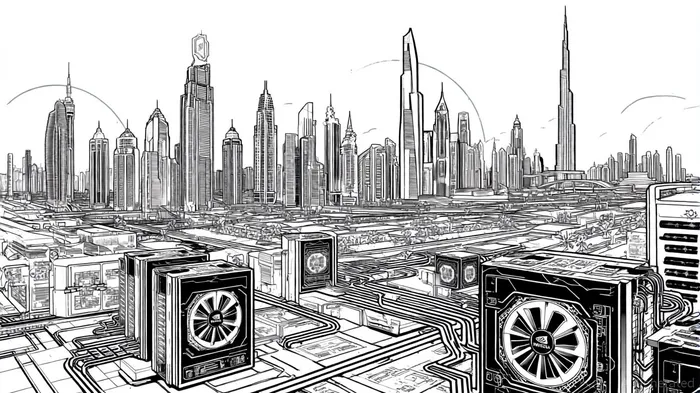
In the race to dominate the AI revolution, NvidiaNVDA-- has positioned itself as a cornerstone of global technological advancement. While the company has not yet disclosed specific partnerships or investments in the UAE for 2025, its broader strategic moves in semiconductor innovation and AI infrastructure suggest a ripple effect that could profoundly influence the UAE's economic trajectory. By analyzing Nvidia's cutting-edge developments and the UAE's AI ambitions, we uncover a compelling narrative of indirect but significant regional impact.
The Semiconductor Edge: A16 Node and Beyond
Nvidia's recent partnership with TSMCTSM-- to adopt the A16 node—a 1.6nm-class process with gate-all-around (GAA) transistors and backside power delivery—marks a pivotal shift in semiconductor design[2]. This technology promises 8-10% higher speed or 15-20% lower power consumption compared to the N2 process, enabling more efficient AI accelerators and high-performance computing (HPC) systems[2]. For the UAE, which is aggressively pursuing AI-driven smart cities and energy-efficient infrastructure, such advancements could lower the cost of deploying large-scale AI solutions while enhancing computational power.
AI Infrastructure as a Catalyst for Economic Transformation
The UAE's Vision 2030 and Vision 2071 emphasize AI as a cornerstone for economic diversification, with initiatives like the Dubai AI Strategy and Abu Dhabi's Mohamed bin Zayed University of Artificial Intelligence (MBZUAI) underscoring this commitment. While Nvidia has not announced direct investments in the UAE for 2025, its global leadership in AI infrastructure—through platforms like the Blackwell Ultra and Rubin CPX—provides the UAE with access to world-class tools for data center optimization and AI reasoning[1]. These technologies are critical for sectors such as healthcare, logistics, and renewable energy, where the UAE is actively deploying AI to boost productivity and sustainability.
Indirect Economic Impact: A Chain Reaction
Even without explicit partnerships, Nvidia's innovations indirectly fuel the UAE's AI ecosystem. For instance, the UAE's reliance on advanced GPUs for training large language models (LLMs) and edge computing applications benefits from Nvidia's dominance in the global AI chip market. As stated by a report from Tom's Hardware, Nvidia's adoption of the A16 node ahead of competitors like Apple signals its intent to maintain a technological edge[2]. This edge translates into superior AI infrastructure for global markets, including the UAE, where demand for AI-driven solutions is surging.
Strategic Synergies: UAE's AI Ambitions and Nvidia's Roadmap
The UAE's focus on AI-driven economic transformation aligns with Nvidia's roadmap for 2025. The company's Feynman architecture, designed for next-generation AI workloads, and its emphasis on energy-efficient computing[2], directly address the UAE's need for scalable, sustainable AI solutions. Furthermore, the UAE's strategic location as a global trade hub could position it as a regional testing ground for Nvidia's AI technologies, fostering a feedback loop that accelerates both corporate and national innovation goals.
Conclusion: A Future Shaped by Indirect Influence
While direct investments by Nvidia in the UAE remain unannounced for 2025, the company's technological leadership in AI and semiconductors creates a fertile ground for indirect economic impact. By leveraging Nvidia's global infrastructure and semiconductor advancements, the UAE can fast-track its AI-driven growth agenda, positioning itself as a regional leader in the Fourth Industrial Revolution. Investors and policymakers should monitor this dynamic closely, as the interplay between Nvidia's innovations and the UAE's strategic priorities could redefine the region's economic landscape in the coming years.





Comentarios
Aún no hay comentarios