
Nvidia and Siemens: Pioneering AI-Driven Industrial Transformation and Semiconductor Design
The convergence of artificial intelligence (AI) and industrial manufacturing is reshaping global supply chains, and the strategic partnership between Nvidia and Siemens stands at the forefront of this revolution. By combining Siemens' industrial automation expertise with Nvidia's AI and GPU capabilities, the two companies are accelerating the development of next-generation semiconductor design tools and AI-driven manufacturing systems. This collaboration is not just a technological leap-it's a catalyst for redefining industrial efficiency, sustainability, and scalability in the AI era.
A New Industrial Operating System
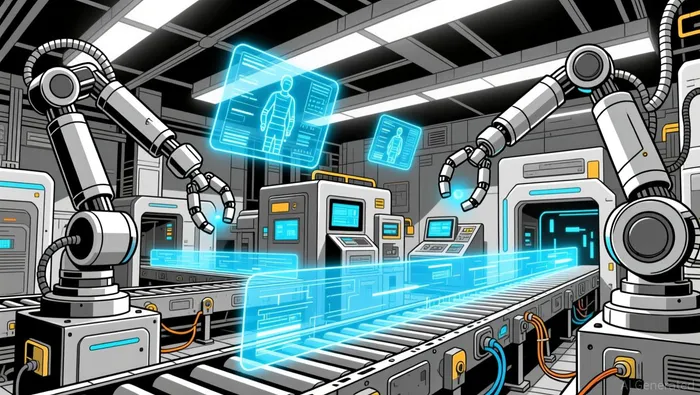
At the heart of the Nvidia-Siemens partnership lies the Industrial AI Operating System, a platform designed to unify design, simulation, and production workflows across the entire industrial value chain. This system integrates Siemens' Xcelerator portfolio with Nvidia's Omniverse platform, enabling engineers to create and manage of factories and semiconductor fabrication processes. These digital twins unify 3D visualization, simulation, and real-time data into a single immersive environment, allowing for rapid optimization of complex systems.
A key innovation is the integration of NVIDIA Blackwell GPUs into Siemens' simulation tools. For instance, BMW Group achieved a 30x speedup in transient aerodynamics simulations using Blackwell and Siemens' Simcenter Star-CCM+ software. Similarly, Siemens' Industrial Copilot for Operations, optimized for Blackwell GPUs, reduces reactive maintenance time by 30%, demonstrating the tangible ROI of AI in factory operations. These advancements underscore the partnership's ability to translate AI into measurable productivity gains.
Semiconductor Design: AI-Native Tools for a New Era
Semiconductor design, a field historically constrained by time-intensive workflows, is being transformed by AI-native tools developed through this collaboration. Siemens and NvidiaNVDA-- are integrating CUDA-X libraries, PhysicsNeMo, and GPU acceleration into Siemens' electronic design automation (EDA) portfolio. This integration targets in critical workflows such as verification, layout, and process optimization.
For example, tools like Aprisa AI and Calibre Vision AI are already enhancing productivity in semiconductor and PCB design by enabling AI-assisted layout guidance, debug support, and circuit optimization. These tools not only accelerate time-to-market but also improve yield and manufacturability, addressing longstanding bottlenecks in chip design. By 2026, the partnership plans to launch the first fully AI-driven manufacturing site at Siemens' Electronics Factory in Erlangen, Germany, serving as a blueprint for global deployment.
Strategic Goals: From Digital Twins to the Industrial Metaverse
The partnership's vision extends beyond individual tools to a broader industrial metaverse, where digital and physical systems are seamlessly connected. This includes urban-scale digital twins, such as those in Berlin and Singapore, which leverage Nvidia Omniverse and Siemens Xcelerator to simulate energy usage, traffic planning, and disaster response. Such projects highlight the scalability of the collaboration's technology, with applications spanning smart cities, energy grids, and logistics.
Moreover, the integration of NVIDIA NIM and Nemotron open AI models into Siemens' EDA tools is reducing operational costs while enhancing generative workflows. This synergy between open-source AI and industrial software is critical for democratizing access to advanced design capabilities, enabling smaller firms to compete with industry giants.
Market Impact: Efficiency, Sustainability, and Competitive Edge
The economic implications of this partnership are profound. By reducing capital expenditures and increasing operational efficiency, the collaboration is positioning itself as a key driver of sustainable manufacturing. According to third-party analyses, the integration of AI into industrial systems could reduce carbon emissions by optimizing energy use in factories and supply chains.
Competitively, the partnership is outpacing rivals by addressing the AI-physical gap-the challenge of translating digital simulations into real-world outcomes. Siemens' deep domain expertise in industrial automation, paired with Nvidia's AI infrastructure, creates a unique value proposition. As noted by industry experts, this collaboration is setting a blueprint for AI-powered factories, which will become a standard in the coming decade.
Future Outlook: A Blueprint for Global Adoption
With the first AI-driven manufacturing site slated for 2026, the partnership is poised to scale its innovations globally. The focus on adaptive manufacturing-where factories autonomously adjust to disruptions- aligns with broader trends in resilient supply chains. For investors, this represents a long-term opportunity in the industrial AI sector, where demand for AI-driven efficiency is expected to grow exponentially.
Conclusion
The Nvidia-Siemens partnership is more than a strategic alliance-it's a foundational shift in how industries leverage AI. By pioneering AI-native tools, digital twins, and adaptive manufacturing systems, the collaboration is redefining the boundaries of what's possible in semiconductor design and industrial production. For investors, this represents a high-conviction bet on the future of manufacturing, where AI isn't just a tool but the operating system of the industrial world.





Comentarios
Aún no hay comentarios