
Nvidia's Dominance in AI: A Closer Look at the Chipmaker's Success
Generado por agente de IAEli Grant
miércoles, 20 de noviembre de 2024, 3:35 pm ET2 min de lectura
NVDA--
Nvidia (NVDA) has emerged as a powerhouse in the artificial intelligence (AI) chip market, with a commanding lead that has left competitors scrambling to catch up. The company's success can be attributed to a combination of factors, including its innovative hardware and software solutions, strategic partnerships, and a commitment to continuous innovation. This article delves into the reasons behind Nvidia's dominance in the AI space and explores what investors need to know about the chipmaker.
Nvidia's CUDA software and GPU architecture have been instrumental in its success. CUDA, a parallel computing platform and API, enables developers to harness the power of GPUs for general-purpose computing. This allows Nvidia's GPUs to perform complex AI tasks, such as training and deploying AI models, at an unparalleled speed. The company's GPU architecture, featuring a vast number of processing cores and high-bandwidth memory, is well-suited for the parallel processing demands of AI workloads. This combination of software and hardware has made Nvidia the go-to choice for data centers and AI developers, with the company controlling between 70% and 95% of the AI chip market.
Nvidia's strategic partnerships and collaborations have also played a significant role in its market dominance. The company has formed alliances with major tech giants like Microsoft and AMD, as well as with AI startups like D-Matrix and 3Fourteen Research. These collaborations have allowed Nvidia to expand its reach and maintain its competitive edge in the rapidly evolving AI landscape.
Nvidia's pricing strategy and high gross margin have further solidified its position in the AI chip market. With a 78% gross margin, the highest among its peers, Nvidia leverages its pricing power to maintain market leadership. This high margin is a result of the company's CUDA software and flagship AI GPUs like the H100, which provide a significant competitive advantage. Despite rival chipmakers like Intel and AMD also offering AI chips, Nvidia's pricing strategy and high gross margin enable it to retain its commanding position in the AI chip market.
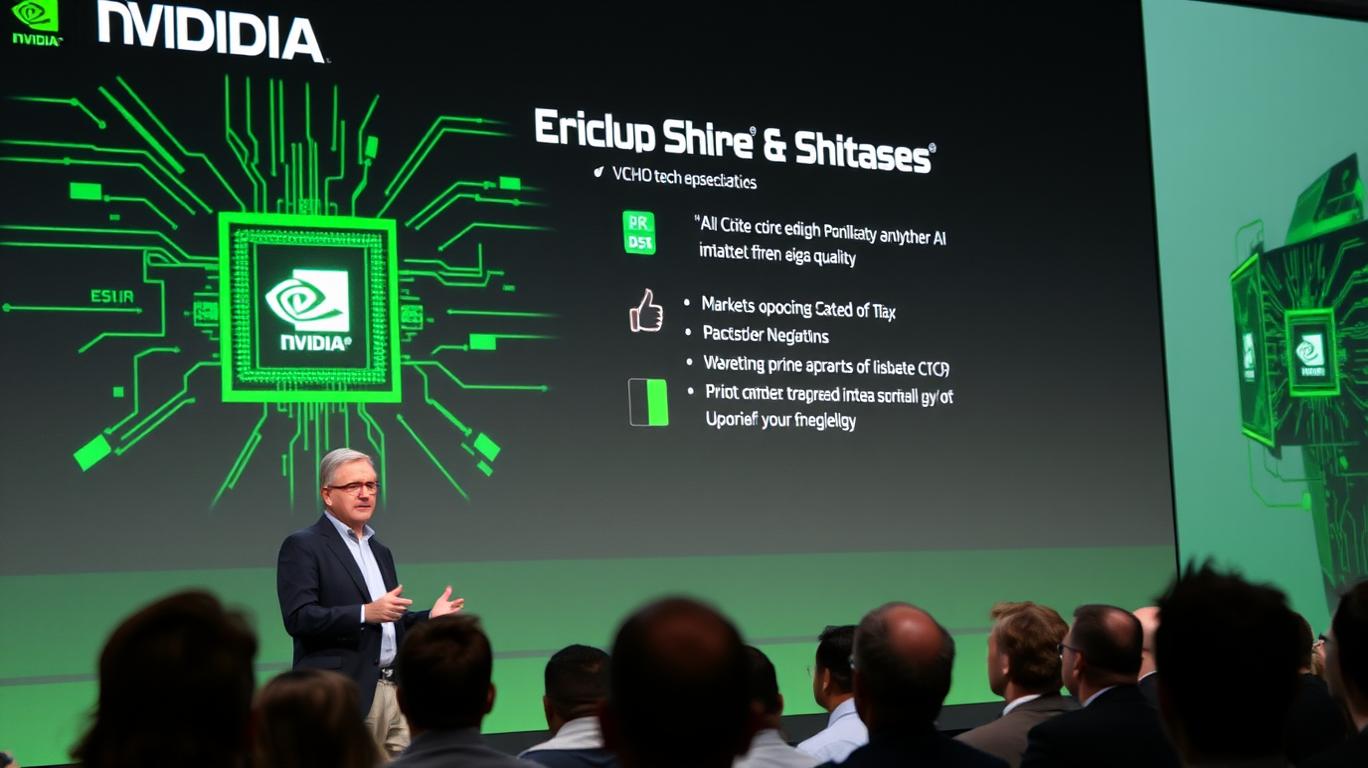
Nvidia's commitment to annual AI chip architecture updates is another key factor driving its success. By releasing a new AI chip architecture every year, Nvidia stays ahead of the competition and continues to improve the performance and efficiency of its AI chips. This frequent innovation allows Nvidia to attract and retain customers who require cutting-edge technology for their AI applications, further cementing its position as the market leader.
Nvidia's dominance in the AI chip market has not gone unnoticed by competitors, who are employing various strategies to challenge its position. AMD, for instance, is focusing on inference, where it believes it can outperform Nvidia, and has already secured partnerships with Microsoft. Intel, on the other hand, is emphasizing cost-effectiveness and performance with its Gaudi 3 AI accelerator. Additionally, startups like D-Matrix are developing alternative architectures to reduce costs and latency. These competitors aim to leverage their unique strengths to capture a share of the growing AI chip market.
In conclusion, Nvidia's dominance in the AI chip market is the result of a combination of factors, including its innovative hardware and software solutions, strategic partnerships, and a commitment to continuous innovation. The company's high gross margin and pricing strategy have further solidified its position, while its competitors are actively seeking ways to challenge its market leadership. As the AI market continues to grow, investors should keep a close eye on Nvidia's progress and the strategies employed by its competitors to maintain their competitive edge.
Nvidia's CUDA software and GPU architecture have been instrumental in its success. CUDA, a parallel computing platform and API, enables developers to harness the power of GPUs for general-purpose computing. This allows Nvidia's GPUs to perform complex AI tasks, such as training and deploying AI models, at an unparalleled speed. The company's GPU architecture, featuring a vast number of processing cores and high-bandwidth memory, is well-suited for the parallel processing demands of AI workloads. This combination of software and hardware has made Nvidia the go-to choice for data centers and AI developers, with the company controlling between 70% and 95% of the AI chip market.
Nvidia's strategic partnerships and collaborations have also played a significant role in its market dominance. The company has formed alliances with major tech giants like Microsoft and AMD, as well as with AI startups like D-Matrix and 3Fourteen Research. These collaborations have allowed Nvidia to expand its reach and maintain its competitive edge in the rapidly evolving AI landscape.
Nvidia's pricing strategy and high gross margin have further solidified its position in the AI chip market. With a 78% gross margin, the highest among its peers, Nvidia leverages its pricing power to maintain market leadership. This high margin is a result of the company's CUDA software and flagship AI GPUs like the H100, which provide a significant competitive advantage. Despite rival chipmakers like Intel and AMD also offering AI chips, Nvidia's pricing strategy and high gross margin enable it to retain its commanding position in the AI chip market.
Nvidia's commitment to annual AI chip architecture updates is another key factor driving its success. By releasing a new AI chip architecture every year, Nvidia stays ahead of the competition and continues to improve the performance and efficiency of its AI chips. This frequent innovation allows Nvidia to attract and retain customers who require cutting-edge technology for their AI applications, further cementing its position as the market leader.
Nvidia's dominance in the AI chip market has not gone unnoticed by competitors, who are employing various strategies to challenge its position. AMD, for instance, is focusing on inference, where it believes it can outperform Nvidia, and has already secured partnerships with Microsoft. Intel, on the other hand, is emphasizing cost-effectiveness and performance with its Gaudi 3 AI accelerator. Additionally, startups like D-Matrix are developing alternative architectures to reduce costs and latency. These competitors aim to leverage their unique strengths to capture a share of the growing AI chip market.
In conclusion, Nvidia's dominance in the AI chip market is the result of a combination of factors, including its innovative hardware and software solutions, strategic partnerships, and a commitment to continuous innovation. The company's high gross margin and pricing strategy have further solidified its position, while its competitors are actively seeking ways to challenge its market leadership. As the AI market continues to grow, investors should keep a close eye on Nvidia's progress and the strategies employed by its competitors to maintain their competitive edge.

Divulgación editorial y transparencia de la IA: Ainvest News utiliza tecnología avanzada de Modelos de Lenguaje Largo (LLM) para sintetizar y analizar datos de mercado en tiempo real. Para garantizar los más altos estándares de integridad, cada artículo se somete a un riguroso proceso de verificación con participación humana.
Mientras la IA asiste en el procesamiento de datos y la redacción inicial, un miembro editorial profesional de Ainvest revisa, verifica y aprueba de forma independiente todo el contenido para garantizar su precisión y cumplimiento con los estándares editoriales de Ainvest Fintech Inc. Esta supervisión humana está diseñada para mitigar las alucinaciones de la IA y garantizar el contexto financiero.
Advertencia sobre inversiones: Este contenido se proporciona únicamente con fines informativos y no constituye asesoramiento profesional de inversión, legal o financiero. Los mercados conllevan riesgos inherentes. Se recomienda a los usuarios que realicen una investigación independiente o consulten a un asesor financiero certificado antes de tomar cualquier decisión. Ainvest Fintech Inc. se exime de toda responsabilidad por las acciones tomadas con base en esta información. ¿Encontró un error? Reportar un problema


SOBRE NOSOTROS
Nuestra historiaAutores de noticiasBase de conocimientosPolítica de privacidadTérmino de usoDescargo de responsabilidad de corretaje de tercerosTérminos de uso de AIMEDivulgaciones de riesgos de AInvest AICarrerasCONTÁCTENOS
Email: support@ainvest.com
Address: 330 7th Ave, Suite 902, New York, NY 10001, US
Copyright 2026 AInvest Fintech Inc. All rights reserved.


Comentarios
Aún no hay comentarios