
Nvidia Insider Selling: Signal or Noise in AI's Growth Story?
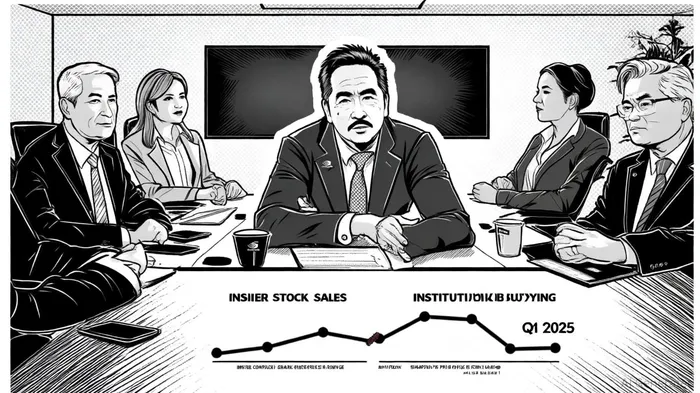
Nvidia's recent insider selling activity has sparked debate among investors: Is it a cautionary signal or a routine byproduct of its aggressive growth trajectory? The data suggests the latter. While executives, including CEO Jen-Hsun Huang, have offloaded millions in shares, these transactions align with established corporate governance frameworks and broader market dynamics that favor long-term optimism.
Corporate Governance: Compensation Plans and Insider Policies
Nvidia's Variable Compensation Plan for 2025 ties executive pay to revenue milestones, incentivizing performance while allowing cash bonuses to be paid post-fiscal year. For instance, Huang's $3 million target award—200% of his base salary—reflects a structure designed to reward overachievement, not immediate liquidity[3]. Meanwhile, insider transactions are governed by strict policies, including Rule 10b5-1 trading plans and vesting schedules for restricted stock units (RSUs), which limit arbitrary dumping[2].
Recent sales by Huang, CFO Colette Kress, and director Dawn E. Hudson were largely tax-related or executed under pre-arranged plans[2]. Notably, insiders still hold over 4% of the company, a stake too large to justify panic over short-term sales[1]. As stated by the Compensation Committee in its 8-K filing, these practices balance executive incentives with shareholder interests[3].
Market Sentiment: Selling vs. Institutional Confidence
Despite the visible insider activity, market sentiment remains overwhelmingly bullish. Analysts rate NVIDIANVDA-- at “Buy” or higher in 92% of cases, with a consensus price target of $171—a 4% premium to its recent closing price[1]. Institutional buyers have offset insider selling entirely, net purchasing $70 billion in shares during Q1 2025[2]. This institutional confidence, coupled with Nvidia's $57% revenue growth projections, suggests insiders are not signaling distress but rather participating in standard compensation cycles[1].
Moreover, the stock's range-bound performance—trading between $165 and $175—reflects market acceptance of its stability until a new catalyst emerges, such as an AI hardware launch or earnings report[1]. Analysts at Nasdaq note that insider selling has subsided to a multi-year low, further diminishing concerns[1].
Conclusion: Signal or Noise?
Nvidia's insider selling is best viewed as noise within a broader narrative of disciplined governance and robust growth. The company's alignment of executive incentives with long-term performance, combined with institutional and analyst support, underlines a resilient business model. While investors should remain vigilant, the current data points to a mature corporate structure rather than a governance red flag.





Comentarios
Aún no hay comentarios