
Nvidia's Humanoid AI Brain: The Next Big Thing in Robotics?
Generado por agente de IAHarrison Brooks
miércoles, 19 de marzo de 2025, 12:08 am ET2 min de lectura
NVDA--
Nvidia, the tech giant known for its groundbreaking advancements in AI and graphics processing, has just unveiled its latest innovation: GR00T N1, a humanoid AI brain that allows robots to think both fast and slow. This dual-system architecture, inspired by human cognitionCGTX--, is set to revolutionize the robotics industry. But is this the next big thing, or just another hype cycle in Silicon Valley?
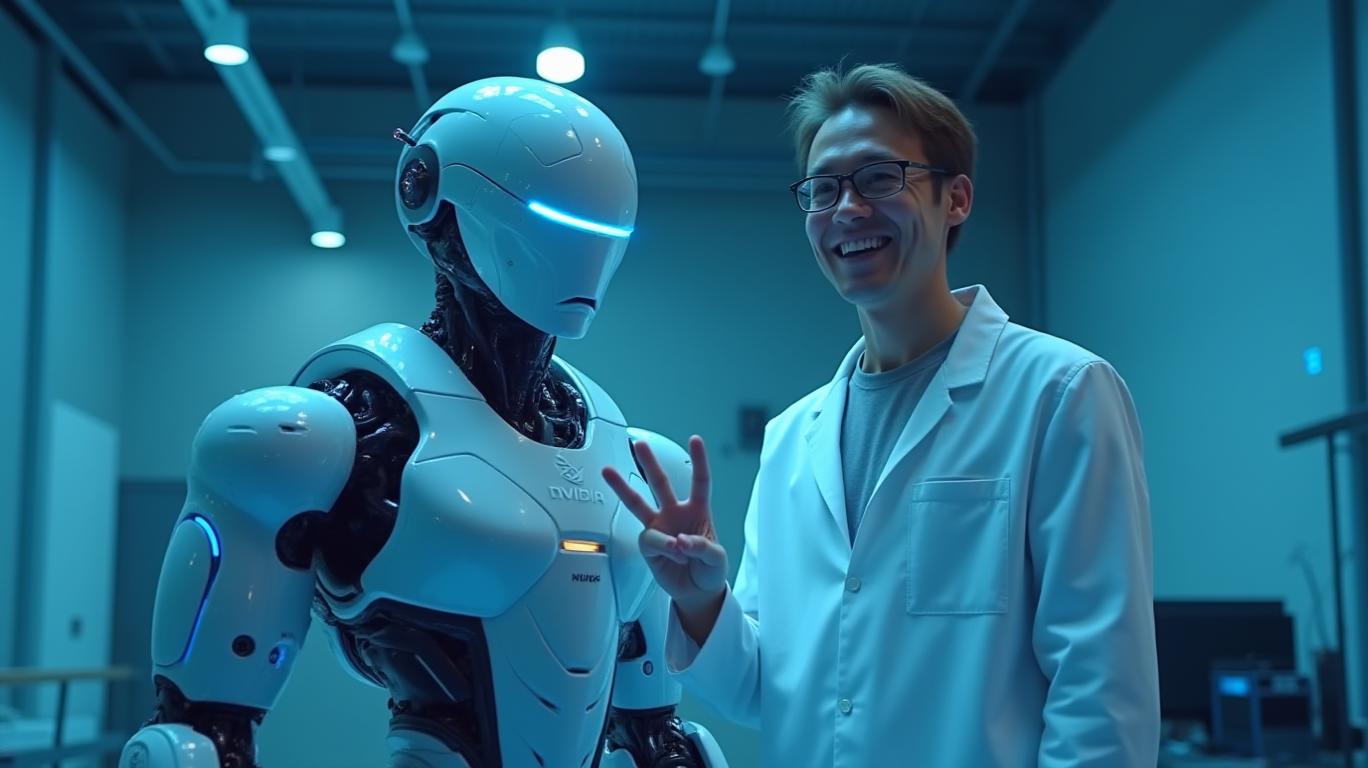
Nvidia's GR00T N1 is a fully customizable foundation model designed to enhance the development and capabilities of humanoid robots. It features a dual-system architecture, with "System 1" acting as a fast-thinking action model and "System 2" as a slow-thinking model for deliberate decision-making. This architecture allows robots to perform complex tasks with greater precision and speed, mimicking human reflexes and intuition.
The implications of this technology are vast. Humanoid robots equipped with GR00T N1 could revolutionize industries challenged by global labor shortages, estimated at over 50 million people. From material handling to packaging and inspection, these robots could perform a wide range of tasks, freeing up human workers for more creative and strategic roles.
But the road to widespread adoption is fraught with challenges. The complexity of humanoid robotics, the high computational demands of training AI models, and the intense competition in the market are just a few of the hurdles NvidiaNVDA-- will need to overcome. Moreover, the ethical and regulatory concerns surrounding the use of humanoid robots could slow down their adoption.
Nvidia's collaboration with Google DeepMind and Disney Research on the Newton physics engine further enhances the capabilities of GR00T N1. This open-source physics engine, optimized for robot learning, allows robots to handle complex tasks with greater precision. The collaboration also accelerates robotics machine learning workloads by more than 70x, making it more efficient for developers to train and deploy AI models for robotics.
The implications of this collaboration for the future of robotics and AI are profound. By integrating advanced physics simulation capabilities into GR00T N1, Nvidia is enabling humanoid robots to perform more complex and precise tasks. This is crucial for applications such as material handling, packaging, and inspection, where robots need to interact with their environment in a highly accurate manner.
But the question remains: is this the next big thing, or just another hype cycle in Silicon Valley? Only time will tell. But one thing is clear: Nvidia's GR00T N1 is a significant step forward in the development of humanoid AI, and its impact on the robotics industry could be transformative.
In conclusion, Nvidia's GR00T N1 is a groundbreaking innovation that has the potential to revolutionize the robotics industry. But the road to widespread adoption is fraught with challenges, and the ethical and regulatory concerns surrounding the use of humanoid robots could slow down their adoption. Only time will tell if this is the next big thing, or just another hype cycle in Silicon Valley. But one thing is clear: Nvidia's GR00T N1 is a significant step forward in the development of humanoid AI, and its impact on the robotics industry could be transformative.
Nvidia, the tech giant known for its groundbreaking advancements in AI and graphics processing, has just unveiled its latest innovation: GR00T N1, a humanoid AI brain that allows robots to think both fast and slow. This dual-system architecture, inspired by human cognitionCGTX--, is set to revolutionize the robotics industry. But is this the next big thing, or just another hype cycle in Silicon Valley?
Nvidia's GR00T N1 is a fully customizable foundation model designed to enhance the development and capabilities of humanoid robots. It features a dual-system architecture, with "System 1" acting as a fast-thinking action model and "System 2" as a slow-thinking model for deliberate decision-making. This architecture allows robots to perform complex tasks with greater precision and speed, mimicking human reflexes and intuition.
The implications of this technology are vast. Humanoid robots equipped with GR00T N1 could revolutionize industries challenged by global labor shortages, estimated at over 50 million people. From material handling to packaging and inspection, these robots could perform a wide range of tasks, freeing up human workers for more creative and strategic roles.
But the road to widespread adoption is fraught with challenges. The complexity of humanoid robotics, the high computational demands of training AI models, and the intense competition in the market are just a few of the hurdles NvidiaNVDA-- will need to overcome. Moreover, the ethical and regulatory concerns surrounding the use of humanoid robots could slow down their adoption.
Nvidia's collaboration with Google DeepMind and Disney Research on the Newton physics engine further enhances the capabilities of GR00T N1. This open-source physics engine, optimized for robot learning, allows robots to handle complex tasks with greater precision. The collaboration also accelerates robotics machine learning workloads by more than 70x, making it more efficient for developers to train and deploy AI models for robotics.
The implications of this collaboration for the future of robotics and AI are profound. By integrating advanced physics simulation capabilities into GR00T N1, Nvidia is enabling humanoid robots to perform more complex and precise tasks. This is crucial for applications such as material handling, packaging, and inspection, where robots need to interact with their environment in a highly accurate manner.
But the question remains: is this the next big thing, or just another hype cycle in Silicon Valley? Only time will tell. But one thing is clear: Nvidia's GR00T N1 is a significant step forward in the development of humanoid AI, and its impact on the robotics industry could be transformative.
In conclusion, Nvidia's GR00T N1 is a groundbreaking innovation that has the potential to revolutionize the robotics industry. But the road to widespread adoption is fraught with challenges, and the ethical and regulatory concerns surrounding the use of humanoid robots could slow down their adoption. Only time will tell if this is the next big thing, or just another hype cycle in Silicon Valley. But one thing is clear: Nvidia's GR00T N1 is a significant step forward in the development of humanoid AI, and its impact on the robotics industry could be transformative.

Divulgación editorial y transparencia de la IA: Ainvest News utiliza tecnología avanzada de Modelos de Lenguaje Largo (LLM) para sintetizar y analizar datos de mercado en tiempo real. Para garantizar los más altos estándares de integridad, cada artículo se somete a un riguroso proceso de verificación con participación humana.
Mientras la IA asiste en el procesamiento de datos y la redacción inicial, un miembro editorial profesional de Ainvest revisa, verifica y aprueba de forma independiente todo el contenido para garantizar su precisión y cumplimiento con los estándares editoriales de Ainvest Fintech Inc. Esta supervisión humana está diseñada para mitigar las alucinaciones de la IA y garantizar el contexto financiero.
Advertencia sobre inversiones: Este contenido se proporciona únicamente con fines informativos y no constituye asesoramiento profesional de inversión, legal o financiero. Los mercados conllevan riesgos inherentes. Se recomienda a los usuarios que realicen una investigación independiente o consulten a un asesor financiero certificado antes de tomar cualquier decisión. Ainvest Fintech Inc. se exime de toda responsabilidad por las acciones tomadas con base en esta información. ¿Encontró un error? Reportar un problema




Comentarios
Aún no hay comentarios