
Nvidia HGX Systems and the Future of Enterprise AI Infrastructure
The AI revolution is no longer a distant promise-it's a seismic shift reshaping the global economy. At the heart of this transformation lies NVIDIA's HGX systems, which are redefining enterprise AI infrastructure and unlocking a $3–$4 trillion market opportunity over the next five years [1]. For investors, this isn't just a trend; it's a high-conviction growth story driven by data center modernization, enterprise adoption, and technological leaps like the Blackwell and Rubin architectures.
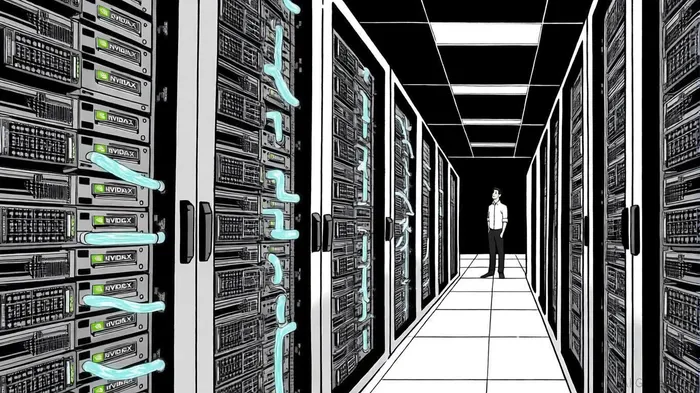
The Acceleration of AI-Driven Data Center Modernization
According to a report by Data Center Frontier, enterprises are rapidly transitioning from general-purpose computing clusters to AI-optimized infrastructure, with NVIDIANVDA-- RTX PRO Servers and HGX systems leading the charge [4]. This shift is being fueled by the insatiable demand for AI workloads-ranging from generative AI to agentic AI-which require specialized hardware to handle their computational intensity.
The numbers tell a compelling story. The global AI-driven data center market is projected to grow at a staggering 31.6% CAGR from 2025 to 2030, expanding from $236.44 billion to $933.76 billion [2]. By 2030, AI is expected to account for 70% of data center capacity demand [4], a figure that underscores the urgency for companies to modernize their infrastructure. NVIDIA's Blackwell platform, with its 11x performance boost over previous generations [2], is uniquely positioned to dominate this surge.
Blackwell's Dominance and the Rise of Enterprise Use Cases
NVIDIA's Blackwell series is already reshaping the landscape. TrendForce forecasts that Blackwell GPUs will account for over 80% of high-end GPU shipments in 2025 [3], driven by their unparalleled efficiency in inference tasks and their integration with high-speed interconnects. The HGX B300, for instance, is a scale-up platform designed to handle the most complex AI models, from training to deployment [5].
Enterprises are already leveraging these systems for mission-critical applications. Hewlett Packard Enterprise (HPE) has partnered with NVIDIA to deploy HGX B300 systems for agentic AI workflows in financial services, enabling real-time risk analysis and procurement optimization [2]. Meanwhile, VMware's Private AI Foundation on HGX servers allows companies to run generative AI applications on-premises with enhanced security and cost efficiency [4]. These use cases highlight how AI is moving from innovation labs into the core of business operations.
Powering the Future: Liquid Cooling and Global Expansion
As AI workloads intensify, so does the need for infrastructure that can handle their energy demands. Goldman Sachs Research warns that global data center power usage could rise by 165% by 2030 compared to 2023 levels [1]. To address this, liquid cooling technologies are gaining traction, with over 35% of new AI-centric data centers adopting such solutions in 2025 [5]. NVIDIA's collaboration with HPE and others ensures that its systems are not only powerful but also energy-efficient, a critical factor for long-term scalability.
Regionally, North America and Asia-Pacific are leading the charge. North America's advanced digital infrastructure and home to hyperscale providers like AWS and Microsoft give it a strong foothold, while Asia-Pacific's rapid digitalization-particularly in India-promises explosive growth [2]. By 2030, India's data center capacity is projected to jump from 1.4 GW to 9 GW [6], a testament to the global scale of this transformation.
Why This Is a High-Conviction Investment
For investors, the case is clear. NVIDIA's HGX systems are not just hardware-they're the backbone of a $3–$4 trillion AI economy. The company's partnerships with HPE, VMware, and hyperscalers, combined with its leadership in Blackwell and Rubin architectures, create a moat that's hard to replicate. Meanwhile, the broader data center market is expanding at a 6.98% CAGR [6], with AI accounting for 70% of capacity demand by 2030 [4].
This is a multi-decade opportunity. As enterprises re-architect their operations around AI, the demand for NVIDIA's infrastructure will only accelerate. The question isn't whether AI will reshape the world-it's how quickly investors can position themselves to benefit from the inevitable.





Comentarios
Aún no hay comentarios