
Nvidia's H200 China Terms: A Catalyst for Risk or a Sign of Supply Pressure?
The immediate catalyst is a sharp, tactical shift by NvidiaNVDA-- in its China sales playbook. According to sources, the company is now requiring full upfront payment for H200 orders, with no option to cancel, refund, or change configurations. This is a significant tightening from past terms, which sometimes allowed deposits. The move is a direct hedge against the severe regulatory uncertainty clouding the market.
This financial pressure is mirrored by a regulatory pause. Chinese authorities have reportedly asked some Chinese tech companies to halt purchases of the H200. The government is still deliberating on how many domestic chips firms need to buy alongside each H200, indicating active, high-stakes policy work. Nvidia has publicly denied the upfront payment requirement, stating it "would never require customers to pay for products they do not receive." This denial frames the new terms as a customer-facing operational change, not a company-wide policy.
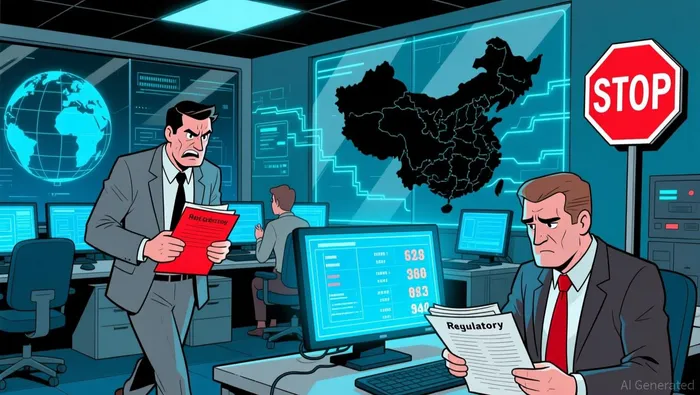
The dangerous imbalance revealed by these events is stark. On one side, Nvidia is demanding cash up front, effectively shifting all financial risk to its Chinese customers. On the other, Chinese regulators are pausing orders and weighing restrictions, creating a supply-demand freeze. This setup highlights a market where the most in-demand AI chips are caught between a company tightening its belts and a government deciding who gets to use them. The result is a temporary stalemate, but one that underscores how fragile the current commercial flow has become.
The Mechanics: Supply, Demand, and the Regulatory Wildcard
The core of this catalyst is a brutal supply-demand imbalance. Chinese tech giants have placed orders for more than 2 million H200 chips for 2026 delivery, a figure that dwarfs Nvidia's current capacity. The company's inventory of 700,000 units creates a gap of nearly two-to-one. This isn't just a tight market; it's a massive backlog that Nvidia is racing to fill, even as it seeks to ramp up production with TSMC for a second-quarter start.
Against this backdrop of pent-up demand, regulatory uncertainty acts as a complete stopgap. Beijing is not simply approving or denying; it is crafting a complex, conditional pathway. Sources indicate the government is weighing a partial approval that would allow limited imports for select commercial uses, while barring purchases by the military, sensitive government organizations, critical infrastructure operators, and state-owned enterprises. The ambiguity is in defining "critical infrastructure," leaving firms in limbo.
This regulatory wildcard is what forces Nvidia's hand. The company is now demanding full upfront payment with no cancellation option, a move explicitly framed as hedging against the risk of a government ban. The customer, therefore, bears the full financial risk. They pay tens of millions of dollars for a chip they may never be allowed to import or deploy, a stark shift from past terms. The result is a market frozen between a company's desperate need for cash flow and a government's deliberate, sector-by-sector vetting process.
The Investment Implication: A Mispricing or a Trap?
The new payment terms and order pause create a clear, immediate risk: a potential write-down on unsold inventory. If Beijing ultimately bans H200 imports, Nvidia faces a massive financial hit from chips paid for but never delivered. The upfront payment requirement shifts that risk to Chinese customers, but it does not eliminate the possibility of a write-down if the government blocks the shipments. This is the core financial trap.
The order pause itself may be temporary, but it signals Beijing's intent to push domestic chip adoption. Reports indicate authorities are asking some Chinese tech companies to halt purchases and may require them to shift toward domestically produced AI silicon. This is a strategic move to reduce reliance on U.S. technology, threatening long-term demand for Nvidia's high-end chips in its second-largest market.
At the same time, Nvidia is caught in a supply squeeze. The company must ramp up production via TSMC to meet global demand, while also trying to fill a gap of nearly two-to-one between Chinese orders and its current inventory. This dual pressure strains its ability to serve China, even if approvals eventually come. The result is a market where the most in-demand chips are frozen between a company's desperate need for cash flow and a government's deliberate, sector-by-sector vetting process.
For investors, this sets up a high-stakes gamble. The setup could create a temporary mispricing if the market overreacts to the regulatory pause, but the fundamental flaw is the extreme vulnerability to a single policy decision. The risk is not just a delay in revenue; it is the potential for a large, unplanned charge. The tactical shift in payment terms is a hedge, but it does not change the underlying binary outcome: Beijing's final decision on imports.
Catalysts and Watchpoints
The immediate setup is a high-stakes wait-and-see. The market is frozen between a company's desperate need for cash flow and a government's deliberate, sector-by-sector vetting process. For investors, the path forward hinges on three near-term catalysts that will confirm or deny the thesis of a temporary mispricing versus a fundamental demand collapse.
First, and most critical, is an official Chinese regulatory decision on H200 imports. Sources indicate Beijing is weighing a partial approval that could allow limited imports for select commercial uses as early as this quarter. The key watchpoint here is the final definition of "critical infrastructure." If the government imposes a narrow, restrictive carve-out, it will validate Nvidia's risk-hedging move and likely keep the market in a state of frozen demand. A broader, more permissive approval would be a major positive catalyst, unlocking the massive backlog. The absence of a decision by mid-quarter would signal continued paralysis.
Second, investors must watch TSMC's production ramp for H200 in the second quarter of 2026. Nvidia is racing to close a supply gap of nearly 2:1 between Chinese orders and its current inventory. The company has approached TSMC to ramp up production, with work expected to begin in Q2. The watchpoint is execution: can TSMC deliver the additional volume needed to meet global demand while also filling the China backlog? Any delay or shortfall in this ramp would exacerbate the supply squeeze and pressure Nvidia's ability to serve any market, not just China.
Finally, monitor for any shift in customer behavior, particularly increased orders for domestic alternatives. Reports indicate Chinese authorities are asking some tech companies to halt purchases and may require them to shift toward domestically produced AI chips. The watchpoint is whether this is a temporary pause or the start of a strategic retreat. Signs that major firms like ByteDance, Alibaba, or Tencent are actively sourcing from Chinese suppliers would be a clear signal that Beijing's push for self-reliance is gaining traction, threatening long-term demand for Nvidia's high-end chips in its second-largest market.





Comentarios
Aún no hay comentarios