
Nvidia Gains as Tesla Shifts Focus from Dojo Supercomputer
PorAinvest
jueves, 14 de agosto de 2025, 6:41 am ET2 min de lectura
NVDA--
The Dojo project, originally introduced in 2019, was positioned as a cornerstone in Tesla’s mission to achieve full self-driving and commercialize humanoid robots. However, after several years of development, Musk announced on X that the project had reached an "evolutionary dead end" [3]. The decision to shut down Dojo reflects Tesla's broader strategy to consolidate its AI efforts and reduce the complexity of its infrastructure.
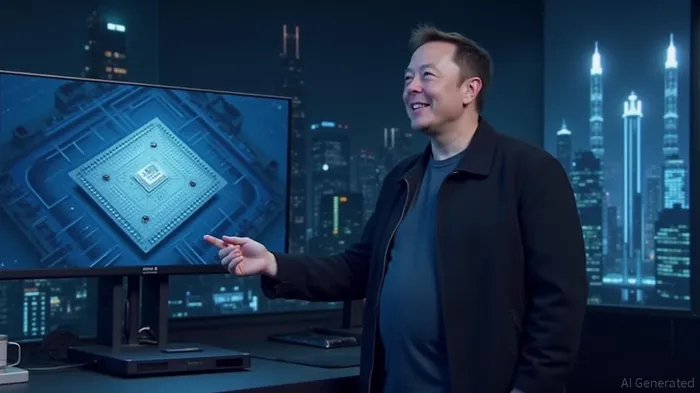
The new focus is on AI6, a next-generation chip designed to handle both AI training and real-time inference. Musk believes that AI6 will be more efficient and scalable than the specialized chips used in the Dojo project. The AI6 chip is expected to power Tesla’s self-driving vehicles and support its Optimus humanoid robot ambitions [3].
Tesla has partnered with Samsung to produce AI6 chips, with a reported deal worth $16.5 billion. This partnership reflects a broader industry trend, where companies are increasingly opting for partnerships over in-house supercomputing solutions. The collaboration with Samsung is expected to enhance Tesla’s AI decision-making capabilities, particularly for its Full Self-Driving (FSD) software and autonomous mobility services [2].
The shift away from Dojo is likely to have financial implications for Tesla. While the stock experienced a decline following the announcement of the project’s termination, Musk has emphasized the company’s commitment to achieving full autonomy [5]. The new strategy aligns with Tesla’s goal of accelerating real-time AI decisions, positioning the company to meet the practical demands of autonomous vehicle development while maintaining flexibility in its AI strategy [2].
The discontinuation of Dojo marks a significant departure from Tesla’s earlier vision of an in-house supercomputing system. However, it reflects a recalibration of resources toward more scalable and immediate applications, underscoring Tesla’s evolving approach to AI and hardware development [13]. The move is expected to simplify infrastructure, reduce cabling complexity, and cut costs significantly.
While the shutdown of Dojo raises questions about Tesla’s long-term R&D stability, the focus on AI6 may accelerate the company’s AI development, especially if the chip meets its performance targets. The shift is likely to have a ripple effect across the tech and automotive sectors, influencing how companies approach AI infrastructure and partnerships [3].
References:
[1] https://www.teslarati.com/elon-musk-confirms-tesla-ai6-chip-project-dojo-successor/
[2] https://www.ainvest.com/news/tesla-shifts-ai-focus-inference-chips-autonomous-driving-2508/
[3] https://startupnews.fyi/2025/08/14/tesla-shuts-down-dojo-supercomputer-project-citing-evolutionary-dead-end/
[4] https://www.teslarati.com/tesla-expands-robotaxi-program-in-austin-to-new-riders/
[5] https://www.tipranks.com/news/tesla-stock-tsla-tumbles-as-it-bins-dojo-ai-plans
TSLA--
Tesla CEO Elon Musk has announced that the company's in-house supercomputer, Dojo, is being sidelined in favor of a new chip project called AI6. This is a significant development for Nvidia, as Tesla is likely to remain a customer and use outsourced chips to scale its robotaxi and robotics services. Musk believes AI6 will handle both training workloads and inferencing neural networks across Tesla's broader infrastructure use cases.
Tesla CEO Elon Musk has announced a significant shift in the company's artificial intelligence (AI) strategy, signaling the end of its in-house supercomputer project, Dojo, in favor of a new chip project called AI6. This move is expected to have substantial implications for both Tesla and its key partners, particularly Nvidia.The Dojo project, originally introduced in 2019, was positioned as a cornerstone in Tesla’s mission to achieve full self-driving and commercialize humanoid robots. However, after several years of development, Musk announced on X that the project had reached an "evolutionary dead end" [3]. The decision to shut down Dojo reflects Tesla's broader strategy to consolidate its AI efforts and reduce the complexity of its infrastructure.
The new focus is on AI6, a next-generation chip designed to handle both AI training and real-time inference. Musk believes that AI6 will be more efficient and scalable than the specialized chips used in the Dojo project. The AI6 chip is expected to power Tesla’s self-driving vehicles and support its Optimus humanoid robot ambitions [3].
Tesla has partnered with Samsung to produce AI6 chips, with a reported deal worth $16.5 billion. This partnership reflects a broader industry trend, where companies are increasingly opting for partnerships over in-house supercomputing solutions. The collaboration with Samsung is expected to enhance Tesla’s AI decision-making capabilities, particularly for its Full Self-Driving (FSD) software and autonomous mobility services [2].
The shift away from Dojo is likely to have financial implications for Tesla. While the stock experienced a decline following the announcement of the project’s termination, Musk has emphasized the company’s commitment to achieving full autonomy [5]. The new strategy aligns with Tesla’s goal of accelerating real-time AI decisions, positioning the company to meet the practical demands of autonomous vehicle development while maintaining flexibility in its AI strategy [2].
The discontinuation of Dojo marks a significant departure from Tesla’s earlier vision of an in-house supercomputing system. However, it reflects a recalibration of resources toward more scalable and immediate applications, underscoring Tesla’s evolving approach to AI and hardware development [13]. The move is expected to simplify infrastructure, reduce cabling complexity, and cut costs significantly.
While the shutdown of Dojo raises questions about Tesla’s long-term R&D stability, the focus on AI6 may accelerate the company’s AI development, especially if the chip meets its performance targets. The shift is likely to have a ripple effect across the tech and automotive sectors, influencing how companies approach AI infrastructure and partnerships [3].
References:
[1] https://www.teslarati.com/elon-musk-confirms-tesla-ai6-chip-project-dojo-successor/
[2] https://www.ainvest.com/news/tesla-shifts-ai-focus-inference-chips-autonomous-driving-2508/
[3] https://startupnews.fyi/2025/08/14/tesla-shuts-down-dojo-supercomputer-project-citing-evolutionary-dead-end/
[4] https://www.teslarati.com/tesla-expands-robotaxi-program-in-austin-to-new-riders/
[5] https://www.tipranks.com/news/tesla-stock-tsla-tumbles-as-it-bins-dojo-ai-plans


Divulgación editorial y transparencia de la IA: Ainvest News utiliza tecnología avanzada de Modelos de Lenguaje Largo (LLM) para sintetizar y analizar datos de mercado en tiempo real. Para garantizar los más altos estándares de integridad, cada artículo se somete a un riguroso proceso de verificación con participación humana.
Mientras la IA asiste en el procesamiento de datos y la redacción inicial, un miembro editorial profesional de Ainvest revisa, verifica y aprueba de forma independiente todo el contenido para garantizar su precisión y cumplimiento con los estándares editoriales de Ainvest Fintech Inc. Esta supervisión humana está diseñada para mitigar las alucinaciones de la IA y garantizar el contexto financiero.
Advertencia sobre inversiones: Este contenido se proporciona únicamente con fines informativos y no constituye asesoramiento profesional de inversión, legal o financiero. Los mercados conllevan riesgos inherentes. Se recomienda a los usuarios que realicen una investigación independiente o consulten a un asesor financiero certificado antes de tomar cualquier decisión. Ainvest Fintech Inc. se exime de toda responsabilidad por las acciones tomadas con base en esta información. ¿Encontró un error? Reportar un problema


SOBRE NOSOTROS
Nuestra historiaAutores de noticiasBase de conocimientosPolítica de privacidadTérmino de usoDescargo de responsabilidad de corretaje de tercerosTérminos de uso de AIMEDivulgaciones de riesgos de AInvest AICarrerasCONTÁCTENOS
Email: support@ainvest.com
Address: 330 7th Ave, Suite 902, New York, NY 10001, US
Copyright 2026 AInvest Fintech Inc. All rights reserved.


Comentarios
Aún no hay comentarios