
Nvidia and Eli Lilly to Invest $1 Billion in AI-Powered Drug Discovery Lab
Nvidia and Eli LillyLLY-- have announced a five-year partnership to establish a joint research lab in the San Francisco Bay area, with an investment of $1 billion according to Reuters. The lab will focus on leveraging advanced AI tools to accelerate drug discovery and clinical development. This partnership was revealed at the JPMorgan Healthcare Conference in San Francisco on January 12, 2026 as reported.
The lab will use Nvidia's latest-generation Vera Rubin AI chips and build on the AI infrastructure that LillyLLY-- has already begun deploying according to the report. The facility is expected to open by the end of March 2026, with researchers from both companies working together to create high-quality training data for AI models in biotechnology as detailed by Quartz.
Both companies will dedicate incremental resources to the lab, with Lilly contributing its drug development expertise and NvidiaNVDA-- providing AI software, open-source models, and computational capacity according to Quartz.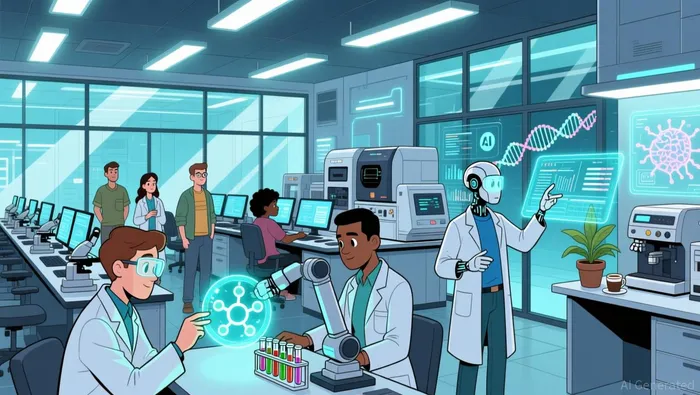 The collaboration aims to create a continuous feedback loop between data generation and AI model development as reported by Fierce Biotech.
Why Did This Happen?
Nvidia has been expanding its AI offerings in the biotech and pharmaceutical sectors, aiming to provide tools that streamline drug discovery according to Seeking Alpha. Lilly, meanwhile, has been investing heavily in AI to reduce the time and cost of bringing new treatments to market. The lab represents a significant step in both companies' strategies to integrate AI into every stage of the drug development pipeline as Reuters reports.
The partnership also aligns with broader industry trends. Drugmakers are increasingly using AI to design new therapies, as models can analyze vast datasets and identify potential treatments more quickly than traditional methods according to Reuters. By co-locating researchers, both companies hope to accelerate this process and drive innovation in medicine as Fierce Biotech notes.
What Are Analysts Watching Next?
Market participants will be watching whether this AI-driven approach leads to tangible results in drug discovery. Analysts note that AI has long promised faster development cycles, but success depends on the quality of data and the ability to validate AI-generated insights according to Quartz.
For Nvidia, the lab represents a multiyear commitment to the biotech sector and an opportunity to expand its hardware and software sales in this niche as Reuters reports. For Lilly, the project is a high-stakes investment that could either reinforce its position as a leader in AI-based drug development or highlight the limitations of computational approaches in complex biological systems according to Quartz.
Both companies are also exploring how AI can be applied beyond drug discovery, including in manufacturing and commercial operations as Fierce Biotech reports. Nvidia has already announced expanded versions of its BioNeMo platform, which includes models for RNA structure prediction and drug toxicity analysis according to Stock Titan.
What Does This Mean for Investors?
The partnership could have significant implications for both companies' stock valuations. Nvidia has seen strong growth in its AI business, and the biotech sector offers a promising expansion opportunity as Stock Titan reports. Lilly, on the other hand, is investing heavily in AI to maintain its competitive edge in pharmaceuticals according to Reuters.
Analysts will be watching for updates on the lab's progress, particularly regarding the speed and success of new drug candidates. If the lab produces results that reduce development timelines and increase the success rate of clinical trials, it could boost investor confidence in both companies as Quartz notes.
Investors should also pay attention to broader trends in AI adoption across the healthcare industry. As more companies invest in AI-driven workflows, the demand for advanced computing infrastructure is likely to grow, benefiting firms like Nvidia and Thermo Fisher Scientific, which is also partnering with Nvidia on AI laboratory automation according to Fierce Biotech.
The partnership between Nvidia and Lilly is part of a larger shift in the pharmaceutical industry. Companies are moving from a model where AI is used as a tool to one where it is seen as a scientific collaborator as Fierce Biotech reports. This change could redefine how medicines are developed and commercialized in the coming years.
The lab's success will depend on several factors, including regulatory approval, scientific validation, and the ability to scale AI workflows across multiple therapeutic areas. While the investment is large, it reflects the growing confidence in AI's potential to transform drug discovery and development according to Quartz.
If the lab achieves its goals, it could serve as a blueprint for future collaborations between technology and life sciences companies, further accelerating innovation in the healthcare sector according to Quartz.







Comentarios
Aún no hay comentarios