
Nvidia and the U.S.-China AI Chip Trade Dynamics: Strategic Implications for Investors
The U.S.-China rivalry over AI chip technology has reached a pivotal inflection point in 2025, with NvidiaNVDA-- at the center of a high-stakes geopolitical and economic contest. Recent policy shifts under the Trump administration, including the approval of H200 AI chip exports to China, have reshaped the landscape for investors. This analysis evaluates Nvidia's long-term investment potential amid evolving export controls, competitive pressures, and the broader strategic implications of U.S.-China tech dynamics.
Policy Shifts and Financial Implications
The Trump administration's decision to permit H200 chip sales to "approved customers" in China marks a stark departure from the Biden-era restrictions that stifled access to advanced AI hardware for Chinese firms according to reports. This policy reversal allows the U.S. , effectively monetizing the export while enabling Nvidia to regain a foothold in a market it had largely lost as research shows. For Nvidia, according to market analysis.
However, the financial benefits are not without caveats. Chinese authorities are reportedly implementing stringent approval processes for H200 imports, favoring domestic alternatives like Huawei's Ascend series and Alibaba's in-house AI systems according to CNBC reporting. These measures reflect Beijing's broader self-reliance strategy, which seeks to reduce dependence on foreign technology. Yet, as one notes, "China's semiconductor industry remains years behind in advanced chip production, making the H200 an attractive option for firms needing cutting-edge compute power despite bureaucratic hurdles" as reported by CNBC.
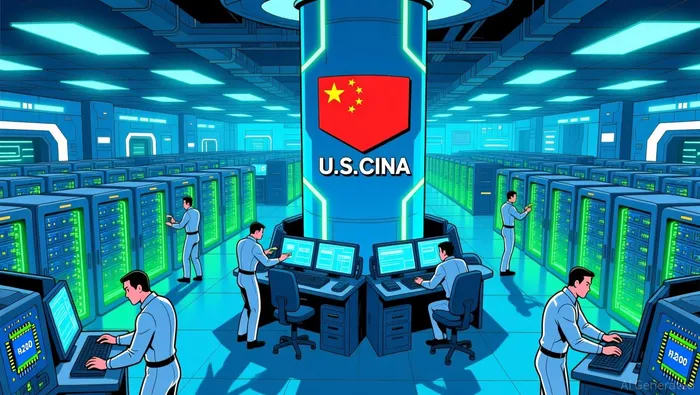
Competitive Landscape and Technological Edge
according to market analysis. Its recent CUDA 13.1 software update, which introduces tile-based programming, further cements its lead by enhancing developer productivity and ecosystem integration according to analysts. This software moat, combined with the H200's superior performance, creates a formidable barrier for competitors.
Emerging Chinese rivals like Moore Threads, often dubbed the "Nvidia of China," have garnered attention, with Moore Threads . However, these firms lag significantly in technological maturity and global infrastructure. As one expert observes, "Moore Threads and others may disrupt regional markets, but they lack the R&D scale, ecosystem partnerships, and software ecosystem to rival Nvidia's global footprint" according to expert analysis.
Long-Term Investment Considerations
For investors, the interplay of policy, technology, and geopolitics presents both opportunities and risks. On the upside, the Trump administration's policy shift could unlock new revenue streams for Nvidia while reinforcing its role as a key player in U.S. national security strategy as reported by Reuters. Analysts project continued growth, , driven by sustained demand for AI infrastructure and software monetization according to market forecasts.
Yet, risks persist. Critics warn that H200 exports could accelerate China's AI capabilities, potentially eroding the U.S. technological edge according to reports. Additionally, policy volatility remains a concern, as future administrations may reverse course based on shifting geopolitical priorities. China's push for self-reliance also threatens to reduce long-term demand for U.S. chips, though supply chain constraints ensure a transitional reliance on Nvidia's offerings according to CNBC reporting.
Strategic Conclusion
Nvidia's strategic position as the de facto leader in AI chip innovation, coupled with its ability to navigate complex geopolitical dynamics, positions it as a compelling long-term investment. While short-term uncertainties-such as enforcement actions against smuggling networks according to Justice Department reports and China's domestic chip ambitions-pose challenges, the company's technological moats, ecosystem dominance, and policy tailwinds outweigh these risks. For investors seeking exposure to the AI revolution, Nvidia's resilience and adaptability make it a cornerstone holding in an era defined by technological competition.





Comentarios
Aún no hay comentarios