
Nvidia's CES 2026 Keynote: A Pivotal Moment for AI and Hardware Leadership
Nvidia's CES 2026 keynote, delivered by CEO Jensen Huang on January 5, 2026, marked a defining moment in the company's trajectory as a leader in AI infrastructure, robotics, and gaming. The event underscored Nvidia's aggressive AI-first strategy, with a focus on the Blackwell Ultra and the upcoming Rubin architecture, while also addressing evolving competitive dynamics and regulatory headwinds. For investors, the keynote and subsequent market reactions highlight both the immense opportunities and risks in a rapidly shifting technological landscape.
AI Infrastructure: Blackwell and Rubin Cement Long-Term Dominance
Nvidia's roadmap for 2026 is anchored by the Blackwell Ultra and the Rubin architecture, both of which are poised to redefine AI infrastructure. The Blackwell Ultra, already in production, is ramping up to meet surging demand for high-performance computing in data centers and enterprise AI applications according to Tom's Guide. Meanwhile, the Rubin architecture, , in inference efficiency over prior generations. This leap in performance positions Rubin as a critical asset for industries reliant on real-time AI processing, such as autonomous vehicles and robotics.
Analysts have emphasized the strategic significance of Rubin. According to a report by TechPolicy Press, the Rubin architecture's focus on inference efficiency addresses a key bottleneck in AI deployment, where cost and speed often limit scalability. , Nvidia's dominance in the AI infrastructure market appears secure-provided it can maintain its lead in hardware innovation.
Robotics and Physical AI: Expanding the AI Ecosystem
The CES 2026 keynote also spotlighted Nvidia's push into robotics, a sector with long-term growth potential. Huang's session on " and the Big Bang of General Robotics" highlighted how AI is transforming industrial automation, logistics, and service robots. By integrating its Omniverse platform with robotics, NvidiaNVDA-- aims to create a unified simulation environment for training and deploying AI-driven machines.
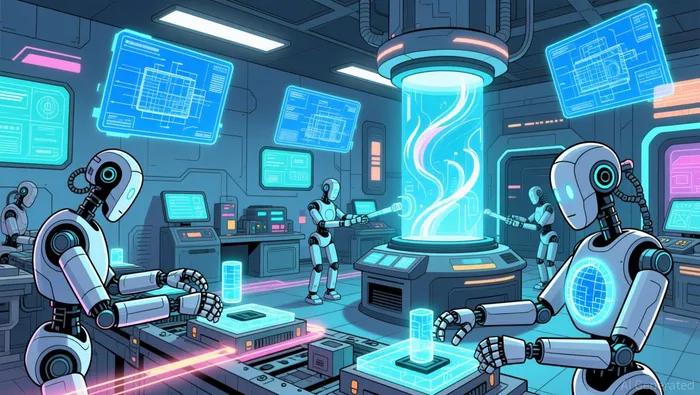 This move aligns with broader industry trends. As noted in LongBridge News, the robotics market is intensifying globally, with competitors from China, the U.S., and South Korea vying for leadership in industrial applications. Nvidia's strength lies in its ability to abstract complex hardware challenges through software, enabling developers to focus on AI algorithms rather than low-level engineering. However, the company faces challenges from specialized robotics startups and alternative hardware providers, which could fragment the market.
Gaming and Consumer Markets: Incremental but Strategic Updates
While the gaming segment received less attention at CES 2026, Nvidia's updates to DLSS 4 and neural rendering technologies underscore its commitment to maintaining relevance in consumer markets. The expanded international availability of GeForce Now, powered by the RTX 5080, also signals a strategic pivot toward cloud gaming-a sector projected to grow as 5G and edge computing mature.
However, the gaming market is increasingly competitive. AMD and Intel are focusing on AI-enhanced PCs and traditional GPU upgrades, while cloud gaming platforms like Google's Stadia and Microsoft's Xbox Cloud Gaming continue to challenge Nvidia's dominance. For investors, the key question is whether Nvidia can sustain its premium pricing in a market where price sensitivity is rising.
Competitive Risks and Regulatory Scrutiny
Nvidia's dominance is not without threats. Alphabet's (TPUs) are gaining traction, . Additionally, regulatory scrutiny in the U.S., EU, and UK has intensified, with antitrust investigations targeting Nvidia's CUDA ecosystem and exclusive partnerships. These investigations could force the company to open its software stack or face penalties, potentially eroding its competitive moat.
Another risk lies in the hardware-software decoupling. and are reducing the lock-in effect of CUDA, enabling developers to switch between GPUs, TPUs, and other architectures with minimal code changes. This trend could dilute Nvidia's pricing power over time, especially as alternative architectures mature.
Market Reactions and Analyst Optimism
Despite these risks, the market has responded positively to Nvidia's roadmap. Analysts at Wedbush Securities and Bank of America , respectively, . This optimism is fueled by Nvidia's Q4 2025 results, . Strategic partnerships with AWS, Cisco, and Verizon further reinforce its ecosystem dominance according to TechPolicy Press.
However, some analysts caution against overvaluation. High price-to-sales ratios and historical precedents of AI hype cycles suggest a potential correction in 2026. For now, though, Nvidia's ability to innovate across hardware, software, and partnerships appears to outweigh these concerns.
Conclusion: A High-Stakes Bet on AI's Future
Nvidia's CES 2026 keynote reaffirmed its position as a cornerstone of the AI revolution. The Blackwell Ultra and Rubin architecture provide a clear path to maintaining leadership in AI infrastructure, while its forays into robotics and cloud gaming diversify its revenue streams. Yet, the company's long-term success will depend on navigating competitive pressures, regulatory challenges, and the evolving software landscape.
For investors, the key takeaway is that Nvidia's stock remains a high-conviction bet. While risks are material, the company's ecosystem advantages, revenue growth, and strategic foresight suggest it is well-positioned to capitalize on the AI-driven economy-provided it can sustain its innovation pace. As one analyst aptly put it, "The AI buildout is still in its early innings, and Nvidia is the most essential stock in this story" according to Investopedia.





Comentarios
Aún no hay comentarios