
Nvidia CEO Tours China Amidst Beijing Antitrust Probe and AI Export Curbs
Generado por agente de IANathaniel Stone
lunes, 13 de enero de 2025, 11:34 pm ET1 min de lectura
NVDA--
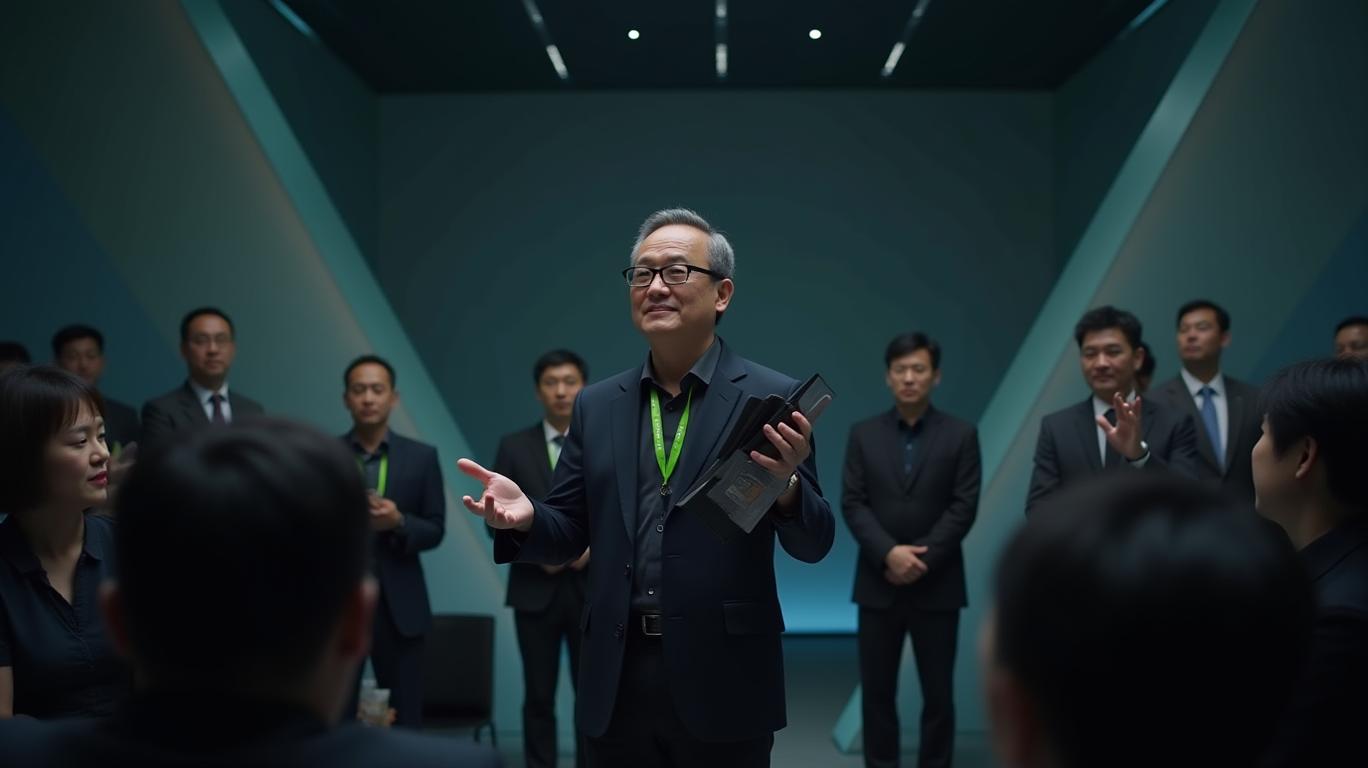
Nvidia's CEO, Jensen Huang, recently visited China, a move that has drawn attention amidst an ongoing antitrust investigation by the State Administration for Market Regulation (SAMR) and the looming threat of AI export curbs. The visit comes at a time when Nvidia is facing scrutiny for its alleged monopolistic behaviors and potential violations of China's Anti-Monopoly Law.
The antitrust probe, initiated in 2023, centers around Nvidia's acquisition of Mellanox Technologies in 2019. The merger strengthened Nvidia's market dominance in the semiconductor field, potentially excluding or restricting competition in the global and Chinese markets for GPU accelerators, dedicated network interconnection equipment, and high-speed Ethernet adapters. Nvidia submitted measures to resolve competition problems, but it has since stopped supplying certain GPU accelerator products to China, infringing upon the legitimate rights and interests of relevant Chinese enterprises.
Meanwhile, the U.S. government is preparing a final set of export restrictions on advanced AI GPUs, which could significantly impact Nvidia's global revenue. Under the new rules, only companies from the U.S. and 18 allies can buy AI GPUs without limits. Entities from other countries will have limited access to AI GPUs unless they obtain validated end user (VEU) status. China, Russia, Macau, and other arms-embargoed nations will face a near-total ban on AI GPU imports. Nvidia and the Semiconductor Industry Association (SIA) strongly oppose the decision, arguing that it will harm the U.S. economy and set America back.
Nvidia's commitment to China, with about 16 percent of its revenue coming from the country, could potentially strain its relationship with the U.S. government. The geopolitical tensions between the U.S. and China, particularly in the realm of technology and artificial intelligence, may put Nvidia in a delicate position. The company must navigate these challenges carefully to maintain its position in both markets.
In conclusion, Nvidia's CEO visit to China amidst the ongoing antitrust investigation and the threat of AI export curbs highlights the complex geopolitical landscape the company operates in. Nvidia must address the antitrust concerns and adapt to the changing regulatory environment to continue its growth and success in the global market.
Nvidia's CEO, Jensen Huang, recently visited China, a move that has drawn attention amidst an ongoing antitrust investigation by the State Administration for Market Regulation (SAMR) and the looming threat of AI export curbs. The visit comes at a time when Nvidia is facing scrutiny for its alleged monopolistic behaviors and potential violations of China's Anti-Monopoly Law.
The antitrust probe, initiated in 2023, centers around Nvidia's acquisition of Mellanox Technologies in 2019. The merger strengthened Nvidia's market dominance in the semiconductor field, potentially excluding or restricting competition in the global and Chinese markets for GPU accelerators, dedicated network interconnection equipment, and high-speed Ethernet adapters. Nvidia submitted measures to resolve competition problems, but it has since stopped supplying certain GPU accelerator products to China, infringing upon the legitimate rights and interests of relevant Chinese enterprises.
Meanwhile, the U.S. government is preparing a final set of export restrictions on advanced AI GPUs, which could significantly impact Nvidia's global revenue. Under the new rules, only companies from the U.S. and 18 allies can buy AI GPUs without limits. Entities from other countries will have limited access to AI GPUs unless they obtain validated end user (VEU) status. China, Russia, Macau, and other arms-embargoed nations will face a near-total ban on AI GPU imports. Nvidia and the Semiconductor Industry Association (SIA) strongly oppose the decision, arguing that it will harm the U.S. economy and set America back.
Nvidia's commitment to China, with about 16 percent of its revenue coming from the country, could potentially strain its relationship with the U.S. government. The geopolitical tensions between the U.S. and China, particularly in the realm of technology and artificial intelligence, may put Nvidia in a delicate position. The company must navigate these challenges carefully to maintain its position in both markets.
In conclusion, Nvidia's CEO visit to China amidst the ongoing antitrust investigation and the threat of AI export curbs highlights the complex geopolitical landscape the company operates in. Nvidia must address the antitrust concerns and adapt to the changing regulatory environment to continue its growth and success in the global market.

Divulgación editorial y transparencia de la IA: Ainvest News utiliza tecnología avanzada de Modelos de Lenguaje Largo (LLM) para sintetizar y analizar datos de mercado en tiempo real. Para garantizar los más altos estándares de integridad, cada artículo se somete a un riguroso proceso de verificación con participación humana.
Mientras la IA asiste en el procesamiento de datos y la redacción inicial, un miembro editorial profesional de Ainvest revisa, verifica y aprueba de forma independiente todo el contenido para garantizar su precisión y cumplimiento con los estándares editoriales de Ainvest Fintech Inc. Esta supervisión humana está diseñada para mitigar las alucinaciones de la IA y garantizar el contexto financiero.
Advertencia sobre inversiones: Este contenido se proporciona únicamente con fines informativos y no constituye asesoramiento profesional de inversión, legal o financiero. Los mercados conllevan riesgos inherentes. Se recomienda a los usuarios que realicen una investigación independiente o consulten a un asesor financiero certificado antes de tomar cualquier decisión. Ainvest Fintech Inc. se exime de toda responsabilidad por las acciones tomadas con base en esta información. ¿Encontró un error? Reportar un problema




Comentarios
Aún no hay comentarios