
Nvidia CEO Predicts 'ChatGPT Moment' for Robotics: A Game Changer for AI and Tech
Generado por agente de IATheodore Quinn
miércoles, 8 de enero de 2025, 6:05 am ET1 min de lectura
NVDA--
Nvidia CEO Jensen Huang has sparked excitement in the tech world by predicting a "ChatGPT moment" for robotics, signaling a potential breakthrough in general robotics technologies driven by advancements in AI tools. This development could significantly impact the broader AI and technology landscape, accelerating the growth of general robotics, improving the training of humanoid robots, and expanding AI applications into physical AI. As a result, the demand for AI chips is expected to increase, benefiting companies like Nvidia.
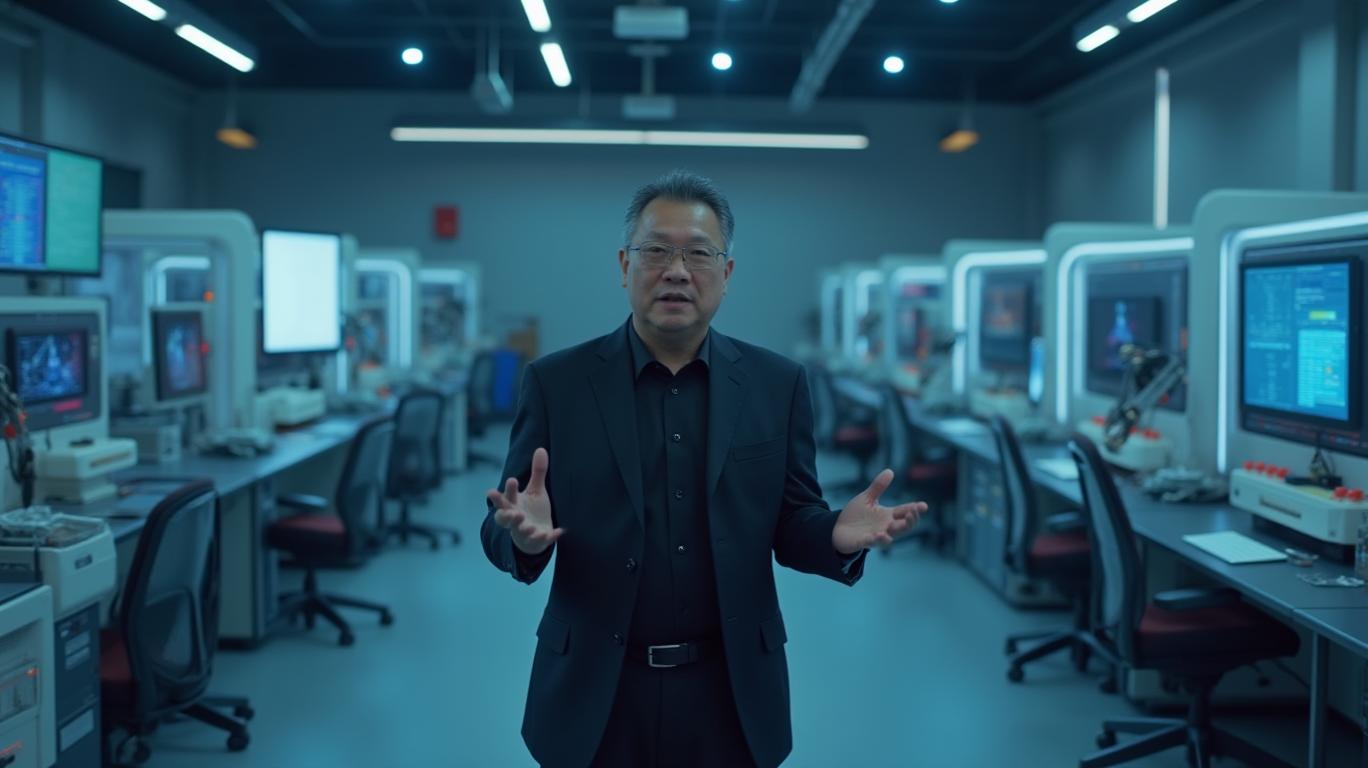
Huang's remarks at the Consumer Electronics Show (CES) in Las Vegas highlighted the potential for AI tools to facilitate rapid and surprising breakthroughs in general robotics, including information technology, self-driving cars, and humanoid robots. This development could lead to increased automation in manufacturing facilities and warehouses, driving efficiency and productivity gains.
One of the key enablers for this growth is Nvidia's Cosmos platform, which leverages world foundation models to simulate the physical world, including physics, spatial relationships, and movement dynamics. This approach allows for the creation of virtual environments where autonomous systems, such as robots and vehicles, can be trained without the need for costly real-world data collection. By generating massive amounts of controllable synthetic data, developers can train perception robots more efficiently and cost-effectively than traditional methods.
The "ChatGPT moment" for robotics could also lead to improved training of humanoid robots. Nvidia's Isaac Groot initiative provides developers with technology elements, including foundation models, data pipelines, simulation frameworks, and a Thor robotics computer. These technologies enable developers to capture motion trajectories and create robot policies without the need for a physical robot, making the training process more efficient.
As AI becomes more prevalent in robotics and other physical applications, there will be an increased demand for AI chips. Nvidia, as a leading provider of AI chips, is well-positioned to benefit from this trend. The company's strong financial performance and market position make it an attractive investment opportunity for those looking to capitalize on the growing AI and robotics market.
In conclusion, Nvidia CEO Jensen Huang's prediction of a "ChatGPT moment" for robotics signals a potential breakthrough in general robotics technologies driven by advancements in AI tools. This development could significantly impact the broader AI and technology landscape, accelerating the growth of general robotics, improving the training of humanoid robots, and expanding AI applications into physical AI. As a result, the demand for AI chips is expected to increase, benefiting companies like Nvidia and presenting an attractive investment opportunity for those looking to capitalize on the growing AI and robotics market.
Nvidia CEO Jensen Huang has sparked excitement in the tech world by predicting a "ChatGPT moment" for robotics, signaling a potential breakthrough in general robotics technologies driven by advancements in AI tools. This development could significantly impact the broader AI and technology landscape, accelerating the growth of general robotics, improving the training of humanoid robots, and expanding AI applications into physical AI. As a result, the demand for AI chips is expected to increase, benefiting companies like Nvidia.
Huang's remarks at the Consumer Electronics Show (CES) in Las Vegas highlighted the potential for AI tools to facilitate rapid and surprising breakthroughs in general robotics, including information technology, self-driving cars, and humanoid robots. This development could lead to increased automation in manufacturing facilities and warehouses, driving efficiency and productivity gains.
One of the key enablers for this growth is Nvidia's Cosmos platform, which leverages world foundation models to simulate the physical world, including physics, spatial relationships, and movement dynamics. This approach allows for the creation of virtual environments where autonomous systems, such as robots and vehicles, can be trained without the need for costly real-world data collection. By generating massive amounts of controllable synthetic data, developers can train perception robots more efficiently and cost-effectively than traditional methods.
The "ChatGPT moment" for robotics could also lead to improved training of humanoid robots. Nvidia's Isaac Groot initiative provides developers with technology elements, including foundation models, data pipelines, simulation frameworks, and a Thor robotics computer. These technologies enable developers to capture motion trajectories and create robot policies without the need for a physical robot, making the training process more efficient.
As AI becomes more prevalent in robotics and other physical applications, there will be an increased demand for AI chips. Nvidia, as a leading provider of AI chips, is well-positioned to benefit from this trend. The company's strong financial performance and market position make it an attractive investment opportunity for those looking to capitalize on the growing AI and robotics market.
In conclusion, Nvidia CEO Jensen Huang's prediction of a "ChatGPT moment" for robotics signals a potential breakthrough in general robotics technologies driven by advancements in AI tools. This development could significantly impact the broader AI and technology landscape, accelerating the growth of general robotics, improving the training of humanoid robots, and expanding AI applications into physical AI. As a result, the demand for AI chips is expected to increase, benefiting companies like Nvidia and presenting an attractive investment opportunity for those looking to capitalize on the growing AI and robotics market.

Divulgación editorial y transparencia de la IA: Ainvest News utiliza tecnología avanzada de Modelos de Lenguaje Largo (LLM) para sintetizar y analizar datos de mercado en tiempo real. Para garantizar los más altos estándares de integridad, cada artículo se somete a un riguroso proceso de verificación con participación humana.
Mientras la IA asiste en el procesamiento de datos y la redacción inicial, un miembro editorial profesional de Ainvest revisa, verifica y aprueba de forma independiente todo el contenido para garantizar su precisión y cumplimiento con los estándares editoriales de Ainvest Fintech Inc. Esta supervisión humana está diseñada para mitigar las alucinaciones de la IA y garantizar el contexto financiero.
Advertencia sobre inversiones: Este contenido se proporciona únicamente con fines informativos y no constituye asesoramiento profesional de inversión, legal o financiero. Los mercados conllevan riesgos inherentes. Se recomienda a los usuarios que realicen una investigación independiente o consulten a un asesor financiero certificado antes de tomar cualquier decisión. Ainvest Fintech Inc. se exime de toda responsabilidad por las acciones tomadas con base en esta información. ¿Encontró un error? Reportar un problema




Comentarios
Aún no hay comentarios