
Nvidia CEO: Full Autonomy Won't Be Achieved Until Next Decade
Generado por agente de IAWesley Park
lunes, 20 de enero de 2025, 12:54 am ET2 min de lectura
NVDA--
Nvidia's CEO, Jensen Huang, has recently shared his perspective on the future of autonomous vehicles, contrasting it with Elon Musk's optimism. Huang believes that achieving full autonomy will not be possible until the next decade, citing several challenges that need to be addressed. In this article, we'll explore Huang's views and the technological advancements required for full autonomy to become a reality.
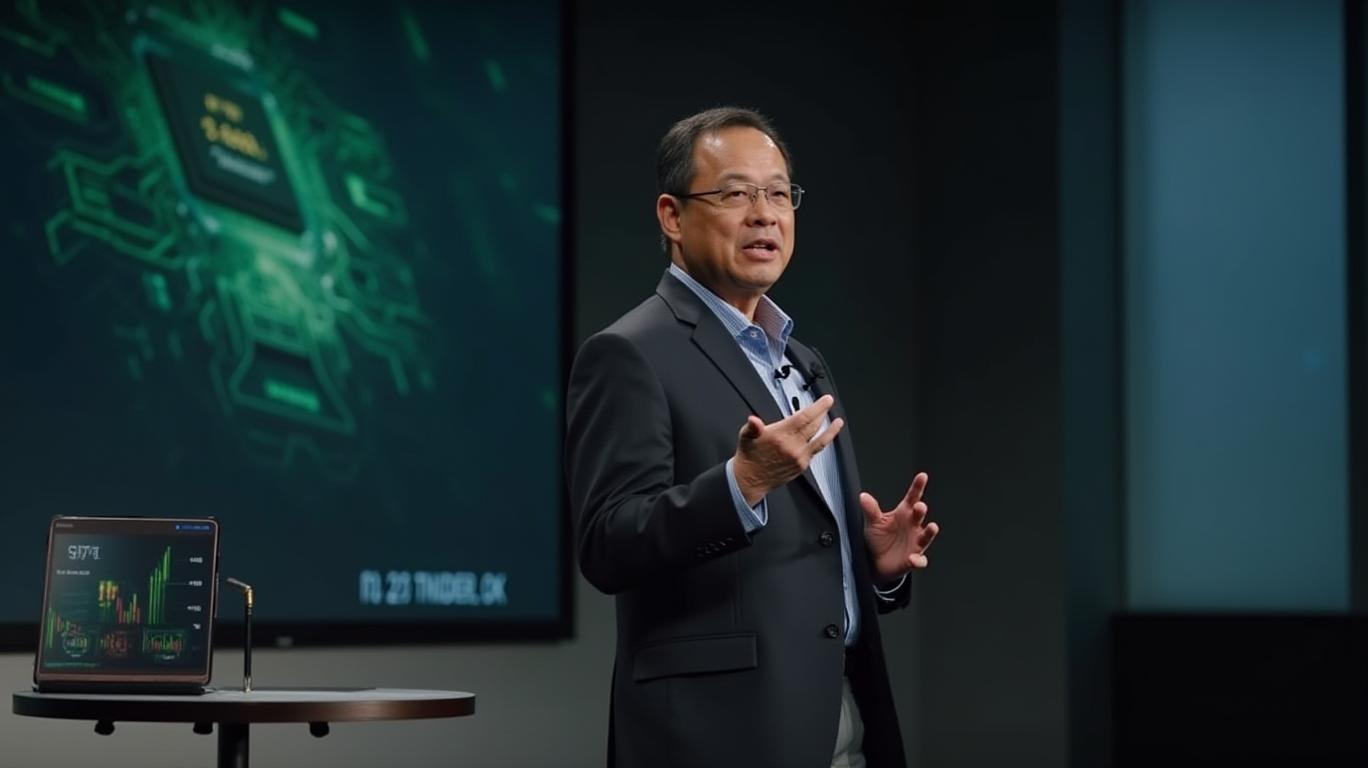
Huang, in an interview with CNBC, stated that full autonomy is "super hard" and that it won't be achieved in the current decade. He acknowledged that while progress has been made, there are still significant hurdles to overcome. Huang's stance differs from Musk's, who has been more optimistic about the timeline for full autonomy.
One of the main challenges Huang highlighted is the need for advanced AI and machine learning models that can understand, reason, and make decisions in real-world environments. Nvidia's DRIVE platform uses AI models trained on Nvidia DGX™ to tackle complex driving scenarios, but these models need to be further enhanced to handle a wider range of situations and edge cases.
High-fidelity simulation is another critical aspect of achieving full autonomy. Nvidia's OVX and Omniverse Cloud Sensor RTX™ APIs enable high-fidelity, physically based simulation to train, test, and validate AVs. However, as full autonomy approaches, these simulations will need to become even more realistic and comprehensive.
Safety and functional safety are paramount in autonomous vehicles. Nvidia's DRIVE platforms are built with safety at their core, prioritizing robust training, simulation, and real-time decision-making. To achieve full autonomy, these safety measures will need to be further enhanced and validated through rigorous testing and certification processes.
Perception and sensor fusion are also crucial for autonomous vehicles to accurately perceive their environment in real-time. Nvidia's DRIVE platform already incorporates sensor fusion, but further advancements are needed to improve perception and reduce sensor dependency.
Edge computing and in-vehicle AI are essential for making real-time decisions in autonomous vehicles. Nvidia's DRIVE AGX™ platform delivers high levels of compute performance, enabling AI-defined vehicles to process large volumes of sensor data over the air for safe, real-time driving decisions. As full autonomy approaches, these in-vehicle AI capabilities will need to be further enhanced and optimized.
Over-the-air (OTA) updates are crucial for keeping autonomous vehicles up-to-date with the latest software and security patches. Nvidia's DRIVE platform supports OTA updates, allowing manufacturers to build, scale, and leverage one development investment across an entire fleet. As full autonomy becomes a reality, OTA updates will play a critical role in maintaining the security and functionality of autonomous vehicles.
Standardization and interoperability are essential for the widespread adoption of autonomous vehicles. Nvidia's DRIVE platform is designed to be modular and scalable, allowing customers to easily use what they need and upgrade as required. As full autonomy approaches, industry-wide collaboration and standardization will be essential to ensure compatibility and interoperability between different autonomous vehicle systems.
In conclusion, Nvidia's CEO, Jensen Huang, has shared his perspective on the future of autonomous vehicles, contrasting it with Elon Musk's optimism. Huang believes that achieving full autonomy will not be possible until the next decade, citing several challenges that need to be addressed. These challenges include advanced AI and machine learning, high-fidelity simulation, safety and functional safety, perception and sensor fusion, edge computing and in-vehicle AI, over-the-air updates, and standardization and interoperability. As the technology continues to evolve, Nvidia's DRIVE platform is well-positioned to help drive the industry forward towards full autonomy.
PGRE--
Nvidia's CEO, Jensen Huang, has recently shared his perspective on the future of autonomous vehicles, contrasting it with Elon Musk's optimism. Huang believes that achieving full autonomy will not be possible until the next decade, citing several challenges that need to be addressed. In this article, we'll explore Huang's views and the technological advancements required for full autonomy to become a reality.
Huang, in an interview with CNBC, stated that full autonomy is "super hard" and that it won't be achieved in the current decade. He acknowledged that while progress has been made, there are still significant hurdles to overcome. Huang's stance differs from Musk's, who has been more optimistic about the timeline for full autonomy.
One of the main challenges Huang highlighted is the need for advanced AI and machine learning models that can understand, reason, and make decisions in real-world environments. Nvidia's DRIVE platform uses AI models trained on Nvidia DGX™ to tackle complex driving scenarios, but these models need to be further enhanced to handle a wider range of situations and edge cases.
High-fidelity simulation is another critical aspect of achieving full autonomy. Nvidia's OVX and Omniverse Cloud Sensor RTX™ APIs enable high-fidelity, physically based simulation to train, test, and validate AVs. However, as full autonomy approaches, these simulations will need to become even more realistic and comprehensive.
Safety and functional safety are paramount in autonomous vehicles. Nvidia's DRIVE platforms are built with safety at their core, prioritizing robust training, simulation, and real-time decision-making. To achieve full autonomy, these safety measures will need to be further enhanced and validated through rigorous testing and certification processes.
Perception and sensor fusion are also crucial for autonomous vehicles to accurately perceive their environment in real-time. Nvidia's DRIVE platform already incorporates sensor fusion, but further advancements are needed to improve perception and reduce sensor dependency.
Edge computing and in-vehicle AI are essential for making real-time decisions in autonomous vehicles. Nvidia's DRIVE AGX™ platform delivers high levels of compute performance, enabling AI-defined vehicles to process large volumes of sensor data over the air for safe, real-time driving decisions. As full autonomy approaches, these in-vehicle AI capabilities will need to be further enhanced and optimized.
Over-the-air (OTA) updates are crucial for keeping autonomous vehicles up-to-date with the latest software and security patches. Nvidia's DRIVE platform supports OTA updates, allowing manufacturers to build, scale, and leverage one development investment across an entire fleet. As full autonomy becomes a reality, OTA updates will play a critical role in maintaining the security and functionality of autonomous vehicles.
Standardization and interoperability are essential for the widespread adoption of autonomous vehicles. Nvidia's DRIVE platform is designed to be modular and scalable, allowing customers to easily use what they need and upgrade as required. As full autonomy approaches, industry-wide collaboration and standardization will be essential to ensure compatibility and interoperability between different autonomous vehicle systems.
In conclusion, Nvidia's CEO, Jensen Huang, has shared his perspective on the future of autonomous vehicles, contrasting it with Elon Musk's optimism. Huang believes that achieving full autonomy will not be possible until the next decade, citing several challenges that need to be addressed. These challenges include advanced AI and machine learning, high-fidelity simulation, safety and functional safety, perception and sensor fusion, edge computing and in-vehicle AI, over-the-air updates, and standardization and interoperability. As the technology continues to evolve, Nvidia's DRIVE platform is well-positioned to help drive the industry forward towards full autonomy.

Divulgación editorial y transparencia de la IA: Ainvest News utiliza tecnología avanzada de Modelos de Lenguaje Largo (LLM) para sintetizar y analizar datos de mercado en tiempo real. Para garantizar los más altos estándares de integridad, cada artículo se somete a un riguroso proceso de verificación con participación humana.
Mientras la IA asiste en el procesamiento de datos y la redacción inicial, un miembro editorial profesional de Ainvest revisa, verifica y aprueba de forma independiente todo el contenido para garantizar su precisión y cumplimiento con los estándares editoriales de Ainvest Fintech Inc. Esta supervisión humana está diseñada para mitigar las alucinaciones de la IA y garantizar el contexto financiero.
Advertencia sobre inversiones: Este contenido se proporciona únicamente con fines informativos y no constituye asesoramiento profesional de inversión, legal o financiero. Los mercados conllevan riesgos inherentes. Se recomienda a los usuarios que realicen una investigación independiente o consulten a un asesor financiero certificado antes de tomar cualquier decisión. Ainvest Fintech Inc. se exime de toda responsabilidad por las acciones tomadas con base en esta información. ¿Encontró un error? Reportar un problema




Comentarios
Aún no hay comentarios