
Nvidia's Bold Move: Tariffs Downplayed, U.S. Production Ramped Up
Generado por agente de IATheodore Quinn
viernes, 21 de marzo de 2025, 2:56 pm ET1 min de lectura
NVDA--
Nvidia, the leading designer of graphics processing units (GPUs), has made a bold strategic move in response to President Donald Trump's tariff policies. CEO Jensen Huang downplayed the negative impact of tariffs, asserting that the company is enthusiastic about building in America and has already begun manufacturing chips in the U.S. This shift is part of a broader strategy to diversify Nvidia's supply chain and reduce reliance on overseas manufacturing, particularly in China.
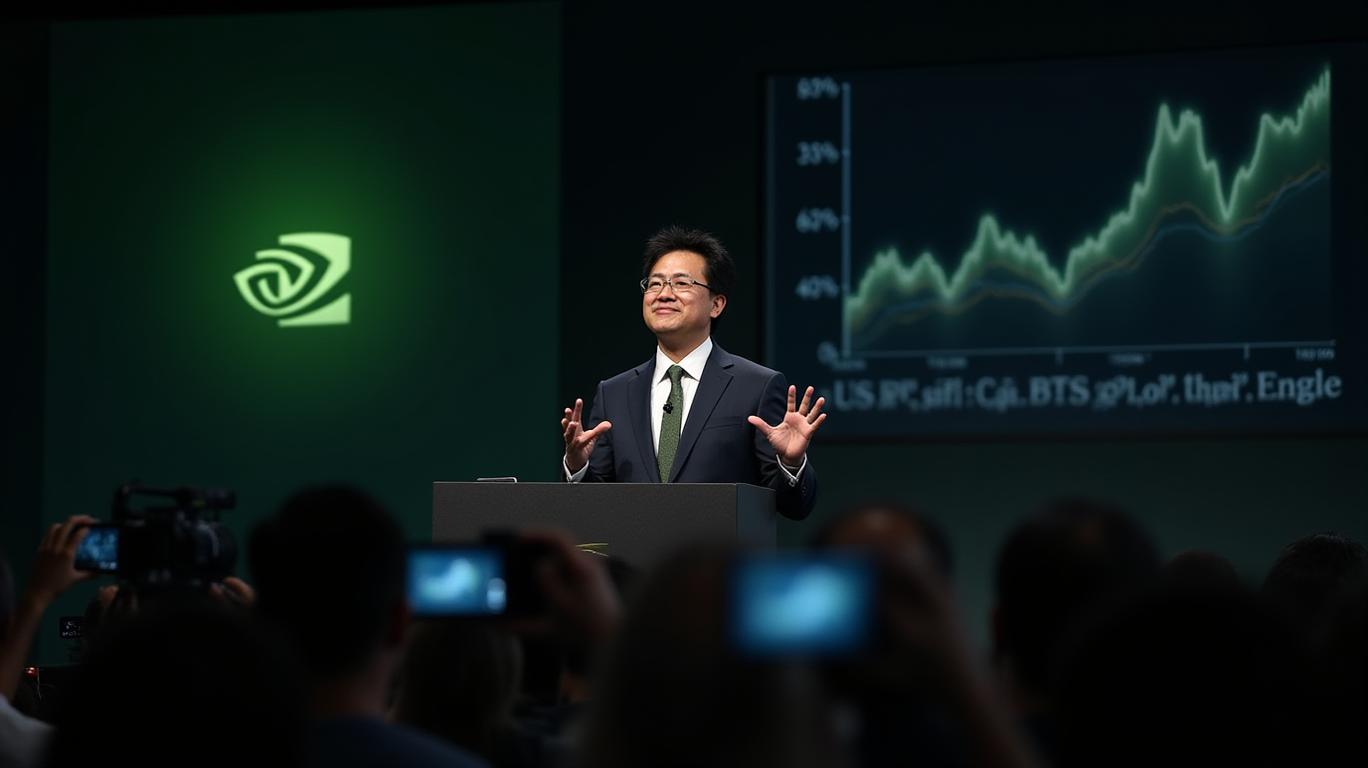
The Impact of Tariffs on Nvidia's Market Position
Trump's tariff policies have introduced significant challenges for NvidiaNVDA--, particularly in its operations in China. The company has faced export restrictions and limited business opportunities in the region, leading to a significant drop in revenue. However, Nvidia's strategic shift towards U.S. production aims to mitigate these challenges and secure a more resilient supply chain.
The Strategic Shift to U.S. Production
Nvidia's decision to invest hundreds of billions of dollars in U.S. chip production over the next four years is a testament to its confidence in the domestic market. The company is working with partners like TSMC to manufacture chips in the U.S., and has already confirmed that Blackwell systems are being produced domestically. This move aligns with Trump's "America First" policies and could help Nvidia avoid some of the tariff-related disruptions.
The Competitive Landscape
The tariff policies could also reshape the competitive landscape for Nvidia. Companies like Huawei pose a growing competitive threat in China, and Nvidia's limited business in the country could allow Huawei to gain a stronger foothold. Additionally, other companies like Apple and TSMC are also investing in U.S. production, which could lead to increased competition for Nvidia in the domestic market.
Long-term Strategic Considerations
Despite the near-term challenges posed by tariffs, Nvidia's long-term strategy seems to be focused on building a more resilient and diversified supply chain. As Jensen Huang stated, "We are enthusiastic about building in America as anybody... We've been working with TSMC to get them ready for manufacturing chips here in the United States." This strategic shift could help Nvidia maintain its competitive edge in the long run, even as it navigates the complexities of Trump's tariff policies.
Conclusion
Nvidia's bold move to downplay the impact of tariffs and ramp up U.S. production is a strategic decision that could have both short-term and long-term implications for the company. While the tariff policies may lead to near-term disruptions and revenue losses, they could also drive Nvidia to invest more in U.S. manufacturing, potentially strengthening its long-term competitiveness. As the company continues to navigate the complexities of the global market, its strategic shift towards U.S. production could be a key factor in its long-term success.
Nvidia, the leading designer of graphics processing units (GPUs), has made a bold strategic move in response to President Donald Trump's tariff policies. CEO Jensen Huang downplayed the negative impact of tariffs, asserting that the company is enthusiastic about building in America and has already begun manufacturing chips in the U.S. This shift is part of a broader strategy to diversify Nvidia's supply chain and reduce reliance on overseas manufacturing, particularly in China.
The Impact of Tariffs on Nvidia's Market Position
Trump's tariff policies have introduced significant challenges for NvidiaNVDA--, particularly in its operations in China. The company has faced export restrictions and limited business opportunities in the region, leading to a significant drop in revenue. However, Nvidia's strategic shift towards U.S. production aims to mitigate these challenges and secure a more resilient supply chain.
The Strategic Shift to U.S. Production
Nvidia's decision to invest hundreds of billions of dollars in U.S. chip production over the next four years is a testament to its confidence in the domestic market. The company is working with partners like TSMC to manufacture chips in the U.S., and has already confirmed that Blackwell systems are being produced domestically. This move aligns with Trump's "America First" policies and could help Nvidia avoid some of the tariff-related disruptions.
The Competitive Landscape
The tariff policies could also reshape the competitive landscape for Nvidia. Companies like Huawei pose a growing competitive threat in China, and Nvidia's limited business in the country could allow Huawei to gain a stronger foothold. Additionally, other companies like Apple and TSMC are also investing in U.S. production, which could lead to increased competition for Nvidia in the domestic market.
Long-term Strategic Considerations
Despite the near-term challenges posed by tariffs, Nvidia's long-term strategy seems to be focused on building a more resilient and diversified supply chain. As Jensen Huang stated, "We are enthusiastic about building in America as anybody... We've been working with TSMC to get them ready for manufacturing chips here in the United States." This strategic shift could help Nvidia maintain its competitive edge in the long run, even as it navigates the complexities of Trump's tariff policies.
Conclusion
Nvidia's bold move to downplay the impact of tariffs and ramp up U.S. production is a strategic decision that could have both short-term and long-term implications for the company. While the tariff policies may lead to near-term disruptions and revenue losses, they could also drive Nvidia to invest more in U.S. manufacturing, potentially strengthening its long-term competitiveness. As the company continues to navigate the complexities of the global market, its strategic shift towards U.S. production could be a key factor in its long-term success.

Divulgación editorial y transparencia de la IA: Ainvest News utiliza tecnología avanzada de Modelos de Lenguaje Largo (LLM) para sintetizar y analizar datos de mercado en tiempo real. Para garantizar los más altos estándares de integridad, cada artículo se somete a un riguroso proceso de verificación con participación humana.
Mientras la IA asiste en el procesamiento de datos y la redacción inicial, un miembro editorial profesional de Ainvest revisa, verifica y aprueba de forma independiente todo el contenido para garantizar su precisión y cumplimiento con los estándares editoriales de Ainvest Fintech Inc. Esta supervisión humana está diseñada para mitigar las alucinaciones de la IA y garantizar el contexto financiero.
Advertencia sobre inversiones: Este contenido se proporciona únicamente con fines informativos y no constituye asesoramiento profesional de inversión, legal o financiero. Los mercados conllevan riesgos inherentes. Se recomienda a los usuarios que realicen una investigación independiente o consulten a un asesor financiero certificado antes de tomar cualquier decisión. Ainvest Fintech Inc. se exime de toda responsabilidad por las acciones tomadas con base en esta información. ¿Encontró un error? Reportar un problema




Comentarios
Aún no hay comentarios