
Nvidia's Autonomous Driving Revolution: A ChatGPT-Level Disruption in Motion
The technological landscape of 2025 is defined by two paradigm-shifting forces: Nvidia's AI-driven autonomous driving systems and the generative AI revolution spearheaded by models like ChatGPT. Both represent foundational shifts in their domains, redefining industries and unlocking new economic value. For investors, understanding the parallels between these disruptions is critical to grasping the long-term trajectory of AI-driven innovation.
Nvidia's Autonomous Driving Breakthroughs: From Computation to Cognition
Nvidia's recent advancements in autonomous driving, particularly the Drive Alpamayo-R1 platform, mark a departure from traditional compute-centric approaches. This system integrates Cosmos Reason, an AI model designed to enable vehicles to apply "common sense" in complex scenarios, such as navigating construction zones or interpreting ambiguous traffic signals according to TechFinitive. Unlike earlier systems that relied on rigid rule-based logic, Alpamayo-R1 allows vehicles to break down driving scenarios contextually, mimicking human decision-making.
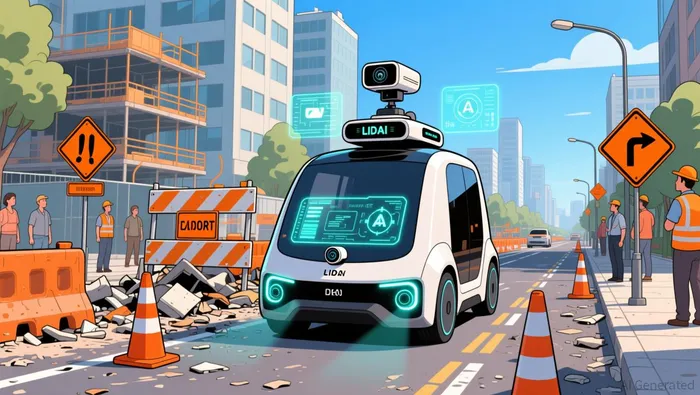 The market impact of this shift is already evident. By 2025, the autonomous driving market was valued at $2 billion, with projections of $7 billion by 2034 according to TechFinitive. Nvidia's partnerships with companies like Uber (to deploy 100,000 robotaxis) and Lucid (to develop level 4 autonomous vehicles) underscore its role as a foundational enabler of this transformation according to TechFinitive. These collaborations highlight a broader trend: autonomous driving is no longer a speculative future but a near-term infrastructure play, with Nvidia's hardware and software stack forming the backbone of the industry.
ChatGPT's AI Disruption: From Tools to Cognitive Infrastructure
In parallel, generative AI models like GPT-5 and LLaMA 4 have redefined how AI integrates into daily life. By 2025, ChatGPT alone had 800 million weekly active users, becoming one of the fastest-growing software platforms in history according to TTMS. These models have evolved beyond text generation to include expert-level reasoning, coding, and multimodal capabilities, enabling applications in healthcare, finance, and enterprise workflows.
The enterprise adoption of generative AI has been equally transformative. By 2024, 78% of businesses had integrated AI into their operations, with 72% of leaders using it weekly according to TTMS. This shift mirrors the early internet era, where foundational tools like search engines and email became indispensable. Similarly, generative AI is now a core infrastructure layer, automating tasks ranging from customer service to R&D.
Comparative Analysis: Market Adoption and Technological Parallels
While autonomous driving and generative AI serve distinct purposes, their market adoption curves and technological trajectories share striking similarities. Both rely on Nvidia's GPU infrastructure, which has become the de facto standard for training and deploying advanced AI models according to Tom Matthews. This dependency underscores Nvidia's dual role as both a beneficiary and a catalyst of AI's broader disruption.
Market adoption metrics further highlight the parallels. In autonomous driving, 89% of automotive companies are actively developing or testing AI-driven systems according to Nvidia, while in retail and CPG, 89% of firms have adopted generative AI for marketing and supply chain optimization according to Olikhatib. Both sectors report measurable ROI, with AI-driven automation reducing costs and improving efficiency. However, challenges persist: autonomous driving faces real-time safety and regulatory hurdles, while generative AI grapples with data privacy and implementation costs according to Olikhatib.
Investment Implications: A Dual-Track AI Revolution
For investors, the convergence of these two AI revolutions presents a unique opportunity. Nvidia's dominance in both domains positions it as a "meta-infrastructure" play, akin to Intel's role in the PC era or Amazon Web Services in cloud computing. The company's $2 billion investment in autonomous driving R&D over five years according to Yahoo Finance and its leadership in AI chip design (e.g., the H100 GPU) ensure its relevance across industries.
However, risks loom. The AI sector faces compute bottlenecks, talent shortages, and speculative overinvestment according to Tom Matthews. A hypothetical scenario like the 2030 ChatGPT outage-where reliance on a single AI provider causes systemic disruption-highlights the fragility of monocultures according to Olikhatib. Diversification and governance will be critical for long-term resilience.
Conclusion: The Road Ahead
Nvidia's autonomous driving innovations and ChatGPT's AI disruption are not isolated phenomena but interconnected pillars of a broader AI revolution. Both represent shifts from tools to infrastructure, with the potential to reshape industries and redefine productivity. For investors, the key lies in balancing optimism with caution: capitalizing on Nvidia's leadership while hedging against systemic risks. As Jensen Huang noted at CES 2026, "The future isn't just about faster GPUs-it's about reimagining what AI can do in the physical and digital worlds" according to BBC News.







Comentarios
Aún no hay comentarios