
Nvidia's AI Leadership and China Export Hopes: A Tipping Point for Tech Equity Allocation?
The global AI landscape in 2025 is defined by a fragile equilibrium between technological innovation and geopolitical strategy. At the center of this dynamic stands Nvidia, whose Blackwell architecture and AI chips have cemented its dominance in the sector. However, the company's fortunes-and those of the broader AI-driven growth stock market-are increasingly tied to regulatory and geopolitical shifts, particularly U.S. export controls targeting China. As these policies evolve, investors face a critical question: How should they position their portfolios to capitalize on AI's transformative potential while mitigating risks from a fractured global tech ecosystem?
The Dual Edges of Nvidia's AI Leadership
Nvidia's leadership in AI computing has been nothing short of meteoric. By 2025, the company's market capitalization , driven by demand from hyperscalers like Microsoft, Amazon, and Google. Its Blackwell architecture, designed for next-generation AI workloads, has set industry benchmarks. Yet, this dominance is now under strain. The U.S. government's 2025 export bans on advanced chips-including the Blackwell series-have cut off access to China, . The financial toll has been severe: on unsold H200 inventory and a strategic decision to exclude China from future revenue forecasts.
These restrictions reflect a broader U.S. strategy to preserve technological superiority, but they also expose vulnerabilities in Nvidia's business model. The company's in discrete GPUs is now challenged by competitors like (AMD) and Broadcom, whose MI400 series and custom silicon are narrowing performance gaps. Meanwhile, China's push for domestic chip production-led by startups like Moore Threads Technology-threatens to further erode Nvidia's influence.
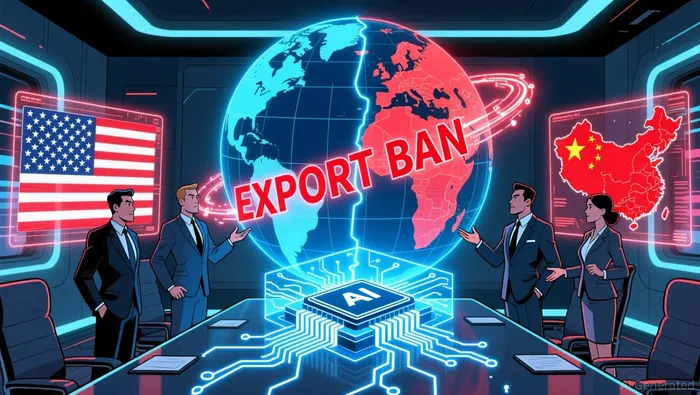
Geopolitical Tipping Points: The H200 Export Debate
The most immediate wildcard for Nvidia's trajectory is the potential reversal of U.S. export restrictions. Reports suggest that President 's administration is considering approving the export of H200 AI chips to China as part of a broader trade deal involving rare earth materials. Such a move could and reignite demand for Nvidia's products in China, where companies like ByteDance and Tencent are already positioning to secure allocations.
However, this reversal would not come without risks. A relaxation of export controls could trigger renewed regulatory scrutiny from U.S. allies and domestic policymakers, who fear enabling China's strategic AI ambitions. For investors, the key question is whether this policy shift would be a short-term boost or a long-term liability for Nvidia's valuation.
Strategic Entry Points: Beyond the "Big Three"
While NvidiaNVDA-- remains a cornerstone of the AI sector, the current environment demands a diversified approach. Alternative AI-driven growth stocks are emerging as compelling opportunities:
- Broadcom (AVGO): The company's custom silicon and networking components are in high demand from hyperscalers, positioning it as a critical enabler of AI infrastructure.
- (PLTR): Its AI-driven data analytics platforms are increasingly adopted by government agencies and enterprises, offering exposure to the AI monetization wave.
- Super Micro Computer (SMCI): With its advanced cooling technology for AI servers, SMCI is directly benefiting from the energy-intensive demands of AI infrastructure.
These companies, while less dominant than Nvidia, offer exposure to complementary segments of the AI ecosystem-networking, data analytics, and hardware optimization-reducing reliance on a single player.
Regional Opportunities: The GCC and China's Domestic Push
Geopolitical shifts are also reshaping regional AI markets. The Gulf Cooperation Council (GCC), particularly Saudi Arabia and the UAE, is leveraging its energy abundance and regulatory clarity to attract AI investment. These nations' national strategies-such as Saudi Arabia's Vision 2030-provide a framework for rapid AI adoption, supported by deep public capital pools.
Meanwhile, China's push for self-sufficiency in AI chips is accelerating. With a in data centers by 2027, the country is reducing its dependency on U.S. technology. This trend creates opportunities for investors in Chinese startups and domestic chipmakers, though it remains clouded by U.S.-China trade tensions.
Valuation Metrics and the AI Bubble Debate
The AI sector's euphoria has led to stretched valuations. reflect optimism about its 74% earnings per share growth forecast, but these metrics also highlight risks. Circular financing and debt-driven expansion by companies like OpenAI have raised concerns about a potential bubble.
For investors, the lesson is clear: diversification is key. While Nvidia's ecosystem partnerships (e.g., the $100 billion deal with OpenAI) ensure its relevance, overexposure to a single stock or sector could amplify losses during market corrections.
Conclusion: Navigating the AI Investment Crossroads
The AI-driven growth stock market in 2025 is at a crossroads. Nvidia's leadership remains formidable, but its future is inextricably linked to geopolitical outcomes. The potential approval of H200 exports to China could be a tipping point, either revitalizing the company's growth trajectory or exposing its vulnerabilities.
For investors, the path forward lies in balancing high-conviction bets on leaders like Nvidia with diversified exposure to alternative players and regional opportunities. The GCC's energy-driven AI ambitions, China's domestic chip push, and the rise of complementary AI infrastructure stocks offer a mosaic of strategic entry points. In this volatile landscape, adaptability-and a keen eye on regulatory shifts-will define success.





Comentarios
Aún no hay comentarios