
NVIDIA’s AI Dominance Outweighs Near-Term Trade Headwinds: A Buy at Undervalued Levels
The U.S. semiconductor export ban on advanced AI chips to China has dealt NVIDIANVDA-- a $15 billion blow to potential sales, marking a stark reminder of geopolitical risks in the global tech landscape. Yet, beneath the headlines of write-downs and regulatory friction lies a compelling case for long-term investors: NVIDIA’s entrenched leadership in AI infrastructure positions it to thrive as demand for generative AI, autonomous systems, and cloud computing explodes. Despite the $5.5 billion inventory write-off tied to the H20 chip ban—the largest single-quarter write-down in corporate history—NVIDIA’s stock remains undervalued relative to its strategic moat. Now is the time to buy.
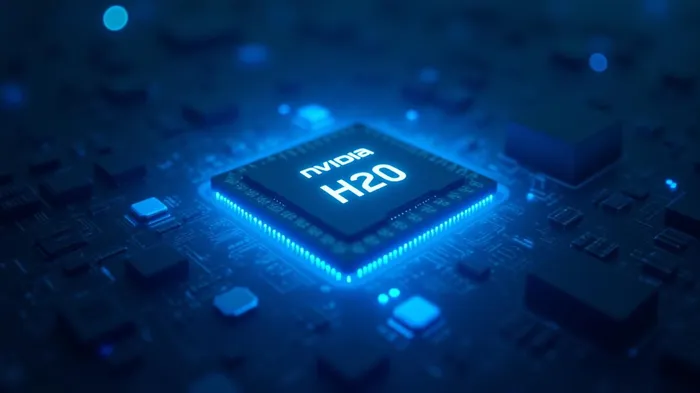
The China Dilemma: A Speedbump, Not a Roadblock
NVIDIA’s CEO Jensen Huang has been blunt: China’s AI chip market is “not just a product—it’s a Boeing.” The $15 billion in lost sales to China due to export bans underscores the region’s critical role in NVIDIA’s revenue mix, which accounts for ~39% of annual sales. Yet, the write-off and lost sales are largely one-time costs, not recurring revenue losses.
Analysts at Goldman Sachs estimate that even a 10–15% revenue decline over two years from China—a more realistic scenario than the worst-case 30% drop—would still leave NVIDIA with ample growth runway. Meanwhile, U.S. cloud providers like Microsoft Azure and Google Cloud are already circumventing restrictions by offering Chinese firms access to NVIDIA-powered servers in offshore data centers. This workaround mitigates some near-term pain and hints at the difficulty of stifling demand for NVIDIA’s unmatched AI architecture.
AI’s Insatiable Appetite: NVIDIA’s Unmatched Ecosystem
The true story here isn’t about China—it’s about AI’s hunger for compute power. NVIDIA’s Hopper and Blackwell architectures dominate the $35.6 billion data center GPU market, with Q4 revenue surging 93% year-over-year. These chips aren’t just components; they’re the backbone of generative AI models, autonomous vehicles, and enterprise cloud platforms.
Even as China seeks self-reliance—via subsidies for domestic chipmakers like SMIC—the reality is this: no competitor has NVIDIA’s software-hardware ecosystem. Its CUDA platform, partnerships with AWS and Azure, and AI training tools lock in hyperscalers and enterprises. The $5.5 billion write-off is a cost of doing business in a fractured world, not an existential threat.
Valuation: A Discounted Leader with 40% Upside
NVIDIA’s stock has dipped 15% year-to-date, reflecting near-term headwinds. But the fundamentals are strong:
- Analyst consensus for Q2 2025 revenue: $43.1 billion (a 66% YoY jump).
- Price targets: A $164.35 average (41% upside) from 34 “Buy” ratings, with DBS and BofA seeing $160–$180.
- Margin resilience: Non-GAAP gross margins held at 70.6% despite write-downs.
Should U.S.-China trade tensions ease—or if China’s chip efforts falter—NVIDIA’s stock could soar. Even in a “status quo” scenario, its dominance in AI training and inference hardware ensures sustained growth.
The Bottom Line: Buy Now, Before the AI Surge Ignites
The $15 billion China sales loss is a headline grabber, but NVIDIA’s moat in AI infrastructure is unshakable. The stock’s dip has created a rare opportunity to buy a $1 trillion+ company at a discounted valuation. With global AI spending set to hit $200 billion by 2027 and NVIDIA’s leadership unchallenged, investors who ignore short-term noise will be rewarded.
Action: Buy NVIDIA stock now. The AI revolution is here, and NVIDIA is its king.





Comentarios
Aún no hay comentarios