
Nvidia's AI Dominance Challenged by Huawei's CloudMatrix 384
PorAinvest
domingo, 27 de julio de 2025, 7:46 pm ET1 min de lectura
NVDA--
The CloudMatrix 384 system incorporates 384 of Huawei's latest 910C chips and outperforms Nvidia's GB200 NVL72 on some metrics [1]. Industry experts have noted that Huawei's system design capabilities, which involve using more chips and system-level innovations, compensate for the weaker individual chip performance compared to Nvidia's offerings [1]. This approach allows Huawei to achieve higher aggregate performance in AI computing.
Huawei's system employs a proprietary high-speed 'supernode' interconnect and an all-optical structure for communication, enhancing throughput and stability [3]. This innovative design could provide a competitive edge in the AI computing market, particularly in China, where the government is pushing for technological self-sufficiency [3].
The introduction of CloudMatrix 384 comes at a time when US export restrictions have blocked Nvidia’s fastest GPUs from the Chinese market. This has increased pressure on Chinese companies to adopt locally produced alternatives [3]. Nvidia CEO Jensen Huang previously acknowledged that Huawei is "moving quite fast" in this area [1].
The CloudMatrix 384 system is positioned for deployment in data centers, cloud providers, and research institutions, targeting large-scale AI deployments [3]. Huawei's focus on system-level integration and optimization could make its solution attractive to enterprises and research institutions looking for reliable AI solutions.
However, the success of CloudMatrix 384 will depend on factors such as cost-effectiveness, software readiness, and evolving regulatory requirements [1]. While Huawei's system offers significant performance improvements, it still lags behind Nvidia in per-chip performance [3]. The real-world adoption and competitiveness of CloudMatrix 384 will be tested by commercial deployments and customer uptake.
In conclusion, Huawei's CloudMatrix 384 represents a significant development in the AI computing market. It introduces a new competitor to Nvidia's top-tier offerings, posing a challenge to the U.S. chipmaker's market share. The success of CloudMatrix 384 will depend on its ability to meet the needs of enterprises and research institutions, as well as its integration with mainstream AI frameworks and domestic procurement policies.
References:
[1] https://www.reuters.com/world/china/huawei-shows-off-ai-computing-system-rival-nvidias-top-product-2025-07-26/
[2] https://www.ainvest.com/news/reka-ai-surpasses-1-billion-valuation-nvidia-snowflake-funding-2507/
[3] https://mlq.ai/news/huawei-publicly-showcases-cloudmatrix-384-ai-challenging-nvidia-amid-us-china-tech-rift/
SNOW--
Nvidia faces competition from Huawei's new AI system, CloudMatrix 384, unveiled at the World Artificial Intelligence Conference. This development introduces a new competitor to Nvidia's leading edge in advanced AI technology, posing a challenge to Nvidia's current top-tier offerings. Industry experts have noted that the CloudMatrix 384 is a significant development that could impact Nvidia's market share.
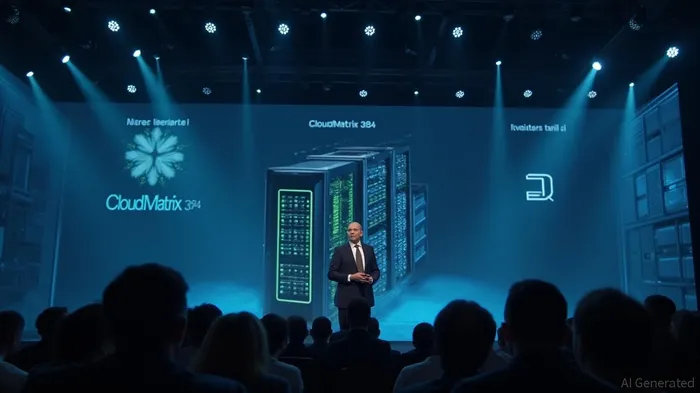
Huawei Technologies has unveiled its latest AI computing system, CloudMatrix 384, at the World Artificial Intelligence Conference in Shanghai. This new system is designed to compete directly with Nvidia's leading edge in advanced AI technology, potentially impacting Nvidia's market share [1].The CloudMatrix 384 system incorporates 384 of Huawei's latest 910C chips and outperforms Nvidia's GB200 NVL72 on some metrics [1]. Industry experts have noted that Huawei's system design capabilities, which involve using more chips and system-level innovations, compensate for the weaker individual chip performance compared to Nvidia's offerings [1]. This approach allows Huawei to achieve higher aggregate performance in AI computing.
Huawei's system employs a proprietary high-speed 'supernode' interconnect and an all-optical structure for communication, enhancing throughput and stability [3]. This innovative design could provide a competitive edge in the AI computing market, particularly in China, where the government is pushing for technological self-sufficiency [3].
The introduction of CloudMatrix 384 comes at a time when US export restrictions have blocked Nvidia’s fastest GPUs from the Chinese market. This has increased pressure on Chinese companies to adopt locally produced alternatives [3]. Nvidia CEO Jensen Huang previously acknowledged that Huawei is "moving quite fast" in this area [1].
The CloudMatrix 384 system is positioned for deployment in data centers, cloud providers, and research institutions, targeting large-scale AI deployments [3]. Huawei's focus on system-level integration and optimization could make its solution attractive to enterprises and research institutions looking for reliable AI solutions.
However, the success of CloudMatrix 384 will depend on factors such as cost-effectiveness, software readiness, and evolving regulatory requirements [1]. While Huawei's system offers significant performance improvements, it still lags behind Nvidia in per-chip performance [3]. The real-world adoption and competitiveness of CloudMatrix 384 will be tested by commercial deployments and customer uptake.
In conclusion, Huawei's CloudMatrix 384 represents a significant development in the AI computing market. It introduces a new competitor to Nvidia's top-tier offerings, posing a challenge to the U.S. chipmaker's market share. The success of CloudMatrix 384 will depend on its ability to meet the needs of enterprises and research institutions, as well as its integration with mainstream AI frameworks and domestic procurement policies.
References:
[1] https://www.reuters.com/world/china/huawei-shows-off-ai-computing-system-rival-nvidias-top-product-2025-07-26/
[2] https://www.ainvest.com/news/reka-ai-surpasses-1-billion-valuation-nvidia-snowflake-funding-2507/
[3] https://mlq.ai/news/huawei-publicly-showcases-cloudmatrix-384-ai-challenging-nvidia-amid-us-china-tech-rift/
Divulgación editorial y transparencia de la IA: Ainvest News utiliza tecnología avanzada de Modelos de Lenguaje Largo (LLM) para sintetizar y analizar datos de mercado en tiempo real. Para garantizar los más altos estándares de integridad, cada artículo se somete a un riguroso proceso de verificación con participación humana.
Mientras la IA asiste en el procesamiento de datos y la redacción inicial, un miembro editorial profesional de Ainvest revisa, verifica y aprueba de forma independiente todo el contenido para garantizar su precisión y cumplimiento con los estándares editoriales de Ainvest Fintech Inc. Esta supervisión humana está diseñada para mitigar las alucinaciones de la IA y garantizar el contexto financiero.
Advertencia sobre inversiones: Este contenido se proporciona únicamente con fines informativos y no constituye asesoramiento profesional de inversión, legal o financiero. Los mercados conllevan riesgos inherentes. Se recomienda a los usuarios que realicen una investigación independiente o consulten a un asesor financiero certificado antes de tomar cualquier decisión. Ainvest Fintech Inc. se exime de toda responsabilidad por las acciones tomadas con base en esta información. ¿Encontró un error? Reportar un problema




Comentarios
Aún no hay comentarios