
Nvidia and the AI Bubble: A Misguided Fear?
The debate over whether NvidiaNVDA-- is riding a speculative AI bubble has dominated Wall Street chatter in recent months. Critics point to its stratospheric market cap-$4.28 trillion as of December 2025-and a P/E ratio of 44.61 as evidence of overvaluation. But when you dig into the numbers, the fear of a "bubble" feels less like a warning and more like a failure to grasp the seismic forces reshaping the tech landscape.
Let's start with the basics: Nvidia's financials are on fire. The company reported Q4 2024 revenue of $22.1 billion, a 22% sequential jump and a staggering 265% year-over-year increase. This isn't just growth-it's a rocket ship. And the market has taken notice. Nvidia's market cap has surged from $1.23 trillion in January 2024 to $4.28 trillion by year-end 2025, a 27.75% annualized gain. Even after a 9.69% pullback in the last 30 days of 2025, the stock remains up 59.04% over five years, a compound annual growth rate that dwarfs most of its peers.
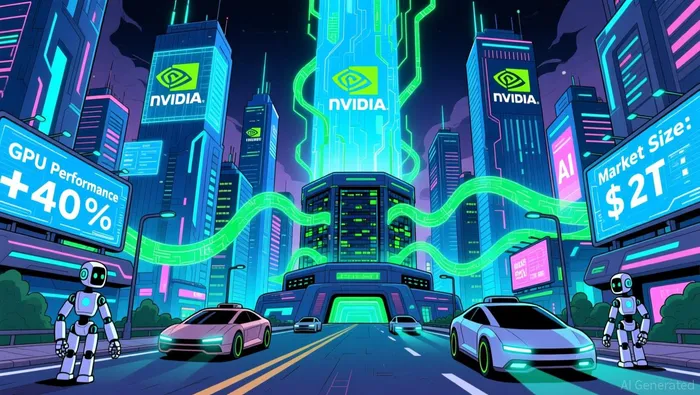
Now, let's address the elephant in the room: the P/E ratio. At 44.61, it's undeniably rich. But context is everything. The AI industry is projected to grow from $371.71 billion in 2025 to $2.4 trillion by 2032, a 30.6% CAGR. Generative AI alone, the fastest-growing segment, is expected to balloon to $467 billion by 2030 at a 25% CAGR according to ABI Research. If Nvidia continues to capture a meaningful share of this explosive growth-driven-by its dominance in GPUs, AI software, and cloud-native platforms-the current multiple could look conservative in hindsight.
Consider this: intrinsic valuation models suggest Nvidia's stock is undervalued. AlphaSpread calculates an intrinsic value of $215.64 per share, compared to its current price of $176.29. That's a 22% discount, implying the market hasn't fully priced in the company's long-term potential. And let's not forget the broader industry tailwinds. AI is on track to surpass cloud computing in market size by 2030, fueled by democratized access to AI tools and cross-industry adoption in healthcare, finance, and retail.
Critics will argue that volatility is inevitable. After all, Nvidia's market cap briefly hit $5 trillion in 2025 before retreating. But volatility isn't a death knell-it's a feature of high-growth stocks. The real question is whether the fundamentals can sustain this trajectory. With revenue growth of 265% in Q4 2024 and a 59% five-year CAGR in market cap, the numbers don't lie.
In the end, the "AI bubble" narrative feels like a relic of short-term thinking. Nvidia isn't just a chipmaker-it's the engine powering the next industrial revolution. For investors willing to look beyond quarterly earnings and focus on the long game, the fear of a bubble is a misguided distraction. The real risk isn't overpaying for Nvidia-it's missing out on a company that's redefining what's possible.





Comentarios
Aún no hay comentarios