
Nvidia: A Pawn in the US-China Tech War
Generado por agente de IAWesley Park
miércoles, 11 de diciembre de 2024, 12:49 pm ET2 min de lectura
NVDA--
Nvidia, the world's leading provider of graphics processing units (GPUs), has found itself at the center of the US-China tech war. As geopolitical tensions escalate, the company faces regulatory scrutiny and export restrictions that could significantly impact its market dominance and future growth prospects.
Nvidia's acquisition of Mellanox Technologies in 2020, valued at $6.9 billion, aimed to bolster its AI chip market dominance. However, this move has sparked antitrust concerns in both the US and China. In the US, the Justice Department is investigating Nvidia for potential monopolistic behavior, while China has launched an antitrust probe into the acquisition, alleging non-compliance with conditions set during the deal. The crux of the issue revolves around Nvidia's alleged failure to share new Mellanox product information with Chinese companies in a timely manner, which was a stipulation to avoid monopolistic control post-acquisition. This investigation underscores China's vigilance against potential market monopolies, especially in the tech industry, at a time when global geopolitical tensions around technology and trade are high. Nvidia's acquisition of Mellanox was part of its broader strategy to dominate the AI chip market, which is now under international scrutiny for monopolistic practices.
Geopolitical tensions and export restrictions have significantly impacted Nvidia's supply chain and market share in China. The US government's restrictions on AI chip exports to China, including Nvidia's A100 and H100 chips, have forced the company to develop modified versions for the Chinese market. However, these modified chips were later restricted under tightened US controls in October 2023, further limiting Nvidia's ability to operate in China. Consequently, Nvidia's market share in China has declined from over 90% to around 17% in recent years, with domestic rivals like Huawei gaining ground. Additionally, China's investigation into Nvidia's acquisition of Mellanox Technologies raises concerns about potential monopolistic practices, further complicating the company's operations in the region.
Nvidia's compliance with regulatory demands in both the US and China will significantly shape its future market strategies. The company is under investigation in both countries for potential monopolistic practices, particularly regarding its acquisition of Mellanox. To maintain market dominance, Nvidia must address these concerns by ensuring transparency and fair competition in its business operations. This may involve sharing technology and intellectual property with competitors, as well as adhering to regulatory guidelines for product pricing and distribution. By complying with these demands, Nvidia can avoid potential fines and maintain its reputation as a leader in the AI chip market. However, the company must also navigate geopolitical tensions and potential export restrictions, which could impact its global supply chain and market reach.
Nvidia's antitrust investigations in both the US and China could lead to market share shifts in the AI chip sector. If Nvidia is found to have violated anti-monopoly laws, it may face penalties, divestments, or restrictions on its operations. This could open up opportunities for competitors like AMD, Intel, and domestic Chinese players like Huawei and SMIC to gain market share. However, Nvidia's dominance in AI chips is unlikely to be easily displaced, given its technological lead and extensive customer base. The investigations may also lead to increased scrutiny and regulation of the AI chip industry, potentially benefiting companies that can demonstrate compliance with anti-monopoly laws and responsible business practices.
In conclusion, Nvidia's position as a leading AI chip provider has made it a key player in the US-China tech war. As geopolitical tensions and regulatory scrutiny intensify, the company must navigate a complex landscape to maintain its market dominance and future growth prospects. By addressing antitrust concerns and adapting to changing market dynamics, Nvidia can continue to thrive in the competitive AI chip sector. Investors should closely monitor the company's progress and regulatory developments to make informed decisions about their portfolios.
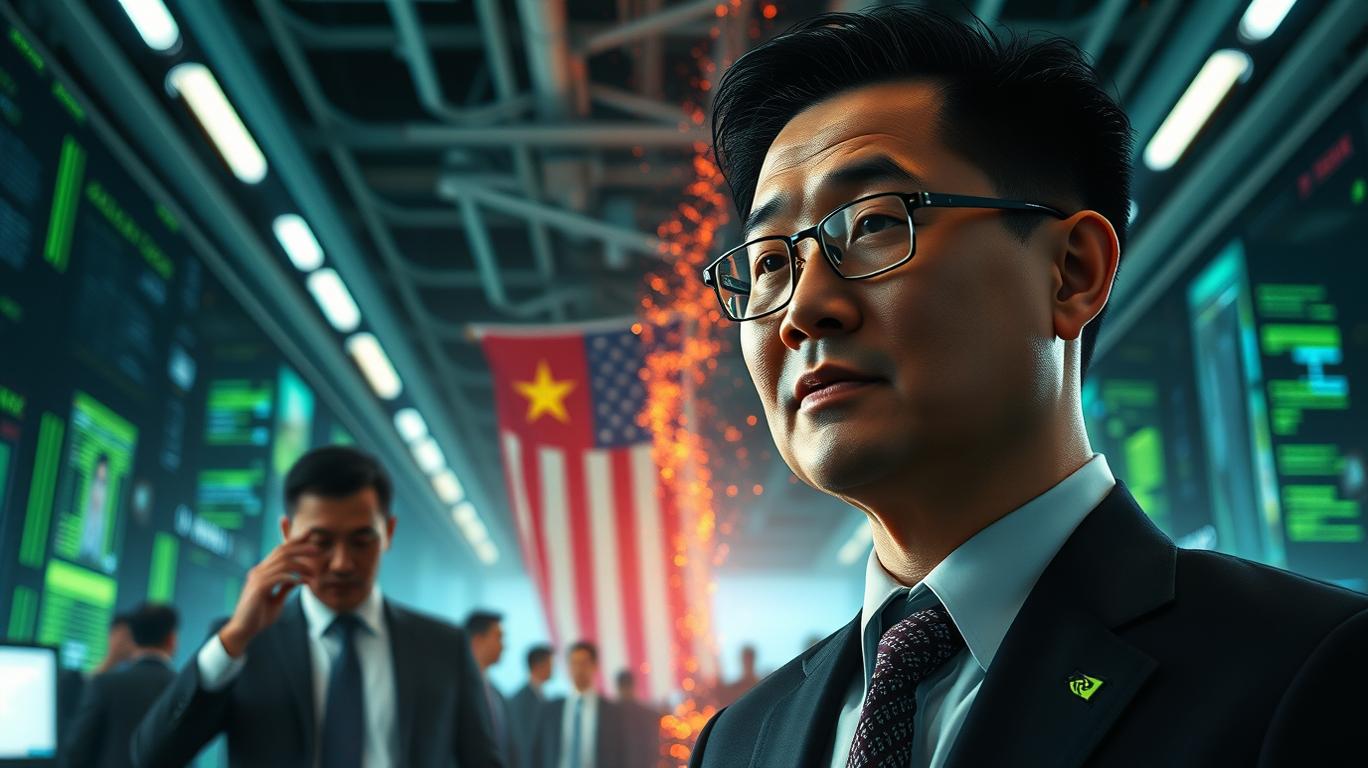
Nvidia, the world's leading provider of graphics processing units (GPUs), has found itself at the center of the US-China tech war. As geopolitical tensions escalate, the company faces regulatory scrutiny and export restrictions that could significantly impact its market dominance and future growth prospects.
Nvidia's acquisition of Mellanox Technologies in 2020, valued at $6.9 billion, aimed to bolster its AI chip market dominance. However, this move has sparked antitrust concerns in both the US and China. In the US, the Justice Department is investigating Nvidia for potential monopolistic behavior, while China has launched an antitrust probe into the acquisition, alleging non-compliance with conditions set during the deal. The crux of the issue revolves around Nvidia's alleged failure to share new Mellanox product information with Chinese companies in a timely manner, which was a stipulation to avoid monopolistic control post-acquisition. This investigation underscores China's vigilance against potential market monopolies, especially in the tech industry, at a time when global geopolitical tensions around technology and trade are high. Nvidia's acquisition of Mellanox was part of its broader strategy to dominate the AI chip market, which is now under international scrutiny for monopolistic practices.
Geopolitical tensions and export restrictions have significantly impacted Nvidia's supply chain and market share in China. The US government's restrictions on AI chip exports to China, including Nvidia's A100 and H100 chips, have forced the company to develop modified versions for the Chinese market. However, these modified chips were later restricted under tightened US controls in October 2023, further limiting Nvidia's ability to operate in China. Consequently, Nvidia's market share in China has declined from over 90% to around 17% in recent years, with domestic rivals like Huawei gaining ground. Additionally, China's investigation into Nvidia's acquisition of Mellanox Technologies raises concerns about potential monopolistic practices, further complicating the company's operations in the region.
Nvidia's compliance with regulatory demands in both the US and China will significantly shape its future market strategies. The company is under investigation in both countries for potential monopolistic practices, particularly regarding its acquisition of Mellanox. To maintain market dominance, Nvidia must address these concerns by ensuring transparency and fair competition in its business operations. This may involve sharing technology and intellectual property with competitors, as well as adhering to regulatory guidelines for product pricing and distribution. By complying with these demands, Nvidia can avoid potential fines and maintain its reputation as a leader in the AI chip market. However, the company must also navigate geopolitical tensions and potential export restrictions, which could impact its global supply chain and market reach.
Nvidia's antitrust investigations in both the US and China could lead to market share shifts in the AI chip sector. If Nvidia is found to have violated anti-monopoly laws, it may face penalties, divestments, or restrictions on its operations. This could open up opportunities for competitors like AMD, Intel, and domestic Chinese players like Huawei and SMIC to gain market share. However, Nvidia's dominance in AI chips is unlikely to be easily displaced, given its technological lead and extensive customer base. The investigations may also lead to increased scrutiny and regulation of the AI chip industry, potentially benefiting companies that can demonstrate compliance with anti-monopoly laws and responsible business practices.
In conclusion, Nvidia's position as a leading AI chip provider has made it a key player in the US-China tech war. As geopolitical tensions and regulatory scrutiny intensify, the company must navigate a complex landscape to maintain its market dominance and future growth prospects. By addressing antitrust concerns and adapting to changing market dynamics, Nvidia can continue to thrive in the competitive AI chip sector. Investors should closely monitor the company's progress and regulatory developments to make informed decisions about their portfolios.

Divulgación editorial y transparencia de la IA: Ainvest News utiliza tecnología avanzada de Modelos de Lenguaje Largo (LLM) para sintetizar y analizar datos de mercado en tiempo real. Para garantizar los más altos estándares de integridad, cada artículo se somete a un riguroso proceso de verificación con participación humana.
Mientras la IA asiste en el procesamiento de datos y la redacción inicial, un miembro editorial profesional de Ainvest revisa, verifica y aprueba de forma independiente todo el contenido para garantizar su precisión y cumplimiento con los estándares editoriales de Ainvest Fintech Inc. Esta supervisión humana está diseñada para mitigar las alucinaciones de la IA y garantizar el contexto financiero.
Advertencia sobre inversiones: Este contenido se proporciona únicamente con fines informativos y no constituye asesoramiento profesional de inversión, legal o financiero. Los mercados conllevan riesgos inherentes. Se recomienda a los usuarios que realicen una investigación independiente o consulten a un asesor financiero certificado antes de tomar cualquier decisión. Ainvest Fintech Inc. se exime de toda responsabilidad por las acciones tomadas con base en esta información. ¿Encontró un error? Reportar un problema


SOBRE NOSOTROS
Nuestra historiaAutores de noticiasBase de conocimientosPolítica de privacidadTérmino de usoDescargo de responsabilidad de corretaje de tercerosTérminos de uso de AIMEDivulgaciones de riesgos de AInvest AICarrerasCONTÁCTENOS
Email: support@ainvest.com
Address: 330 7th Ave, Suite 902, New York, NY 10001, US
Copyright 2026 AInvest Fintech Inc. All rights reserved.


Comentarios
Aún no hay comentarios