
How NVIDIA Could 14-Fold Its $10 Billion Business in 5 Years
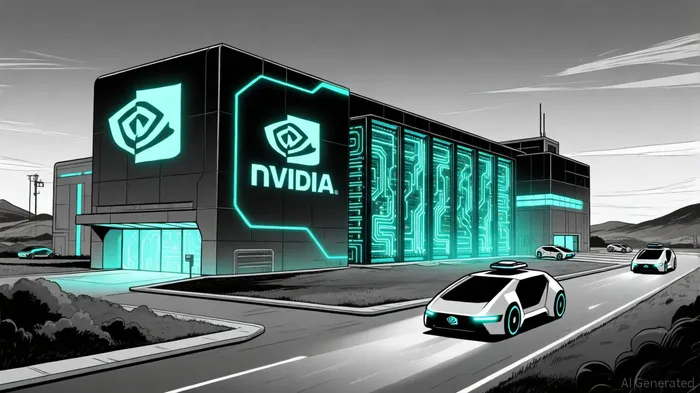
The global AI infrastructure and chip market is on a trajectory of explosive growth, driven by insatiable demand for computing power in data centers and autonomous systems. For investors, this presents a rare opportunity to capitalize on a company poised to dominate this transformation: NVIDIANVDA--. With a current market share of 75% to 85% in high-performance data center AI GPUs [1], NVIDIA is not merely riding the AI wave—it is engineering the tides.
The Market Dynamics: A $1 Trillion Opportunity
The AI data center market alone is projected to balloon from $236.44 billion in 2025 to $933.76 billion by 2030, growing at a 31.6% CAGR [2]. This surge is fueled by the proliferation of AI-specific data centers, which now account for 33% of global data center capacity, or nearly 4,000 facilities [3]. Meanwhile, the broader AI infrastructure market—including hardware and software—is expected to expand from $32.98 billion in 2025 to $146.37 billion by 2035, at an 18.01% CAGR [4]. These figures underscore a structural shift in computing demand, with AI workloads requiring specialized infrastructure that NVIDIA is uniquely positioned to supply.
NVIDIA's Dominance: A Moat Built on Ecosystem and Performance
NVIDIA's dominance stems from a combination of hardware innovation, software ecosystem, and strategic partnerships. Its Blackwell and Hopper architectures currently power 70% to 95% of AI data-center GPU workloads [5], while its CUDA platform remains the de facto standard for GPU computing and deep learning [6]. This creates a network effect: developers and enterprises locked into CUDA are less likely to switch to competing platforms, even as rivals like AMD and Intel invest heavily in AI chips.
Strategic alliances further cement NVIDIA's leadership. A landmark $100 billion partnership with OpenAI to deploy 10 gigawatts of Nvidia-powered data centers ensures long-term demand for its hardware [7]. Similarly, collaborations with hyperscalers like Amazon, Microsoft, and Meta have driven record revenue. In Q2 FY2026, NVIDIA reported $46.7 billion in revenue, with Blackwell Data Center revenue rising 17% sequentially [8]. By 2028, AI accelerators could account for nearly half of NVIDIA's total revenue, per Morningstar Equity Research [9].
Strategic Initiatives: Expanding the AI Ecosystem
NVIDIA's growth is not confined to data centers. Its DRIVE Hyperion Platform, featuring the DRIVE Thor chip, is revolutionizing autonomous vehicles, while the Cosmos platform accelerates AI training in robotics and autonomous systems [10]. Partnerships with Toyota and Uber highlight its expanding footprint in the automotive sector. Meanwhile, the UK's AI infrastructure, powered by NVIDIA Blackwell Ultra GPUs, is a testament to its global reach [11].
The company's R&D roadmap is equally compelling. Upcoming products like the Blackwell Ultra (B300-series) and the Vera Rubin Architecture (R100) promise to maintain its technological edge. These innovations, combined with a $130.5 billion FY2025 revenue (a 114.2% YoY increase) and $72.88 billion in net income [12], position NVIDIA to capture a disproportionate share of the AI boom.
Risks and Realities
No investment is without risk. Competitors like AMD and Intel are closing the gap, and supply chain bottlenecks could delay product launches. However, NVIDIA's ecosystem advantage, first-mover status, and relentless innovation create a formidable barrier to entry. As long as AI demand outpaces supply, NVIDIA's trajectory appears unassailable.
Conclusion: A 14-Fold Bet on AI's Future
For NVIDIA to grow from a $10 billion business to $140 billion in five years, it must sustain its current growth rates. With the AI data center market expanding at 31.6% CAGR and NVIDIA's AI accelerators projected to dominate half its revenue by 2028 [13], this target is not only plausible—it is inevitable. Investors who recognize the confluence of market dynamics, strategic execution, and technological leadership will find NVIDIA's stock a compelling vehicle for this transformation.





Comentarios
Aún no hay comentarios