
Nvidia's $100 Billion Bet on OpenAI: A Game Changer for AI Infrastructure and Semiconductor Demand?
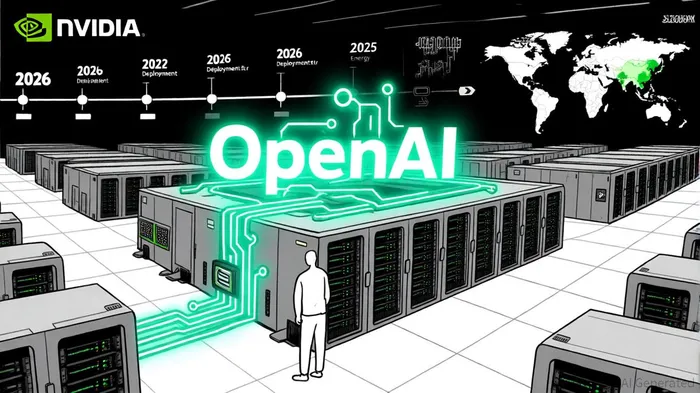
The semiconductor industry is on the brink of a seismic shift, . This partnership, announced on September 22, 2025, is not just a financial commitment—it's a strategic masterstroke to dominate the next decade of AI infrastructure. , the chipmaker is locking in its role as the backbone of the AI revolution while reshaping capital allocation trends in the sector.
Strategic Implications: A Win-Win for NvidiaNVDA-- and OpenAI
Nvidia's investment is structured to align with OpenAI's aggressive expansion plans, . This ensures long-term revenue visibility for Nvidia while enabling OpenAI to scale its AI superintelligence ambitions[1]. The first gigawatt, , . This partnership also diversifies OpenAI's infrastructure support, reducing its reliance on Microsoft and creating a vertically integrated AI ecosystem spanning hardware, software, and infrastructure[3].
For Nvidia, this deal reinforces its dominance in the AI chip market, . Competitors like Intel, AMD, and cloud providers (Google, Amazon, Microsoft) are developing custom solutions to challenge Nvidia's hegemony, but the company's CUDA software ecosystem and accelerated product cycles give it a critical edge[5].
Semiconductor Demand: A $1.07 Trillion Opportunity
The scale of this partnership underscores the explosive growth of the semiconductor industry. By 2035, , driven by generative AI and data center expansions[6]. Nvidia's collaboration with OpenAI is a microcosm of this trend, .
, packaging, and energy efficiency[8]. . This surge in demand will likely push semiconductor manufacturers to prioritize AI-specific innovations, further entrenching Nvidia's leadership.
and Market Leadership Dynamics
Nvidia's investment signals a shift in capital allocation priorities. From 2025 to 2030, . The partnership with OpenAI, combined with existing collaborations with Microsoft, Oracle, and SoftBank, .
However, competitors are not standing still. Microsoft's Azure AI and Apple's custom silicon are emerging as alternatives, while Google and Amazon are investing in in-house AI chip development[12]. Yet, .
The Bottom Line: A High-Stakes Bet with High Rewards
, . By securing a front-row seat in the AI superintelligence race, Nvidia is not just capturing market share—it's redefining the rules of the game. For investors, , and Nvidia is the leading refiner.







Comentarios
Aún no hay comentarios