
Nutex Health Inc.: Unraveling Governance Risks and Investor Value Amid Securities Lawsuits
In the wake of a high-profile securities class action lawsuit and mounting governance scrutiny, Nutex Health Inc.NUTX-- (NASDAQ: NUTX) finds itself at a critical juncture. The company, which reported a 269.6% year-over-year revenue surge in Q4 2024 driven by arbitration recoveries Q4 2024 results, now faces allegations of financial misstatements, fraudulent billing practices, and board-level negligence. These developments raise urgent questions about the sustainability of its business model and the alignment of its governance practices with long-term investor value.
The Legal and Governance Fallout
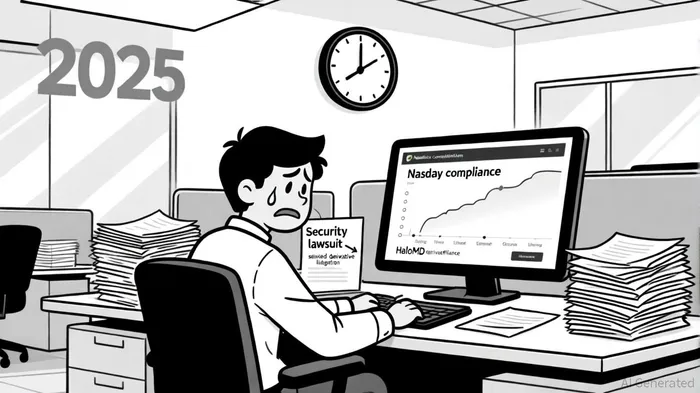
The August 22, 2025, securities lawsuit class-action notice accuses NutexNUTX-- and its executives of orchestrating a scheme to defraud insurers through HaloMD, a third-party vendor managing arbitration claims under the No Surprises Act. Plaintiffs argue that the arbitration-driven revenue model was inherently unsustainable and misrepresented in financial disclosures. A derivative lawsuit filed September 10, 2025, further compounds these concerns, alleging that the board and executives breached fiduciary duties by failing to disclose risks tied to HaloMD's operations, according to a Panabee report. The lawsuit describes practices such as "mass submissions and misrepresentations" as evidence of systemic governance failures, as discussed on the Proskauer blog.
Nutex's governance structure, while nominally robust-with a lead independent director and diverse board composition governance profile-has been called into question. The company's recent restatement of financial statements for 2023–2024 due to misclassified liabilities is detailed in a BiotechHealthX article, which also notes a Nasdaq delinquency notice for missing Q2 2025 filings. As noted by the Proskauer blog, the reliance on third-party vendors like HaloMD has exposed "new corporate governance risks" that transcend operational oversight.
Investor Value at Risk
The market has already priced in significant uncertainty. Following a July 22 short-seller report accusing Nutex of deceptive billing practices, and as referenced in a Hagens Berman release, the stock plummeted 10%, with a further 16.4% drop on August 15 after the company announced delayed financial filings, according to the BiotechHealthX article. These declines reflect investor skepticism about management's ability to address governance gaps.
The financial restatements and regulatory scrutiny also threaten Nutex's credibility. While the company claims progress in remedying internal control weaknesses, as reported in a separate Panabee update, the derivative lawsuit argues that these disclosures were misleading. For instance, the misclassification of stock-based compensation as equity rather than liabilities, noted in a PR Newswire release, suggests a lack of transparency in financial reporting-a red flag for long-term investors.
Pathways to Recovery
For Nutex to rebuild trust, it must demonstrate tangible governance reforms. The appointment of Michael L. Reed as lead independent director SEC filing is a step toward board independence, but actions-not titles-will determine success. Key measures include:
1. Vendor Oversight: Establishing independent audits of HaloMD's arbitration processes to verify compliance with regulatory standards.
2. Transparency: Disclosing detailed risk assessments of third-party vendor dependencies in SEC filings.
3. Board Accountability: Implementing governance reforms recommended by the derivative lawsuit plaintiffs, such as enhanced executive oversight.
However, the October 21 deadline for investors to file claims in the class-action lawsuit deadline notice and Nasdaq's October 20 compliance plan submission, noted in the BiotechHealthX article, create immediate pressure. Failure to meet these milestones could exacerbate financial strain and trigger delisting, further eroding investor value.
Conclusion
Nutex Health's current challenges highlight the interplay between governance effectiveness and investor confidence. While the company's arbitration-driven growth model initially attracted attention, the recent legal and regulatory scrutiny reveals systemic vulnerabilities. For long-term investors, the critical question is whether Nutex can transition from reactive compliance to proactive governance-a shift that will require not only structural changes but also a cultural commitment to transparency. Until then, the stock remains a high-risk proposition, with governance risks overshadowing its past financial successes.





Comentarios
Aún no hay comentarios