
Nuscale Power's Strategic Alliances with DOE and CFPP: A Catalyst for Nuclear Renaissance
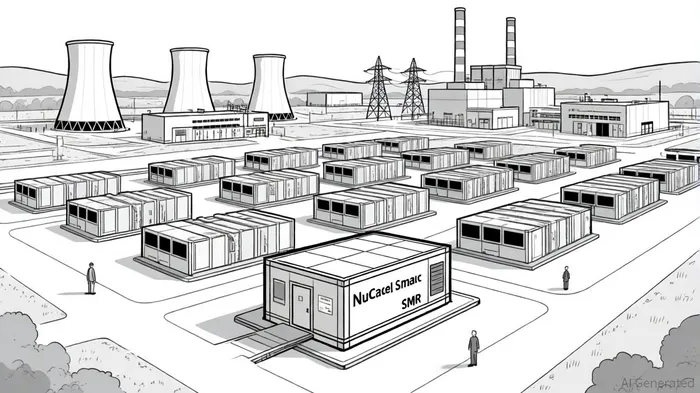
In the evolving landscape of clean energy, Nuscale PowerSMR-- stands at the forefront of a potential nuclear renaissance, driven by its strategic partnerships with the U.S. Department of Energy (DOE) and the Carbon Free Power Project (CFPP). These alliances, coupled with recent regulatory approvals and private-sector collaborations, underscore a pivotal shift toward scalable, government-backed small modular reactor (SMR) technology. For investors, the convergence of policy support, technological innovation, and commercial ambition presents a compelling case for long-term value creation.
Government-Backed Validation: The DOE's $1.4 Billion Bet on SMRs
The DOE's recent approval of a multi-year cost-share award for the CFPP marks a watershed moment for Nuscale. This agreement, which could provide up to $1.4 billion to demonstrate a 12-module NuScale plant at Idaho National Laboratory, is subject to Congressional appropriations but signals strong federal confidence in SMR commercialization[1]. Construction is slated to begin in December 2025, with the first module operational by 2029[1]. By de-risking first-of-a-kind deployments, the project addresses a critical barrier for advanced nuclear technologies, positioning Nuscale as a leader in the next generation of power generation.
This federal support is not merely financial but also symbolic. The DOE's involvement validates the technical and economic viability of SMRs, which are inherently modular and adaptable to diverse energy markets. For investors, this alignment with national energy security goals—such as decarbonization and grid resilience—reduces regulatory uncertainty and opens pathways for broader adoption.
Regulatory Milestone: NRC Certification of Uprated Design
Complementing the DOE's efforts, the U.S. Nuclear Regulatory Commission (NRC) approved Nuscale's uprated 77 MWe reactor design in 2025[2]. This certification, the second SMR to receive NRC approval in the U.S., streamlines licensing for future projects, enabling faster deployment cycles. The uprated design's enhanced efficiency and safety features further strengthen Nuscale's competitive edge, particularly in markets targeting high-density power solutions like hyperscale data centers[5].
This regulatory green light is a critical enabler for scalability. Unlike traditional reactors, which require bespoke licensing for each plant, Nuscale's standardized design allows for “copy-paste” deployment, significantly lowering costs and timelines. For investors, this means a scalable business model with recurring revenue potential across multiple projects.
Overcoming Setbacks: From Idaho to TVA's 6-GW Vision
Despite the 2023 termination of the Idaho project with Utah Associated Municipal Power Systems (UAMPS) due to cost overruns and subscriber challenges[3], Nuscale has pivoted strategically. A landmark 6-GW deployment agreement with ENTRA1 Energy and the Tennessee Valley Authority (TVA) in 2025[2] exemplifies this resilience. This partnership, aimed at deploying SMRs across TVA's service territory, aligns with the utility's decarbonization targets and underscores Nuscale's ability to secure large-scale contracts.
The TVA deal is particularly noteworthy for its scale and scope. By leveraging TVA's infrastructure and distribution network, Nuscale can demonstrate the economic and operational benefits of SMRs at a regional level. For investors, this represents a tangible step toward commercialization, with potential ripple effects across the U.S. energy sector.
Synergies with Constellation's Calvert Cliffs Modernization
While Nuscale focuses on SMR deployment, complementary investments in existing nuclear infrastructure further bolster the sector's growth. Constellation Energy's $100 million investment to upgrade Maryland's Calvert Cliffs Clean Energy Center[1] highlights the industry's dual-track approach: modernizing legacy plants while integrating next-gen technologies. These upgrades, which include substation enhancements and equipment modernization, increase the plant's output by 10% and support potential license renewals[3].
Such initiatives create a supportive ecosystem for SMRs. By extending the operational life of conventional reactors, projects like Calvert Cliffs ensure a stable demand for nuclear energy, reducing market fragmentation and fostering investor confidence.
Conclusion: A Strategic Nexus for Investors
Nuscale Power's strategic alliances with the DOE, CFPP, and TVA, combined with regulatory milestones and industry partnerships, position the company as a linchpin in the global transition to low-carbon energy. The government-backed scalability of its SMR technology, coupled with private-sector demand, creates a virtuous cycle of innovation and investment. For stakeholders, the key risks—cost overruns, regulatory delays—remain mitigated by federal support and Nuscale's demonstrated adaptability.
As the energy sector grapples with the dual challenges of decarbonization and reliability, Nuscale's SMRs offer a compelling solution. The coming years will test the company's ability to execute on its ambitious roadmap, but the alignment of policy, technology, and market demand suggests a trajectory of sustained growth.





Comentarios
Aún no hay comentarios