
NuScale Power's Stock Surge: SMR Market Momentum vs. Long-Term Risks
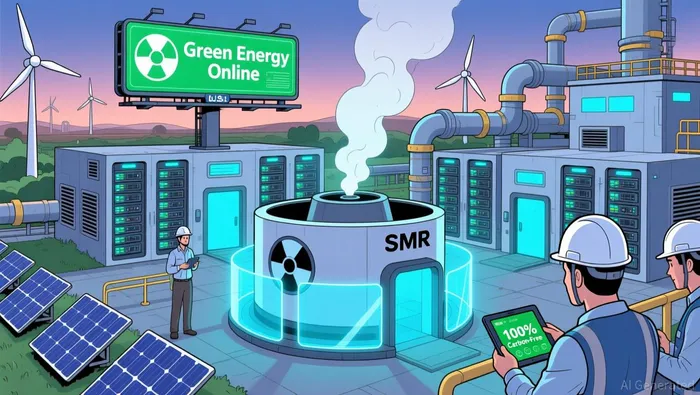
The recent 16% surge in NuScale PowerSMR-- (NYSE: SMR) shares has ignited investor optimism, driven by a landmark agreement with the Tennessee Valley Authority (TVA) to deploy up to six gigawatts of small modular reactor (SMR) capacity-the largest SMR deployment program in U.S. history according to a study. This milestone, coupled with growing demand for carbon-free energy solutions, has positioned NuScaleSMR-- as a leader in the SMR industry. However, as the market grapples with nuclear industry volatility, investors must weigh the sector's momentum against persistent financial, regulatory, and supply chain risks.
SMR Market Momentum: A New Energy Paradigm
The SMR industry is gaining traction as a cornerstone of decarbonization and energy security. According to a report by the Nuclear Energy Institute (NEI), the global SMR market is projected to grow at a compound annual rate of 9.1%, reaching $6.9 billion in 2025. This growth is fueled by demand from data centers and artificial intelligence infrastructure, with tech giants like Amazon pledging to invest in 5 gigawatts of nuclear capacity. A 2025 study by LucidCatalyst, supported by Urenco and the World Nuclear Association, further estimates that SMRs could supply 700 gigawatts by 2050, particularly in industrial sectors such as synthetic aviation fuels and coal repowering.
NuScale's unique position as the first SMR provider to secure U.S. Nuclear Regulatory Commission (NRC) design approval according to industry analysis has amplified its appeal. The TVA deal, expected to cost $2–3 billion, underscores the scalability of SMRs and their potential to generate recurring revenue from operations and maintenance. Meanwhile, NuScale's partnership with ENTRA1 Energy-a global strategic partner-has bolstered its commercialization prospects.
Long-Term Risks: Financial Strains and Industry Skepticism
Despite the bullish outlook, NuScale's financial health remains precarious. The company reported a net loss and negative operating revenue in Q3 2025, with a staggering $1.85 per share loss driven by a one-time $495 million expense from its Partnership Milestones Agreement with ENTRA1. While NuScale has strengthened its cash position through capital raises-securing $475.2 million via an at-the-market program-analysts warn that its valuation hinges on speculative growth rather than near-term profitability.
Supply chain vulnerabilities further complicate NuScale's path to commercialization. The company's reliance on specialized nuclear-grade components and engineering services has exposed it to delays and cost overruns. Fluor's decision to divest its stake in NuScale by mid-2026 has also raised concerns about reduced financial backing. Industry critics argue that SMRs face historical challenges, including the U.S. nuclear industry's track record of missed deadlines and budgets.
Balancing Momentum and Risk
The SMR market's long-term potential is undeniable, but its success hinges on overcoming systemic hurdles. Regulatory frameworks must evolve to streamline deployment timelines, while supply chains for high-assay low-enriched uranium fuel need expansion. For NuScale, the TVA project represents a critical test of its ability to deliver on promises. If successful, it could catalyze broader adoption of SMRs. However, investors should remain cautious about the company's heavy debt load and the sector's unproven scalability.
In conclusion, NuScale's stock surge reflects the SMR industry's transformative potential, but the path to profitability is fraught with risks. As the market navigates these challenges, stakeholders must balance optimism with pragmatism, ensuring that SMRs fulfill their promise as a cornerstone of the clean energy transition.







Comentarios
Aún no hay comentarios