
Nuclear Stalls and Coal's Grip: Why Gas Bulls Are Facing a Rough Road Ahead
The global energy landscape is undergoing a seismic shift, and investors are being forced to confront an uncomfortable truth: delays in Turkey's nuclear ambitions and Asia's stubborn coal dependency are reshaping the calculus for gas demand. For gas bulls, this is no longer a temporary setback but a structural headwind. Let's dissect how geopolitical tensions, supply chain snarls, and strategic shifts in energy infrastructure are upending fossil fuel investments—and why coal and renewables are the safer bets.
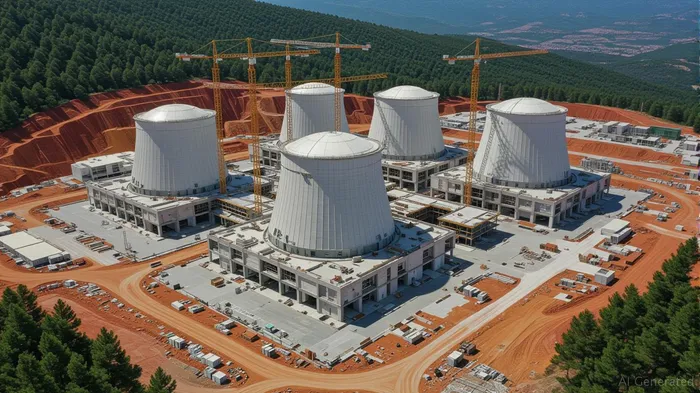
Turkey's Nuclear Stumble: A Geopolitical Quagmire
Turkey's Akkuyu Nuclear Power Plant, a $24 billion project led by Russia's Rosatom, has become a poster child for how geopolitical risks can derail energy megaprojects. Originally slated to start operations by late 2025, Unit 1 is now delayed until mid-2026, with the entire four-reactor complex pushed to 2028 at the earliest. The delays stem from a toxic mix of U.S. sanctions, supply chain disruptions, and frozen funds.
- Sanctions and Supply Chain Chaos: U.S. sanctions on Russia have stifled critical inputs, with Siemens Energy withholding key components. Rosatom's pivot to Chinese suppliers introduced further delays, extending timelines by months. The Turkish Energy Minister confirmed Siemens' non-delivery has already cost six months of progress.
- Frozen Funds and Fiscal Disputes: Turkey owes Rosatom $7 billion, but $3 billion was blocked by U.S. authorities in 2024. Rosatom now demands fiscal concessions, including tax exemptions, to proceed—a negotiation that continues to stall progress.
- Geopolitical Sovereignty Concerns: The BOO (Build-Own-Operate) model grants Rosatom control until 2050, sparking Turkish backlash over energy sovereignty. Over 300 Turkish engineers trained in Russia highlight the entrenchment of Russian influence—a risk investors cannot ignore.
The delays are not just technical; they're existential. Turkey's pivot to South Korea (Sinop plant) and China (Thrace plant) for alternative nuclear solutions underscores the project's vulnerability to geopolitical shifts. For gas investors, this means one fewer competitor for market share—and a weaker case for gas as a "transition fuel."
Asia's Coal Surge: Gas's Worst Nightmare
While Turkey's nuclear woes are regional, Asia's coal-centric energy strategy poses a global threat to gas demand. China's coal approvals hit 11.29 GW in Q1 2025, part of a 289 GW pipeline since 2021—a doubling of pre-2020 approvals. The implications are stark:
- Cost Competition: Coal's $50–$70/ton price tag crushes LNG's $10+/mmBtu cost. In China, solar tariffs are now $44/MWh, compared to gas's $77/MWh—making renewables and coal far more attractive.
- Stranded Asset Risks: The IPCC warns that 90% of Asia's coal fleet could become stranded by 2040, but short-term economics favor coal's dominance. Renewables' surge (solar and wind outpacing electricity demand growth) is sidelining gas as an uneconomical middleman.
- Policy Headwinds: The G7's coal funding ban and the Just Energy Transition Partnership (JETP) aim to curb coal, but delays in funding and weak enforcement mean coal's decline is glacial.
The data shows coal's cost advantage widening, while LNG demand fell 6.2% YoY through May 2025. China's LNG imports dropped 25% YoY in Q1—a five-year low—highlighting gas's losing battle against coal and renewables.
The Perfect Storm for Gas Bulls
Gas bulls are facing a trifecta of risks:
1. Supply Chain Volatility: Sanctions and geopolitical rivalries (e.g., U.S.-Russia, U.S.-China) will keep LNG prices volatile and uncompetitive.
2. Demand Underperformance: Asia's gas demand growth is projected to slow to 2% in 2025 (vs. 5.5% in 2024), with LNG imports set to decline.
3. Strategic Shifts: Turkey's pivot to coal and renewables (e.g., 13.8 GW solar in Thailand's coal-to-renewables transition) erodes gas's role in energy diversification.
Rosatom's shares have dropped 18% since late 2023, reflecting investor anxiety over Akkuyu's delays and geopolitical risks. This mirrors broader gas sector underperformance, with majors like ExxonMobil and TotalEnergiesTTE-- lagging renewables peers.
Investment Strategy: Pivot to Coal and Renewables
The writing is on the wall: gas assets exposed to Turkish or Asian markets face prolonged headwinds. Investors should:
- Underweight Gas Stocks: Sell positions in gas utilities (e.g., Cheniere EnergyLNG--, Dominion Energy) and E&P firms with Asian exposure.
- Overweight Coal and Renewables:
- Coal: India's Coal India Limited (up 15% YoY) benefits from Asia's coal demand, though long-term risks remain.
- Renewables: Solar (JinkoSolar, up 22% in 2025) and wind (Vestas, +18%) are capturing 90% of new capacity growth by 2030.
- Storage/Hydrogen: Plug PowerPLUG-- (hydrogen tech) and CATL (batteries) are critical enablers of the energy transition.
Conclusion
Turkey's nuclear delays and Asia's coal binge are not temporary blips but structural shifts. Gas bulls are losing the race to renewables and coal's cost advantage—a reality underscored by falling LNG demand and frozen project timelines. Investors ignoring these trends risk being stranded in a shrinking market. The smart move? Bet on the fuels and technologies that are winning the energy war: coal (for now) and renewables (for always).





Comentarios
Aún no hay comentarios