
Nuclear Energy's Strategic Surge: Powering the AI Revolution Through Tech Partnerships
The rapid ascent of artificial intelligence (AI) has ignited a seismic shift in global energy demand, with data centers consuming electricity at an unprecedented scale. As tech giants race to deploy next-generation AI infrastructure, they are increasingly turning to nuclear energy-a sector long overlooked in favor of renewables and natural gas-to meet their insatiable appetite for reliable, low-carbon power. This alignment between nuclear energy providers and AI-driven technology firms is not merely a stopgap solution but a strategic realignment with profound implications for both industries.
A New Energy Paradigm for AI Infrastructure
According to a Deloitte report, data center electricity demand could surge five-fold by 2035, reaching 176 gigawatts globally. Nuclear energy, with its high capacity factor (over 92.5%) and ability to provide consistent baseload power, is uniquely positioned to fill this gap. Unlike intermittent renewables, nuclear reactors operate continuously, making them ideal for powering the 24/7 operations of AI data centers. For instance, a single reactor can generate over 800 megawatts-enough to power a city of 500,000 homes. This scalability is critical as AI workloads grow exponentially, demanding not just more computing power but also the energy to sustain it.
Meta, a vanguard in this transition, has already secured multi-gigawatt nuclear power deals with companies like VistraVST--, TerraPower, and Oklo to fuel its Prometheus supercluster computing system. These agreements, which could add up to 6.6 gigawatts of capacity by 2035, underscore the urgency of securing stable energy supplies for AI infrastructure. The company's partnerships extend beyond mere power procurement; they involve funding the development of advanced nuclear technologies, including small modular reactors (SMRs), which are expected to begin operations as early as 2030.
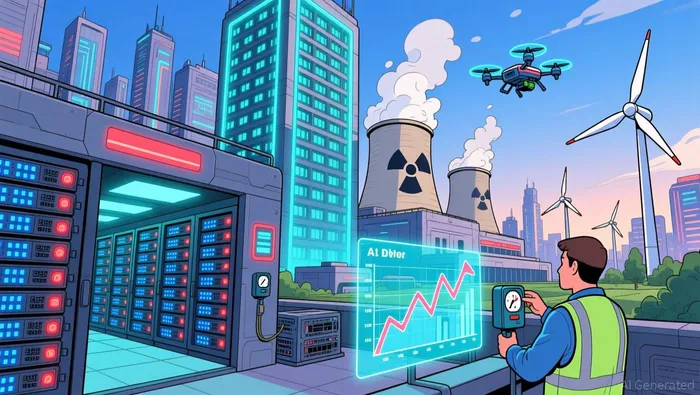
Strategic Partnerships: A Win-Win for Tech and Nuclear Sectors
The collaboration between tech firms and nuclear providers is driven by mutual incentives. For tech companies, nuclear energy offers a predictable cost structure and a carbon-neutral profile, aligning with corporate sustainability goals. For nuclear firms, the influx of capital from tech giants accelerates the deployment of next-generation reactors, which have historically faced delays due to high upfront costs and regulatory hurdles.
Microsoft, for example, has signed a 20-year power purchase agreement with Constellation EnergyCEG-- to restart a nuclear facility by 2028. Similarly, Google is pursuing gigawatts of nuclear capacity to support its AI ambitions by 2030. These partnerships are reshaping the energy landscape, with tech firms acting as anchor tenants for new nuclear projects. As BloombergNEF notes, such long-term contracts reduce financial risk for nuclear developers, enabling them to secure financing at lower interest rates.
Small modular reactors (SMRs) are emerging as a key innovation in this space. Unlike traditional reactors, SMRs can be manufactured in factories and deployed in modular configurations, reducing both costs and construction timelines. Companies like TerraPower and Kairos Power are already in talks with tech firms to integrate SMRs into AI infrastructure, with pilot projects slated for the late 2020s. This flexibility is particularly valuable for data centers located in regions with limited grid capacity or where large-scale nuclear plants are politically contentious.
Challenges and the Path Forward
Despite the promise, nuclear energy faces significant headwinds. The capital costs of building new reactors remain prohibitively high, ranging from $6,417 to $12,681 per kilowatt-far exceeding the costs of natural gas or even solar-plus-storage solutions. Additionally, the U.S. lacks a permanent solution for high-level nuclear waste, a regulatory and public relations hurdle that could delay projects.
However, the urgency of decarbonizing AI infrastructure is forcing both sectors to innovate. Modular construction techniques and streamlined regulatory processes are being explored to cut costs and accelerate deployment. For example, the U.S. Department of Energy has launched initiatives to fast-track SMR licensing, recognizing the technology's potential to bridge the energy gap for AI. Meanwhile, tech firms are leveraging their financial clout to share risks with nuclear developers, as seen in Meta's agreements to co-fund reactor projects.
Investment Implications
For investors, the convergence of nuclear energy and AI infrastructure presents a compelling opportunity. Nuclear providers with partnerships to tech firms-such as TerraPower, Oklo, and Constellation Energy-are likely to outperform peers in the coming decade. Similarly, tech stocks with diversified energy strategies, including MetaMETA-- and Microsoft, are positioning themselves to sustain long-term growth in an energy-intensive AI era.
Yet, caution is warranted. The success of these partnerships hinges on technological breakthroughs, regulatory support, and continued demand for AI. Investors should monitor key metrics, such as the pace of SMR deployments, the cost of nuclear power relative to alternatives, and the regulatory environment for waste management.
Conclusion
The AI revolution is redefining the energy sector, and nuclear power is emerging as an unlikely but essential ally. By aligning with tech giants, nuclear providers are not only securing their future but also enabling the next wave of technological innovation. For investors, this strategic sector alignment offers a rare intersection of long-term growth, decarbonization, and energy security-a trifecta that is hard to ignore.







Comentarios
Aún no hay comentarios