
Novo Nordisk's Workforce Restructuring: A Catalyst for Innovation and Shareholder Value?
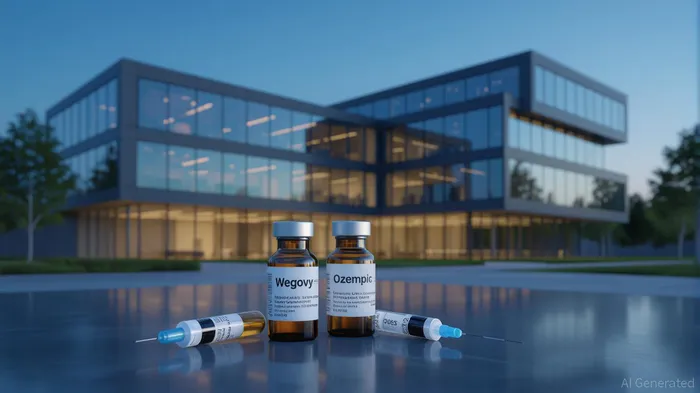
In 2025, Novo NordiskNVO--, the Danish pharmaceutical giant, announced a sweeping workforce restructuring that cut 9,000 global jobs—11.5% of its 78,400-strong workforce. This move, the largest in the company's history, reflects a strategic pivot toward cost optimization in a high-growth sector facing intensifying competition. For healthcare investors, the question looms: Is this restructuring a catalyst for long-term innovation and shareholder value, or a short-term fix that risks undermining Novo's R&D pipeline?
Strategic Cost Optimization: A Response to Market Pressures
Novo Nordisk's restructuring is driven by a confluence of challenges. The company's flagship GLP-1 drugs, Wegovy and Ozempic, have faced declining market share in the U.S. due to Eli Lilly's Mounjaro and Zepbound, as well as compounded generic alternatives. Additionally, Novo's experimental obesity drug, CagriSema, underperformed in clinical trials, failing to outpace Lilly's offerings. These pressures, combined with a 46% drop in share price since early 2025, have forced a recalibration.
The restructuring aims to save 8 billion Danish kroner ($1.26 billion) annually by 2026, with savings redirected toward R&D, manufacturing expansion, and patient access initiatives. CEO Mike Doustdar, who took office in July 2025, has emphasized a “performance-based culture,” prioritizing agility and resource efficiency. The cuts target non-essential roles in sales, communications, and administration, while preserving manufacturing capacity for high-demand drugs.
R&D Reallocation: Balancing Cost Discipline and Innovation
The redirected savings are being funneled into high-impact R&D projects, including:
- Amycretin: A dual GLP-1/amylin agonist with a weekly dosing profile, now in late-stage trials.
- Oral Semaglutide: A patient-friendly oral formulation of Ozempic, slated for a 2026 U.S. launch.
- Open Discovery Innovation Network (ODIN): A collaborative platform to accelerate precompetitive research in diabetes, chronic kidney disease, and Parkinson's.
However, the restructuring has also led to the cancellation of eight lower-priority R&D projects, including CagriSema and zalfermin. While this streamlines the pipeline, it raises concerns about long-term innovation diversity. Novo's R&D spending dropped 23.8% in Q2 2025, and the company now faces a critical juncture: Can it maintain its leadership in obesity and diabetes care without compromising its pipeline?
Investor Sentiment: A Mixed Bag
The restructuring has polarized investors. On one hand, the cost discipline has stabilized Novo's operating profit, which rose 29% year-on-year in H1 2025. On the other, the stock price has fallen nearly 46% since early 2025, reflecting skepticism about the company's ability to compete with Lilly's next-gen therapies like retatrutide (a triple agonist showing 24% weight loss in trials).
The market's reaction to the restructuring underscores a broader tension: short-term cost savings versus long-term innovation. While Novo's operating margin remains robust at 42%, its R&D-to-revenue ratio has declined from 12% in 2023 to 9.5% in 2025. This shift risks alienating investors who value sustained R&D investment in high-growth sectors.
Strategic Implications for Healthcare Investors
For investors, Novo's restructuring presents both opportunities and risks:
1. Opportunity: The redirected savings could accelerate the development of next-gen therapies like oral semaglutide and amycretin, which address unmet needs in obesity care. If successful, these products could recapture market share and drive revenue growth.
2. Risk: The cancellation of R&D projects and reduced spending may delay the launch of transformative therapies, allowing competitors like LillyLLY-- to dominate the GLP-1 space.
The key for NovoNVO-- will be balancing cost discipline with strategic R&D bets. Its $9 billion investment in manufacturing expansion to scale Wegovy production to 100 million doses by 2026 is a positive sign, but the company must also prove that its remaining pipeline can deliver.
Conclusion: A Calculated Bet on the Future
Novo Nordisk's workforce restructuring is a calculated move to navigate a rapidly evolving market. By cutting costs in non-core areas and reinvesting in high-impact R&D, the company aims to regain its competitive edge. However, the success of this strategy hinges on the approval and commercialization of key pipeline candidates.
For healthcare investors, the takeaway is clear: Monitor Novo's R&D progress closely. If the company can deliver on its next-gen therapies and maintain its leadership in diabetes and obesity care, the restructuring could unlock significant shareholder value. But if it falters, the stock may remain under pressure. In a sector where innovation is king, Novo's ability to balance cost optimization with bold R&D bets will define its future.





Comentarios
Aún no hay comentarios