
Novo Nordisk's Strategic Workforce Restructuring: A Blueprint for Biopharma Innovation and Shareholder Value
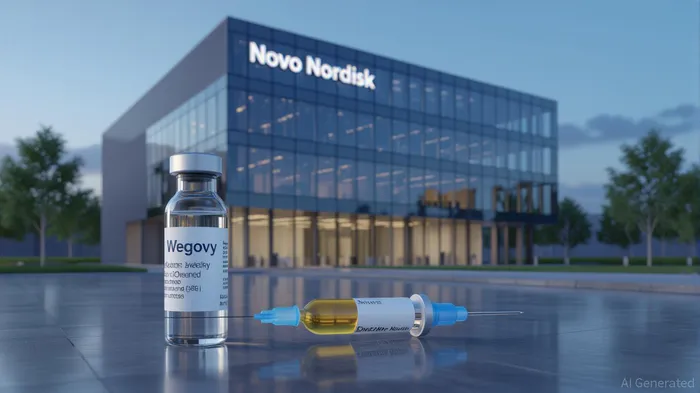
In the high-stakes arena of biopharmaceuticals, NovoNVO-- Nordisk's 2023–2025 restructuring represents a masterclass in aligning operational discipline with long-term innovation. By slashing 9,000 global jobs (11.5% of its workforce) and redirecting DKK 8 billion in annual savings toward R&D and manufacturing, the Danish giant has positioned itself to navigate a rapidly evolving obesity and diabetes market. This strategic pivot—from cost-cutting to capital reallocation—offers critical lessons for investors seeking to understand how operational streamlining can catalyze innovation in high-margin healthcare sectors.
The Rationale Behind the Restructuring
Novo's decision to reduce its workforce was not a knee-jerk reaction to declining sales but a calculated move to address systemic challenges. The company faced dual pressures: rising competition from Eli Lilly's Zepbound and the proliferation of compounded GLP-1 alternatives, which eroded Wegovy's U.S. market share. Simultaneously, Novo's own R&D pipeline required pruning to focus on high-impact projects. By eliminating non-core roles and freezing hiring in non-critical areas, Novo achieved immediate cost savings while creating financial headroom to reinvest in its core strengths.
The restructuring's stated goals—streamlining operations, accelerating decision-making, and reallocating resources to growth areas—align with a broader industry trend. Biopharma firms are increasingly prioritizing operational agility to counteract the high costs of drug development and regulatory uncertainty. Novo's approach, however, stands out for its scale and precision. For instance, the company's decision to discontinue two obesity drug candidates (NNC0519-0130 and INV-347) despite promising early-stage data reflects a disciplined focus on portfolio optimization.
Reinvesting in Innovation: The R&D Reallocation
The DKK 8 billion in annual savings is being funneled into three key areas:
1. Next-Generation GLP-1 Therapies: Novo is advancing amycretin, a GLP-1 and amylin agonist with a weekly dosing profile, into late-stage trials. This compound could differentiate Novo's offerings in a market saturated with daily or weekly injectables.
2. Oral Formulations: The company's $200 million licensing agreement with SepternaSEPN-- for a GLP-1/GIP/glucagon triple agonist and its own oral semaglutide (expected to launch in early 2026) aim to address patient adherence challenges. Oral delivery is a $100 billion opportunity in the obesity space, and Novo's first-mover advantage could secure significant market share.
3. Manufacturing Expansion: A $9 billion investment in scaling Wegovy production to 100 million doses annually by 2026 ensures supply stability amid surging demand. This infrastructure buildout is critical to maintaining Novo's leadership in a market projected to reach $100 billion by 2030.
Shareholder Value: Balancing Short-Term Pain for Long-Term Gain
While the restructuring initially caused a stock dip, Novo's financial resilience has since stabilized investor sentiment. H1 2025 results revealed a 29% year-on-year increase in operating profit and a 78.64% return on equity, underscoring the effectiveness of cost discipline. The company's free cash flow of DKK 34 billion in the first half of 2025 was largely returned to shareholders via dividends and buybacks, reinforcing its commitment to capital efficiency.
However, the strategy is not without risks. The cancellation of eight R&D projects, including oral semaglutide and CagriSema, raises concerns about innovation dilution. Investors must monitor the success of Novo's remaining pipeline, particularly the REDEFINE 4 trial of CagriSema against tirzepatide. A positive outcome could validate the company's R&D reallocation strategy, while a setback might necessitate further portfolio adjustments.
Strategic Implications for Biopharma
Novo's restructuring highlights a broader trend: the convergence of operational efficiency and R&D focus in high-margin healthcare sectors. By prioritizing projects with the highest commercial potential, Novo is mirroring strategies employed by tech firms in the 1990s, where lean operations and rapid iteration drove growth. This model is particularly relevant in biopharma, where R&D costs average $2.6 billion per approved drug.
For investors, the key takeaway is that operational streamlining is not a one-time cost-cutting exercise but a dynamic process of resource reallocation. Novo's ability to maintain a 78.64% operating margin while investing in next-gen therapies demonstrates that efficiency and innovation are not mutually exclusive.
Investment Thesis
Novo Nordisk's current valuation appears undervalued relative to its long-term potential. At a P/E ratio of 14.25 (TTM) and a free cash flow yield of 4.26%, the stock offers compelling upside if the company executes its R&D and manufacturing plans. However, investors should remain cautious about near-term headwinds, including regulatory scrutiny of its 340B rebate model and competition from compounded alternatives.
Recommendation: Investors with a 3–5 year horizon should consider a position in Novo NordiskNVO--, contingent on the successful launch of oral semaglutide and positive trial data for amycretin. The company's strategic realignment positions it to capitalize on the obesity drug boom, provided it can navigate regulatory and competitive challenges.
In conclusion, Novo Nordisk's restructuring exemplifies how operational rigor and R&D focus can drive sustainable shareholder value in high-margin healthcare sectors. By aligning cost discipline with innovation, the company is not just surviving in a competitive market—it's redefining the playbook for biopharma leadership.





Comentarios
Aún no hay comentarios