
Novo Nordisk's Strategic Restructuring and Reinvestment in Diabetes and Obesity Markets
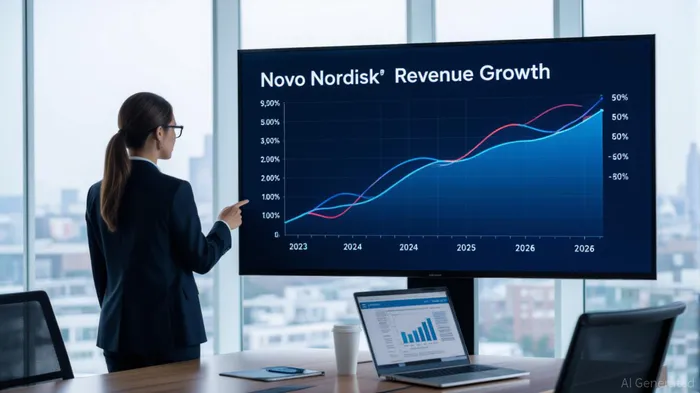
Novo Nordisk's strategic evolution in 2025 reflects a delicate balancing act between near-term cost pressures and long-term growth ambitions in the diabetes and obesity markets. While the company's first-half 2024 results demonstrated resilience—reporting an 18% rise in revenue and a 29% surge in operating profit at constant exchange rates[1]—its stock price has languished, falling 52% over the trailing 12 months as of July 2025[2]. This divergence underscores the challenges of managing investor expectations amid regulatory scrutiny, competitive pressures, and the need to reinvest in a pipeline that remains its core growth engine.
Strategic Restructuring: R&D Focus and Cost Discipline
Novo Nordisk has adopted a dual strategy to navigate these headwinds. First, it has narrowed its R&D pipeline to prioritize metabolic disorders and obesity, aligning with broader industry trends of portfolio optimization[3]. This shift reflects a recognition that high R&D costs and regulatory uncertainty necessitate sharper focus. Second, the company has committed to operational efficiency, with its revised full-year 2024 guidance of 8–14% revenue growth and 10–16% operating profit growth[1] signaling confidence in its ability to maintain margins despite rising input costs.
However, this restructuring is not without risks. The Federal Trade Commission (FTC) and Department of Justice (DOJ) are investigating Novo Nordisk's use of the 340B rebate model, which critics argue costs providers over $125 million monthly and harms patients[1]. Such regulatory friction could divert resources from innovation and strain relationships with healthcare providers, complicating market access for its GLP-1 drugs.
Market Expansion: Milder Growth, Sustained Leadership
The diabetes and obesity segment, Novo Nordisk's crown jewel, is expected to grow at a more measured pace in 2025 and 2026. Wegovy sales are projected to rise 40% in 2025 to $13 billion but slow to 25% in 2026[1], while Ozempic's growth is anticipated to decelerate to just 7% in 2025[1]. This moderation follows the explosive 26% growth in 2024, driven by the blockbuster success of GLP-1 drugs.
Nonetheless, Novo Nordisk's dominance in this space remains intact. The company's $9 billion investment in manufacturing expansion in 2025[2] ensures supply stability, a critical factor as demand for weight-management therapies surges. Analysts also highlight the upcoming U.S. launch of oral semaglutide for obesity in early 2026[1], which could reinvigorate growth by expanding patient access and differentiating Novo NordiskNVO-- from competitors like Eli Lilly[4].
Long-Term Prospects: Valuation and Competitive Dynamics
Despite near-term challenges, Novo Nordisk's forward P/E ratio of 16.9[2] suggests it is attractively valued relative to the healthcare sector and S&P 500. This discount reflects both the stock's underperformance and the market's skepticism about its ability to sustain growth. However, the company's robust pipeline—anchored by metabolic and obesity therapies—positions it to capitalize on secular trends in chronic disease management.
The competitive landscape, however, is intensifying. Eli Lilly's recent strides in the weight-loss drug market[4] have raised questions about Novo Nordisk's ability to maintain its lead. Yet, Novo's first-mover advantage in GLP-1 drugs, combined with its manufacturing scale and global patient base (now exceeding 45 million[1]), provides a formidable moat.
Conclusion: A Calculated Bet on Innovation
Novo Nordisk's strategic restructuring is a calculated response to a high-stakes environment. By prioritizing R&D in high-margin therapeutic areas, optimizing operational efficiency, and investing in manufacturing, the company is laying the groundwork for long-term growth. While regulatory risks and competitive pressures persist, its forward-looking pipeline and attractive valuation offer compelling upside for investors willing to weather near-term volatility.
As the obesity market evolves into a $100 billion-plus industry[4], Novo Nordisk's ability to innovate and adapt will determine whether it remains a leader or cedes ground to rivals. For now, the data suggests that its strategic bets—though not without risk—are well-positioned to deliver value over the long term.





Comentarios
Aún no hay comentarios