
Novo Nordisk and the Pharma-Driven Economic Renaissance of Denmark: A Blueprint for Long-Term Investment
The Economic Engine of Denmark
Denmark's third-quarter 2025 GDP growth of 2.3%-the fastest since late 2021-was fueled largely by Novo Nordisk's meteoric rise. The company's blockbuster diabetes and weight-loss drugs, including Ozempic and Wegovy, have driven a 5.1% year-over-year sales increase, even amid U.S. market challenges and a restructuring plan that included layoffs. In Q3 2025 alone, Novo Nordisk generated over 70 billion Danish kroner (approximately $11 billion) in revenue, contributing to a 4.1% rise in Danish exports. Analysts estimate that the pharmaceutical sector, led by Novo Nordisk, accounts for a disproportionate share of Denmark's GDP growth, underscoring its role as both an economic anchor and a global innovator.
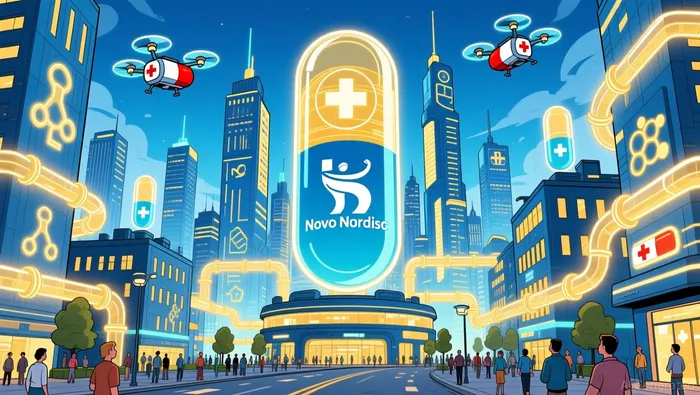
This growth is not accidental. Denmark's investment in biotech infrastructure, coupled with Novo Nordisk's R&D prowess, has created a virtuous cycle: high-value exports, skilled employment, and reinvestment in cutting-edge therapies. The company's market capitalization of 1.4 trillion Danish kroner reflects not just financial strength but a strategic alignment with Denmark's national economic priorities.
Obesity Therapeutics: A $150 Billion Opportunity
The obesity therapeutics market is on an exponential growth trajectory, driven by demographic shifts, rising healthcare costs, and the life-extending potential of GLP-1 receptor agonists. According to Grand View Research, the global market is projected to expand at a 22.31% CAGR through 2030, reaching $60.53 billion. Morgan Stanley's revised forecast of $150 billion by 2035 highlights the sector's transformative potential, with Novo Nordisk positioned at its epicenter.
The company's pipeline reinforces this leadership. While temporary supply constraints allowed Eli Lilly to gain market share, Novo Nordisk is poised to reclaim its edge with oral therapies like Cagrisema (2026) and Amycretin (2029) according to Lattice Work analysis. These innovations address critical unmet needs-such as patient adherence to oral formulations-while expanding the addressable market. Ole Søeberg of Nordic Investment Partners argues that Novo Nordisk's current valuation, which assumes a 2030 EPS of 30 DKK, underestimates its growth potential. If the company meets ambitious targets, EPS could surpass 50 DKK, implying a 15% CAGR through 2027.
Strategic Pricing and Global Accessibility
Novo Nordisk's recent decision to reduce prices for obesity treatments signals a calculated shift toward broader market penetration. This move, while potentially squeezing short-term margins, aligns with long-term goals of expanding patient access and solidifying market dominance. In a sector where affordability and regulatory approval are pivotal, the company's pricing strategy could accelerate adoption rates, particularly in emerging markets.
Risks and Realities
No investment thesis is without caveats. Supply chain bottlenecks, competitive pressures from rivals like Eli Lilly, and regulatory scrutiny in the U.S. remain challenges. Additionally, the obesity therapeutics market's rapid growth invites scrutiny over long-term safety and sustainability. However, Novo Nordisk's R&D spend-among the highest in the industry-positions it to navigate these risks through innovation.
Conclusion: A Model for the Future
Denmark's economic renaissance, powered by Novo Nordisk, offers a blueprint for how nations can leverage strategic industries to drive growth. For investors, the company represents more than a stock-it is a gateway to a sector poised to redefine healthcare and economics. As obesity becomes a global priority, Novo Nordisk's dual role as a national economic engine and a pioneer in therapeutics makes it a compelling long-term investment.







Comentarios
Aún no hay comentarios