
Novo Nordisk's U.S. Job Cuts: Strategic Streamlining or Warning Sign?
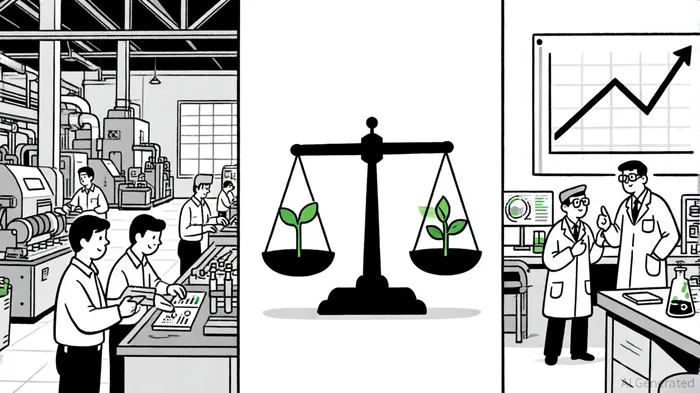
In September 2025, Novo NordiskNVO--, the Danish pharmaceutical giant behind Wegovy and Ozempic, announced a sweeping global restructuring plan, including 9,000 job cuts-nearly 11.5% of its workforce-across manufacturing, support functions, and administrative roles, according to a News & Observer article. While the majority of reductions occurred in Denmark, the U.S. facility in Clayton, North Carolina-a critical hub for obesity drug production-also faced significant layoffs, according to a CNBC report. This move, framed as a strategic pivot under new CEO Mike Doustdar, raises critical questions for investors: Is this a calculated step toward operational efficiency and long-term growth, or a sign of deeper challenges in a competitive market?
Operational Efficiency: Cutting Fat to Build Muscle
Novo Nordisk's restructuring targets redundancies and non-core operations to accelerate decision-making and reduce costs, as stated in a GlobeNewswire release. At the Clayton plant, layoffs hit front-line manufacturing roles, including quality control and production line technicians, alongside support functions like HR and communications, as reported by Reuters. These cuts align with a broader effort to streamline operations, despite the facility's simultaneous $4.1 billion expansion, which is projected to add 1,000 jobs, according to an EconoTimes report.
The company's rationale hinges on reallocating resources to its core diabetes and obesity franchises. By trimming non-essential roles, NovoNVO-- aims to redirect capital toward R&D and manufacturing scale-up, ensuring it maintains leadership in a rapidly evolving market, according to a TraderInsight analysis. For instance, savings from the restructuring-estimated at 8 billion Danish kroner ($1.26 billion) annually by 2026-will fund innovation in obesity treatments and the development of a pill version of Wegovy, as reported in a Reuters report.
However, critics argue that cutting production roles could disrupt supply chains or delay product launches. Yet, Novo's emphasis on expanding Clayton's capacity suggests a dual strategy: reducing costs while scaling critical operations, as the News & Observer noted.
Financial Implications: Short-Term Pain for Long-Term Gain
The restructuring comes with immediate financial headwinds. Novo Nordisk incurred a one-off cost of 8 billion Danish kroner, primarily from impairment charges and severance, which slashed its 2025 operating profit growth forecast from 10–16% to 4–10% at constant exchange rates, according to the GlobeNewswire release. This reduction reflects the upfront costs of transformation, a common pattern in corporate turnarounds.
For investors, the key question is whether these short-term losses will be offset by long-term gains. The company projects annualized savings of 8 billion Danish kroner by 2026, which will be reinvested into R&D and commercial execution, according to EconoTimes. This reallocation is critical in a market where competitors like Eli Lilly's Zepbound are intensifying competition, as Reuters reported. By prioritizing innovation, Novo aims to defend its market share and expand its therapeutic pipeline.
Long-Term Growth: Balancing Risk and Reward
The success of Novo's strategy hinges on its ability to balance cost-cutting with innovation. While the layoffs signal a shift toward leaner operations, they also highlight vulnerabilities in a slowing growth environment. Sales of obesity drugs, once a high-growth sector, are facing margin pressures as generic alternatives and competitive therapies emerge, according to EconoTimes.
Yet, Novo's focus on R&D and manufacturing scale-up positions it to capitalize on unmet needs in diabetes and obesity care. The company's investment in a pill version of Wegovy, for example, could open new markets and reduce patient adherence challenges, as reported by Reuters. For investors, the critical metric will be how effectively Novo converts restructuring savings into revenue-generating innovations.
Conclusion: A Calculated Bet
Novo Nordisk's U.S. job cuts are best viewed as a strategic streamlining rather than a warning sign. The company is proactively addressing operational inefficiencies and reallocating resources to high-potential areas, even at the cost of short-term pain. While the one-off expenses and revised profit forecasts are concerning, the long-term reinvestment plan-focusing on R&D and manufacturing-aligns with the demands of a competitive market.
For investors, the key takeaway is to monitor Novo's execution. If the company can maintain its innovation momentum while achieving cost discipline, the restructuring could bolster its position as a leader in diabetes and obesity care. However, missteps in managing the transition-such as supply chain disruptions or talent attrition-could undermine these efforts. In the end, Novo's ability to balance efficiency with growth will define its success in the years ahead.





Comentarios
Aún no hay comentarios